CFTC’s Q1 2026 Crypto Rulebook: Game-Changer for XRP Price and Institutional Inflows?

CFTC’s Q1 2026 Crypto Rulebook: Game-Changer for XRP Price and Institutional Inflows?
Short answer: Following Michael Selig’s confirmation as CFTC Chairman on December 18, 2025, the agency signaled plans to roll out a full digital asset regulatory framework starting in Q1 2026 — covering trading, custody, and intermediary rules for tokens like XRP, which was consolidating around $1.86-$1.90 at the time amid ETF speculation. The framework itself won’t guarantee a price outcome, but it aims to remove the regulatory ambiguity that’s kept many institutions on the sidelines.

As December 2025 came to a close, the cryptocurrency market stood at a genuinely pivotal crossroads. The CFTC’s Q1 2026 crypto framework loomed large, promising a comprehensive rulebook for digital assets that could reshape trading, compliance, and investment flows across the sector. This wasn’t just regulatory fine print — it represented a real potential catalyst for assets like XRP, which had been consolidating around $1.90 amid speculation over ETF approvals and growing institutional interest. With Chairman Michael Selig freshly confirmed, the timeline accelerated meaningfully, offering a path toward clarity in a space long plagued by uncertainty.
Decoding the CFTC’s Q1 2026 Framework
The Commodity Futures Trading Commission (CFTC) oversees futures, options, and swaps in the U.S., treating many cryptocurrencies as commodities rather than securities. Under Chairman Selig, sworn in on December 23, 2025, the agency planned to roll out a full digital asset framework starting in Q1 2026, including amended regulations designed to better accommodate blockchain technology broadly.
Imagine the crypto market as a bustling highway without speed limits or clear signage — exciting, but genuinely chaotic. This framework aimed to install guardrails and traffic lights rather than shut the highway down. It sought to define clear rules for trading digital commodities, custody arrangements, and intermediary obligations. The Crypto CLARITY Act, introduced in Congress separately, positioned the CFTC as the lead regulator for non-security tokens specifically — a shift that could streamline operations for platforms handling XRP, which Ripple uses extensively for cross-border payments.
Selig’s timeline was genuinely aggressive from the outset. Confirmed by the Senate on December 18, 2025, he succeeded Caroline Pham and brought a clearly pro-innovation stance to the role. Sources at the time indicated rulemaking would commence early in 2026, focusing heavily on blockchain integration. This wasn’t abstract policy talk — it tied directly to real market stability. Coordination with the SEC remained essential throughout, though, particularly for assets straddling the line between commodity and security classification.
XRP’s Consolidation and Broader Market Shifts
XRP’s price hovered around $1.86 at the time, down slightly over the preceding week but up dramatically over the prior five years. This consolidation near $1.90 reflected cautious optimism among traders, who watched closely for rebounds tied specifically to potential ETF inflows. Institutional adoption surged in parallel — in 2025, crypto ETFs attracted $29.4 billion in inflows through mid-August alone, highlighting a real shift from retail speculation toward serious capital allocation.
Regulations like this Q1 2026 framework had real potential to amplify that trend further. XRP, designed specifically for efficient remittances, stood to benefit meaningfully from added clarity. Ripple’s existing partnerships with banks already demonstrated genuine utility, but regulatory green lights could unlock considerably more. Some analysts projected XRP could reach the $5 to $10 range by 2026 if ETF approvals materialized, driven by institutional pilots and continued on-chain growth.
Broader trends showed crypto genuinely maturing as an asset class. Global ETPs saw $87 billion in net inflows since 2024, with Bitcoin dominating overall but altcoins like XRP steadily gaining traction. Volatility persisted regardless — XRP dipped 9% over the prior month even amid these positive structural developments, a reminder that regulatory optimism doesn’t eliminate short-term price swings.
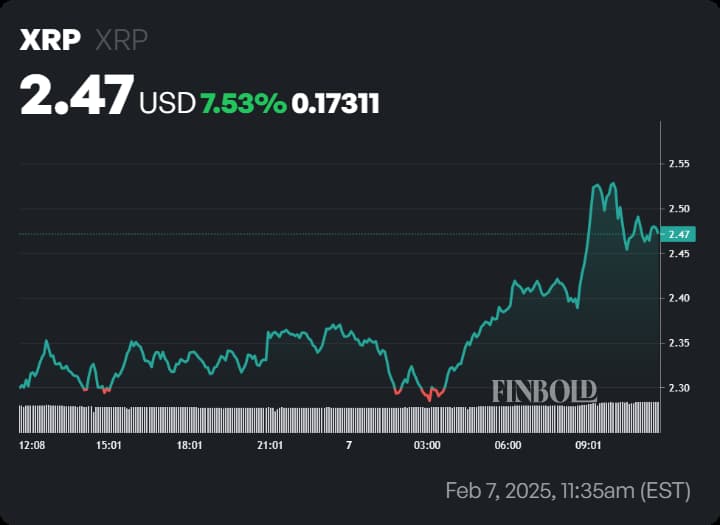
For real-time price tracking, TradingView’s XRP/USD chart remained a useful reference point. Key indicators at the time, like neutral moving averages, suggested a holding pattern overall, though RSI readings hinted at potential upside if institutional inflows continued accelerating.
How Chainlink’s Oracles Fit In
It’s worth exploring how this framework could empower altcoins beyond XRP specifically. Chainlink’s oracles — decentralized networks that feed real-world data into smart contracts — are a good example. Smart contracts function as automated agreements on the blockchain, but they’re fundamentally blind to external information like stock prices or weather data on their own. Oracles solve this problem directly, acting as reliable messengers between on-chain logic and off-chain reality.
Chainlink leads in this space, connecting blockchains to off-chain sources securely and reliably. For altcoin smart contracts broadly, this enables applications across DeFi, insurance, and supply chain tracking. The basic flow works simply enough: data requests from contracts go out to oracle nodes, which fetch, verify, and return the requested information.
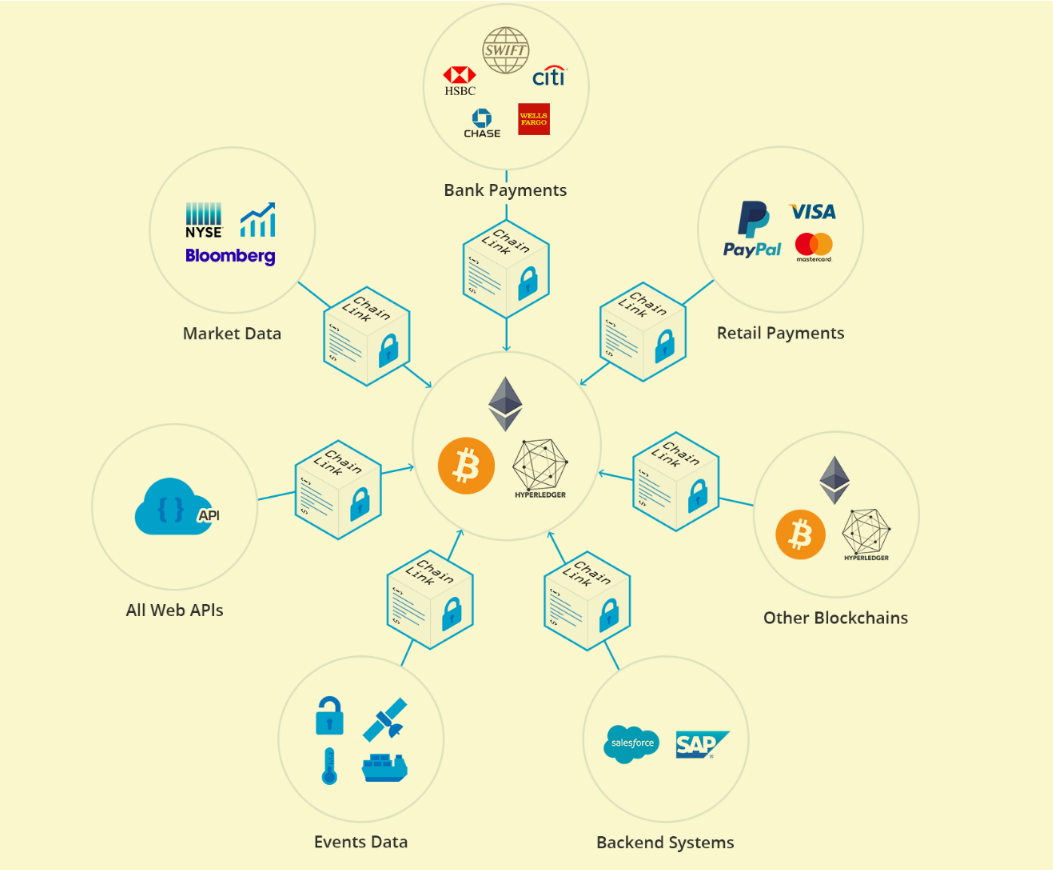
Why does this connect to regulation specifically? A comprehensive CFTC framework could help standardize oracle usage within regulated markets, reducing risks like data manipulation across the board. In fintech more broadly, Chainlink already powers hybrid systems where traditional finance meets crypto directly. Real-world asset tokenization, for instance, grew from $8.5 billion in early 2024 to $33.91 billion by Q2 2025, partly thanks to reliable oracle data feeds underpinning that growth. As rules clarified further, more institutional inflows into oracle-dependent altcoins seemed likely.
Integration isn’t seamless, though. Oracles must remain genuinely tamper-resistant, and Chainlink’s decentralized model addresses this through multiple independent nodes reaching consensus. For beginners, it’s a bit like crowdsourcing truth — majority consensus among nodes helps ensure accuracy. This ties back to XRP directly: imagine XRP payments triggered automatically by oracle-verified exchange rates, boosting efficiency under a clearer regulatory framework.
Pros, Risks, and Common Misconceptions
This Q1 2026 framework offered clear potential upsides. Enhanced legitimacy could drive XRP’s price upward over time — analysts predicted a median around $1.88 by end-2026 in more conservative scenarios, with optimistic projections reaching as high as $8 if ETF momentum materialized as hoped. Institutional inflows, already robust at the time, seemed likely to surge further as rules reduced compliance hurdles for major players. For Chainlink specifically, it meant more secure data infrastructure for altcoin ecosystems generally, fostering continued innovation.
Real risks remained, though. Delays in rulemaking were plausible — Congress might have pushed related bills like the Digital Asset Market Clarity Act further into 2026, prolonging uncertainty regardless of CFTC intentions. Overly strict regulations could also stifle smaller market participants unintentionally. Market volatility never fully disappeared either: XRP’s roughly 17% yearly drop through this period served as a reminder that external macroeconomic factors still mattered enormously.
A common misconception holds that all cryptocurrencies would thrive equally under this kind of framework. In reality, XRP, as a commodity-classified asset, stood to gain more directly than assets still treated as securities. Another myth suggests regulation inherently kills innovation — in practice, it often provides a stable foundation instead, much like seatbelts in cars: safety measures that ultimately enable higher speeds rather than restrict them. For oracles specifically, the persistent myth is that they’re infallible; Chainlink mitigates but doesn’t fully eliminate oracle risk through its redundancy model.
Actionable Insights for Investors
Monitoring Selig’s official updates directly through CFTC.gov is a reasonable starting point for anyone tracking this framework’s rollout. Tracking XRP metrics specifically matters too — volume spikes or RSI readings above 50 could signal genuine rebound potential worth watching.
Assessing ETF prospects is worthwhile as well. If XRP ETFs eventually launched, inflows comparable to Bitcoin’s roughly $22 billion in 2025 seemed plausible, though staying informed through sources like CoinDesk or Grayscale’s research reports remained essential for tracking actual developments as they unfolded.
Thinking long-term rather than chasing short-term hype tends to serve investors better here. Tools like blockchain analytics adoption indexes can help gauge genuine institutional trends over time. Watching Ripple’s ongoing pilots specifically offered a useful preview of how this rulebook’s real-world impact might eventually play out.
Frequently Asked Questions
What did the CFTC’s Q1 2026 crypto framework aim to cover?
It aimed to define clear rules for trading digital commodities, custody arrangements, and intermediary obligations, positioning the CFTC as lead regulator for non-security tokens like XRP under the broader CLARITY Act framework.
Does regulatory clarity from the CFTC guarantee XRP’s price will rise?
No. XRP still dipped 9% over the prior month and roughly 17% for the year despite positive regulatory developments, illustrating that a clearer framework reduces uncertainty but doesn’t eliminate normal market volatility.
How does real-world asset tokenization connect to this framework?
Tokenization of real-world assets grew from $8.5 billion in early 2024 to $33.91 billion by Q2 2025, relying heavily on reliable oracle data feeds — a clearer regulatory framework could standardize oracle usage further and accelerate this growth.
Who did Michael Selig succeed as CFTC Chairman?
Selig succeeded Caroline Pham, bringing a pro-innovation stance to the role after his Senate confirmation on December 18, 2025, and swearing-in on December 23, 2025.
A Long-Term View
The CFTC’s Q1 2026 crypto framework represented a genuine maturation step for the industry. For XRP, it carried real potential to help end prolonged consolidation, sparking price rebounds and fresh inflows over time. Chainlink’s oracles exemplify how real-world data integration can thrive within a more regulated environment, benefiting altcoins broadly rather than XRP alone. Real challenges persisted throughout, but the overall trajectory pointed toward greater stability and sustained growth. Investors who prioritized education over speculation were best positioned to navigate this transition.
What if this framework didn’t just stabilize XRP, but helped redefine the entire digital asset landscape — could 2026 mark the true dawn of mainstream crypto adoption?
References Used for This Article
- WilmerHale – Michael Selig Confirmed as CFTC Chairman: Six Issues to Watch in 2026 – https://www.wilmerhale.com/en/insights/client-alerts/20251218-michael-selig-confirmed-as-cftc-chairman—six-issues-to-watch-in-2026
- The Motley Fool – Prediction: XRP Will Soar to This Price in 2026 – https://www.fool.com/investing/2025/12/21/xrp-ripple-will-soar-to-this-price-in-2026/
- 24/7 Wall St – AI Ran 10,000 Simulations: XRP’s Most Likely Price on December 31, 2026 – https://247wallst.com/investing/2025/12/22/ai-ran-10000-simulations-heres-xrps-most-likely-price-on-december-31-2026/
- Chainlink – Decentralized Oracles for Blockchain Use Cases – https://chain.link/use-cases
- Grayscale Research – 2026 Digital Asset Outlook – https://research.grayscale.com/reports/2026-digital-asset-outlook-dawn-of-the-institutional-era
- CFRA Research – Crypto ETFs Surge in 2025: Regulatory Tailwinds Drive Record Growth – https://www.cfraresearch.com/insights/crypto-etfs-surge-in-2025-regulatory-tailwinds-drive-record-growth/
- TradingView – XRP/USD Chart Data – https://www.tradingview.com/symbols/XRPUSD/
- Congress.gov – Digital Asset Market Clarity Act – https://www.congress.gov/bill/119th-congress/house-bill/3633/text
- MarketWatch (Morningstar) – Crypto Investors Got Almost Everything They Wanted in 2025, Yet Prices Still Fell – https://www.morningstar.com/news/marketwatch/20251224183/crypto-investors-got-almost-everything-they-wanted-in-2025-yet-prices-still-fell-theyre-looking-for-more-help-from-the-white-house-in-2026
This is not financial advice. Crypto is volatile — always do your own research and only invest what you can afford to lose.

[…] $2.85 in September to the current $1.85-$1.89 consolidation zone. This decline mirrored broader crypto headwinds, including Bitcoin’s own corrections and macroeconomic uncertainties like interest […]