Selig Takes Over CFTC: Why XRP Holders Should Be Optimistic About 2026 Catalysts

Selig Takes Over CFTC: Why XRP Holders Should Be Optimistic About 2026 Catalysts
Short answer: Michael Selig’s swearing-in as the 16th CFTC Chairman set up several concrete catalysts for XRP heading into 2026 — RLUSD’s stablecoin adoption surpassing $1 billion in market cap, ODL transaction volume growing 41% year-over-year to $1.3 billion in Q2 2025 alone, and a planned EVM-compatible sidechain that could let XRPL tap into Chainlink’s oracle infrastructure for tokenized real-world assets. None of this guarantees a specific price outcome, but the underlying utility case strengthened considerably.

As 2025 drew to a close, the cryptocurrency landscape was shifting under new regulatory leadership. Michael Selig’s swearing-in as the 16th Chairman of the Commodity Futures Trading Commission (CFTC) marked a genuinely pivotal moment. For XRP holders, this development signaled real reason for optimism. Selig’s pro-innovation stance, combined with expanding Ripple initiatives like RLUSD and On-Demand Liquidity (ODL), positioned several concrete catalysts for 2026 — though these developments came amid broader market dynamics worth examining closely rather than in isolation.
Understanding the Core Elements
The CFTC oversees futures and derivatives markets, including digital assets classified as commodities. XRP, the native token of the XRP Ledger (XRPL), had long navigated regulatory gray areas throughout its history. Unlike Bitcoin or Ethereum, XRP focuses specifically on facilitating cross-border payments through Ripple’s network infrastructure.
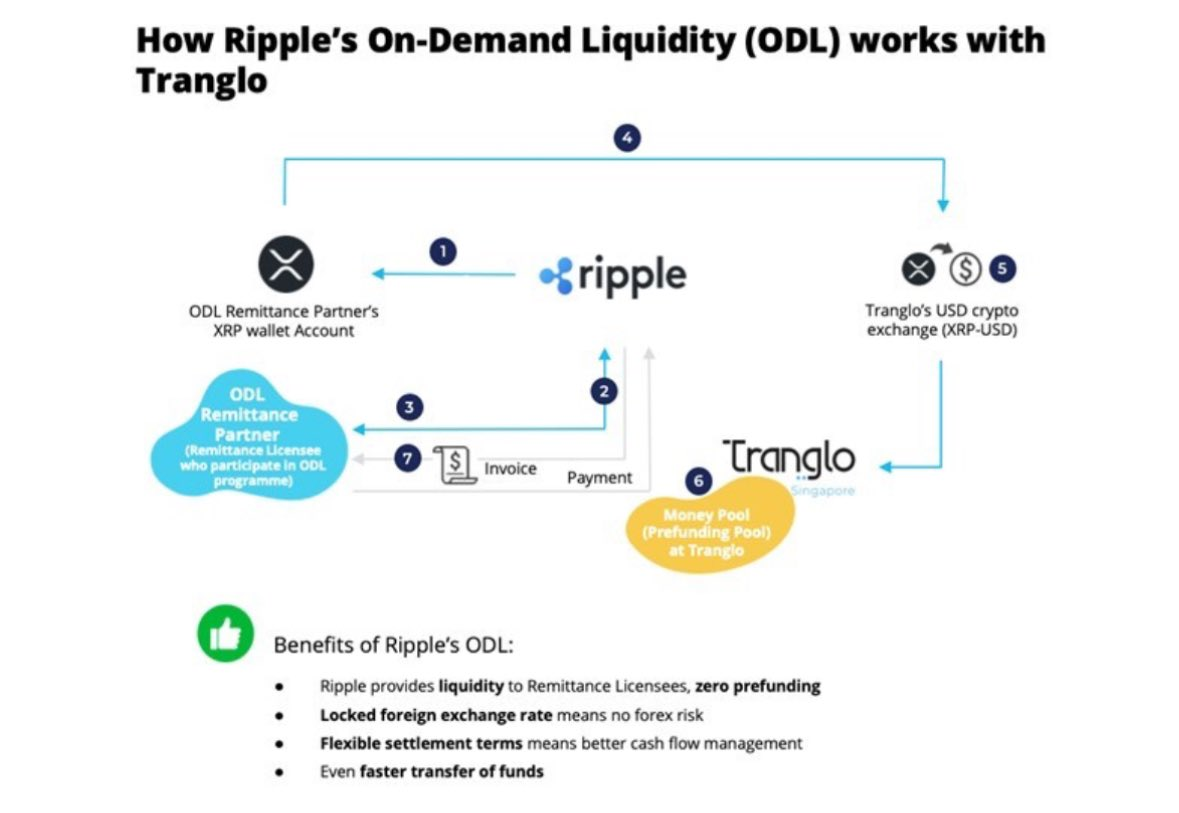
RLUSD is Ripple’s dollar-pegged stablecoin, designed specifically for stability and regulatory compliance. It aims to integrate seamlessly with traditional finance rather than sit apart from it. Meanwhile, ODL uses XRP as a bridge currency for instant settlements, reducing the need for pre-funded accounts in international money transfers.
Chainlink’s oracles add another layer worth understanding here. These are decentralized networks that feed real-world data into blockchain smart contracts. Imagine a smart contract as a self-executing vending machine — it needs external inputs like stock prices or weather data to actually function as intended. Without oracles, blockchains remain fundamentally isolated from off-chain information.
For altcoins like XRP, oracles enable considerably more advanced applications. They bridge the so-called “oracle problem,” where smart contracts otherwise can’t natively access external data without risking centralization or outright manipulation of inputs.
Regulatory Tailwinds and Current Trends
Selig’s appointment aligned with the broader push for clearer digital asset policy. Nominated in October 2025 and confirmed by the Senate in December, Selig brought a genuinely crypto-friendly perspective drawn from his prior industry background. He emphasized clarity in market structure legislation specifically, with the relevant bill potentially heading toward final approval soon after his confirmation.
A January 2025 executive order promoted responsible growth of digital assets more broadly, encouraging innovation while still addressing legitimate risks. This policy framework had real potential to classify more altcoins under CFTC oversight specifically, reducing the SEC-related uncertainty that had plagued XRP for years.
RLUSD saw genuinely rapid adoption through this period. By November 2025, it surpassed a $1 billion market cap — one of the fastest climbs recorded for any regulated stablecoin. Expansion into markets like Japan highlighted its real potential to integrate with global finance more broadly.
ODL volumes climbed steadily too. In Q2 2025, Ripple reported $1.3 billion in ODL transactions, a 41% year-over-year increase. This growth positioned XRP to capture a genuine slice of the roughly $150 trillion annual cross-border payments market, currently dominated by legacy systems like SWIFT.
Beyond payments specifically, Chainlink’s oracles were gaining real traction elsewhere too. As of October 2025, Chainlink secured over $100 billion in value across more than 2,400 integrations, holding roughly 70% of the broader oracle market share. That dominance underscored its role in enabling real-world data for altcoin ecosystems generally.
Oracles and Altcoin Evolution
Chainlink’s oracles solve a fundamental blockchain limitation. Smart contracts on networks like Ethereum or emerging XRPL sidechains need reliable off-chain data to execute complex logic reliably. A decentralized insurance contract, for instance, might require verified weather reports to trigger payouts accurately.
In the altcoin space specifically, this shift proved genuinely transformative. Altcoins often specialize in particular niches like payments (XRP) or decentralized finance (DeFi). Oracles allow these tokens to interact meaningfully with real-world events, such as asset prices or supply chain updates.
XRP’s potential here is worth considering directly. With XRPL’s planned EVM-compatible sidechain, smart contracts could leverage Chainlink oracles specifically for tokenizing real estate or commodities. This kind of integration could meaningfully amplify 2026 catalysts by expanding XRP’s utility well beyond remittances alone.
Chainlink isn’t without competition, of course. Other oracle providers exist in the space, but its decentralized model — where node operators stake tokens specifically to ensure accuracy — sets a real standard others have struggled to match. As adoption grows further, expect more altcoins to lean on this kind of infrastructure for genuine scalability.

Pros, Risks, and Common Misconceptions
On the positive side, Selig’s leadership had real potential to accelerate regulatory clarity, fostering greater institutional inflows over time. Broader digital asset policy emphasized U.S. competitiveness in the space, potentially easing barriers for innovations like RLUSD’s continued expansion.
ODL’s efficiency represented another genuine strength here. By using XRP for liquidity directly, it cut costs and sped up transfers meaningfully — a real advantage in a world of rising remittance flows, estimated at $690 billion for 2025 alone. Chainlink’s oracles further enhanced this picture by enabling data-driven smart contracts, opening doors to DeFi applications and real-world asset tokenization simultaneously.
Real risks persisted throughout, though. Crypto markets remained genuinely volatile, influenced heavily by macroeconomic factors like Federal Reserve interest rate policy. A reversal in expected rate cuts could reasonably dampen broader enthusiasm across the sector.
Regulatory shifts carried real uncertainty too. While Selig maintained a pro-innovation stance, enforcement actions or unexpected legislative delays could still stall progress. Competition from other stablecoins or payment networks added further pressure on RLUSD’s growth trajectory specifically.
A common misconception holds that XRP is solely controlled by Ripple the company. In reality, the XRPL is genuinely decentralized, with validators distributed worldwide beyond Ripple’s direct control. Another persistent myth suggests oracles like Chainlink eliminate all risk entirely — in practice, they mitigate but don’t fully erase the possibility of data manipulation if underlying networks are somehow compromised.
Actionable Insights for Investors
Monitoring legislative developments matters here first — watching for the crypto market structure bill to reach final approval, as Selig himself indicated was possible, could define clearer boundaries between SEC and CFTC oversight going forward.
Tracking RLUSD and ODL metrics directly is worthwhile too. Ripple’s partnerships, especially across Asia, offer a useful signal of continued growth. If ODL volumes maintain their upward trajectory, that could meaningfully boost broader XRP demand over time.
Considering oracle integrations is worth the attention as well. As Chainlink expands further into capital markets — a trend expected to accelerate through 2026 — watching for collaborations with altcoin projects like XRP specifically could reveal new use cases, such as tokenized assets built directly on XRPL.
Evaluating broader macro trends matters as well. Federal Reserve policy on interest rates will continue influencing overall market liquidity. Diversifying thoughtfully, while remaining genuinely optimistic about these 2026 catalysts, is a reasonable approach that balances exposure against ongoing market volatility.
Frequently Asked Questions
What is RLUSD, and how does it relate to XRP?
RLUSD is Ripple’s dollar-pegged, regulation-focused stablecoin, distinct from XRP itself. It surpassed $1 billion in market cap by November 2025 and is designed to integrate with traditional finance, complementing XRP’s role in Ripple’s broader payments ecosystem.
How much did Ripple’s ODL transaction volume grow in 2025?
Ripple reported $1.3 billion in ODL transactions during Q2 2025 alone, a 41% year-over-year increase, reflecting growing use of XRP as a bridge currency for cross-border settlements.
What would an EVM-compatible XRPL sidechain enable?
It would let XRPL-based smart contracts access Ethereum-compatible tooling and Chainlink’s oracle infrastructure, potentially enabling tokenization of real-world assets like real estate or commodities directly on XRP’s network.
Does Ripple the company control the XRP Ledger?
No. The XRPL is decentralized, with validators distributed worldwide beyond Ripple’s direct control — a common misconception is treating XRP as functionally identical to a Ripple-issued asset.
Embracing a Long-Term Perspective
Looking ahead, Selig’s CFTC tenure, paired with broader digital asset policy initiatives, set a genuine foundation for growth. RLUSD’s expansion and ODL’s continued advancement positioned XRP for real-world utility gains. Chainlink’s oracles, meanwhile, could supercharge altcoin smart contracts more broadly, creating real synergies across DeFi and beyond.
Success still hinged on execution, though. Regulatory tailwinds had to translate into genuinely actionable frameworks rather than remain aspirational. For XRP holders, these 2026 catalysts represented real opportunity amid an evolving landscape.
As the crypto ecosystem continues maturing, will these catalysts finally bridge traditional finance and digital assets meaningfully, or will unforeseen challenges alter the trajectory along the way?
References Used for This Article
- CFTC – Michael Selig Sworn In as 16th CFTC Chairman – https://www.cftc.gov/PressRoom/PressReleases/9164-25
- WilmerHale – Michael Selig Confirmed as CFTC Chairman: Six Issues to Watch in 2026 – https://www.wilmerhale.com/en/insights/client-alerts/20251218-michael-selig-confirmed-as-cftc-chairman—six-issues-to-watch-in-2026
- Politico Pro – Trump Taps Crypto Regulator Mike Selig as New CFTC Chair Nominee – https://subscriber.politicopro.com/article/2025/10/trump-mike-selig-cftc-00621525
- CoinDesk – Senate Confirms Trump Crypto-Friendly Nominees to Take Over CFTC, FDIC – https://www.coindesk.com/policy/2025/12/11/senate-confirms-trump-crypto-friendly-nominees-to-take-over-cftc-fdic
- The White House – Strengthening American Leadership in Digital Financial Technology – https://www.whitehouse.gov/presidential-actions/2025/01/strengthening-american-leadership-in-digital-financial-technology
- 24/7 Wall St – Is XRP the Most Undervalued Crypto in 2026? The Case for $5 and Against It – https://247wallst.com/investing/2025/12/23/is-xrp-the-most-undervalued-crypto-in-2026-the-case-for-5-and-against-it/
- Yahoo Finance – Ripple: XRP Could Capture 14% of SWIFT’s $150 Trillion by 2030 – https://finance.yahoo.com/news/ripple-bold-claim-xrp-could-144043007.html
- Messari – Chainlink: A Full-Stack Institutional Platform – https://messari.io/report/chainlink-a-full-stack-institutional-platform
- Chainlink Blog – Chainlink in 2025: The Final Stage of Blockchain Adoption Is Coming – https://blog.chain.link/chainlink-2025/
This is not financial advice. Crypto is volatile — always do your own research and only invest what you can afford to lose.

[…] a mixed bag: peaks at $3.65 in July gave way to consolidation, ending with that 11% slump. Now, for 2026, the narrative flips. If ETF inflows reach $10 billion—a plausible scenario given current $1.25 […]