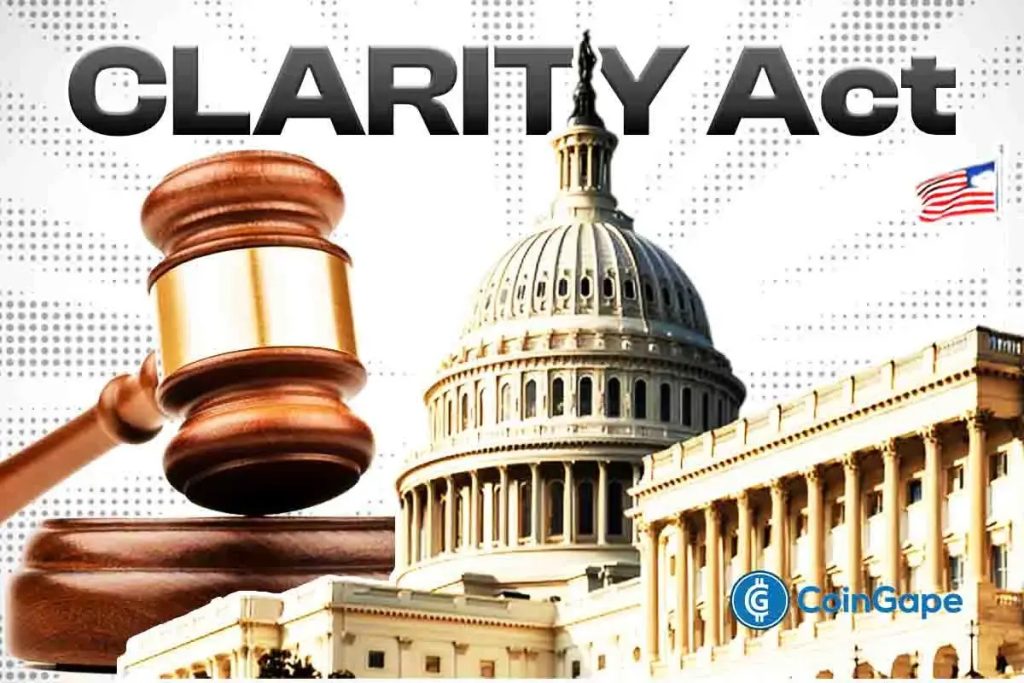
The xrp market structure bill 2026 is heating up right now. Senate committees are scheduling markups as we speak, in mid-January. You feel that shift in the air? After years of crypto sitting in regulatory limbo, this legislation could finally draw clear lines.

XRP Market Structure Bill 2026: Regulatory Clarity on the Horizon for Ripple’s Token
Short answer: the XRP Market Structure Bill refers to the crypto market structure legislation moving through the U.S. Senate in early 2026, aimed at splitting regulatory oversight cleanly between the SEC and CFTC. For XRP specifically, that would mean commodity status backed by law rather than just a favorable court ruling — and after years of legal limbo following the Ripple-SEC case, that distinction matters a lot for institutional adoption.
Editor’s update (August 27, 2026): Seven months on, the Senate still hasn’t passed this bill — but the SEC and CFTC issued a separate binding classification for XRP in March, and a lot has changed with ETFs and price action since. Read our full August 2026 XRP update for where things actually stand today.
XRP isn’t just another altcoin at this point — it has real utility in cross-border payments through Ripple’s network. But regulatory uncertainty held back a lot of institutional interest for years. This bill was designed to fix that, building on earlier efforts like FIT21 and the CLARITY Act discussions.
What Exactly Is the Market Structure Bill?
People tend to talk about “the market structure bill” as if it’s one specific, static piece of paper. It isn’t, really — it’s evolving crypto legislation that moved through Congress in stages, with key markups delayed multiple times but never fully abandoned.
At its core, the bill sets out to answer a deceptively simple question: who regulates what? The SEC handles securities; the CFTC handles commodities. Decentralized tokens tend to lean toward the commodity classification. For XRP, that distinction is significant. The Ripple lawsuit ended in 2025 with partial clarity — XRP was found not to be a security in secondary market sales — but a court ruling and full legislative backing carry very different weight. The bill would give that classification statutory permanence rather than case-specific precedent.
It’s a bit like traffic laws for a highway everyone already uses but no one polices consistently — without clear rules, institutions tend to stay on the sidelines rather than risk running afoul of an ambiguous standard. The bill aims to standardize trading venues, custody requirements, and token classification, replacing the case-by-case enforcement approach that defined the previous several years.
Where Things Stood in Early 2026
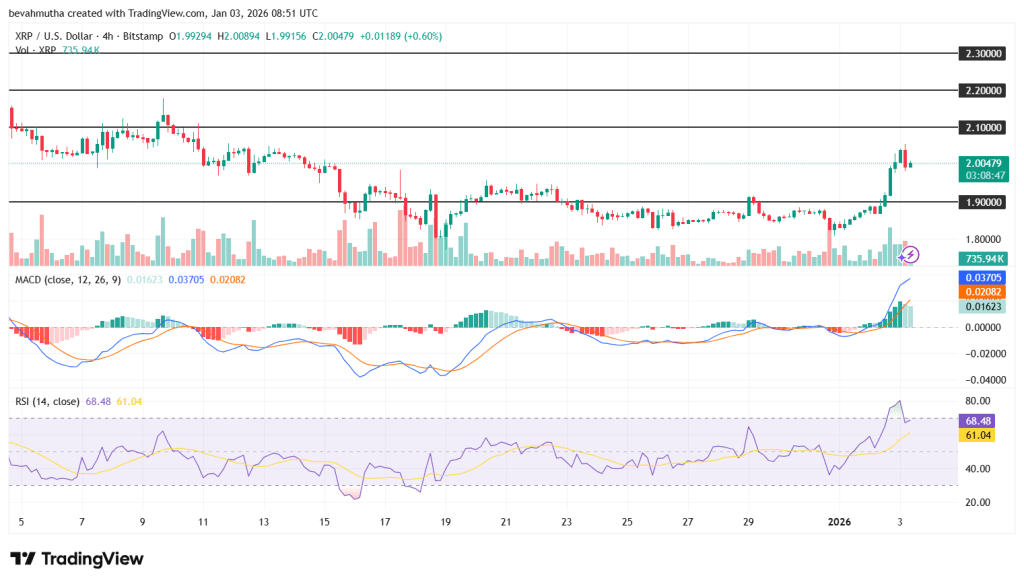
XRP started 2026 trading around $2, having rallied from late-December lows near $1.81 on anticipation of legislative movement. Senate Banking Committee Chairman Tim Scott announced a markup targeted for January 15, which then got pushed back over unresolved issues involving stablecoin yields — a fairly typical pattern for major financial legislation working its way through committee.
Bipartisan talks continued to advance regardless, with industry representatives meeting senators regularly throughout the process. One notable data point from that period: XRP spot ETFs, launched in late 2025, pulled in $1.3 billion in net inflows within their first 50 days — real institutional money moving in even before full regulatory clarity arrived.
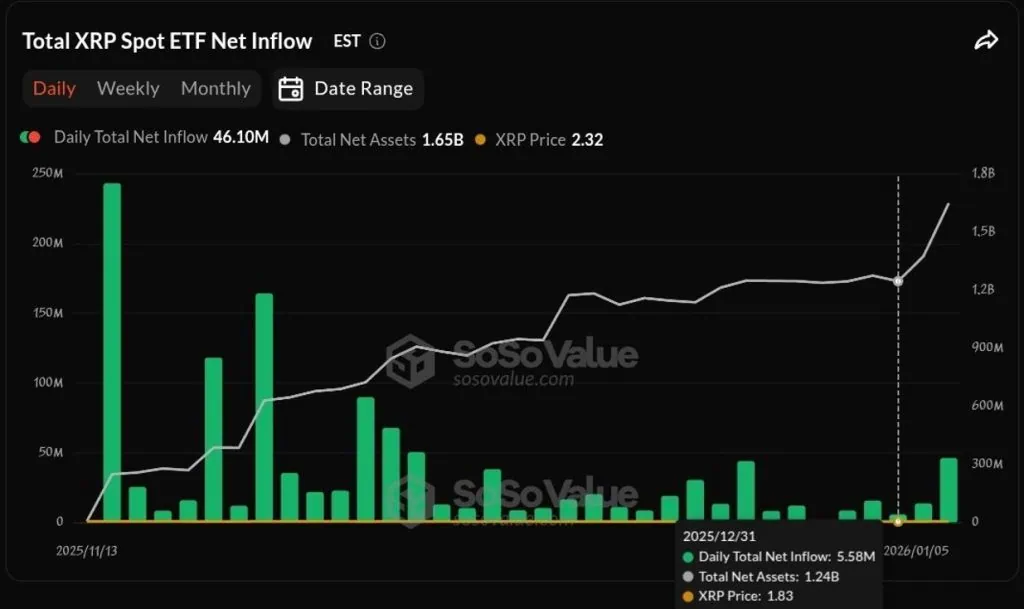
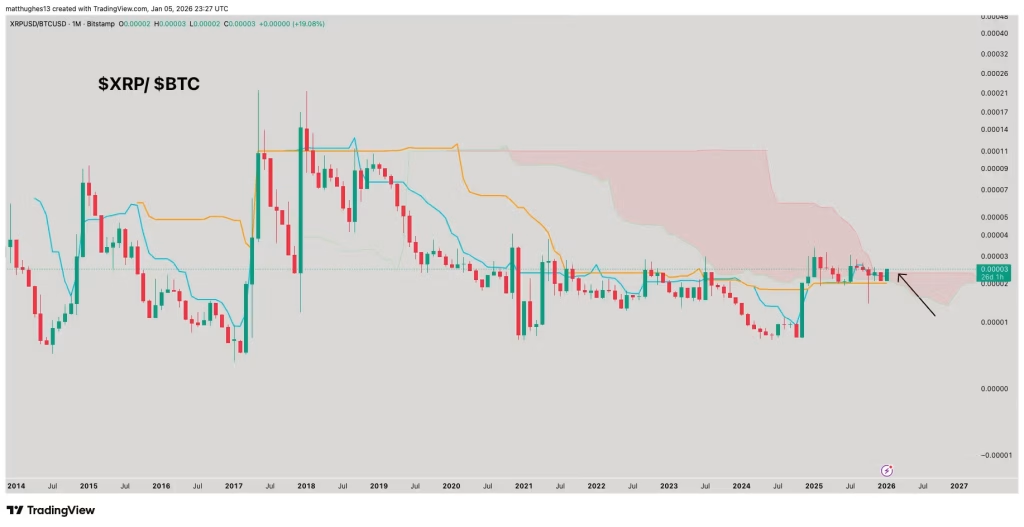
ETF inflows on that scale tighten available supply quickly — over 500 million XRP had already been removed from circulating exchange balances by that point. XRP also decoupled somewhat from Bitcoin’s price action early in the year: BTC was up roughly 4.5% year-to-date while XRP posted double-digit gains, which lines up with regulatory tailwinds hitting XRP more directly given its specific legal history.
Ripple’s broader business kept expanding alongside all of this too — UK FCA authorization and new banking partnerships for On-Demand Liquidity both landed while lawmakers were still debating the bill’s details.
Why the Bill Could Unlock Real Value
The upside case here is fairly straightforward: clear rules tend to bring hesitant institutions off the fence. If XRP secures commodity status definitively, banks can engage with meaningfully less compliance risk, which in theory drives more ODL volume and stronger utility-based demand rather than purely speculative trading.
Standard Chartered analysts projected $8 for XRP by the end of 2026, based on ETF flows and RLUSD stablecoin adoption — a call some considered conservative and others viewed as achievable only if the bill passed cleanly and on schedule. Supply dynamics were also working in XRP’s favor around that time, with exchange balances hitting multi-year lows as outflows to ETFs and self-custody wallets accelerated.
The case for the bill in short:
- Removes a major barrier to institutional participation
- Reduces the ongoing legal overhang that’s followed XRP for years
- Legitimizes XRP’s actual payments utility rather than treating it purely as a speculative asset
- Opens the door to a valuation re-rating that better reflects underlying fundamentals
None of this is guaranteed, though, and the risks are worth taking just as seriously.
Risks and Common Misconceptions
Delays plagued the process throughout early 2026, and partisan disagreements over stablecoin provisions specifically threatened to water down the final bill or push its timeline out further — Congress has a long track record of letting major crypto legislation stall for reasons unrelated to crypto itself.
One common misconception is that passage would trigger an instant price moonshot. It wouldn’t — markets tend to price in anticipation well ahead of any final vote, which is exactly what happened around earlier House passage of FIT21-related measures, followed by pullbacks whenever the process hit new delays. Another misconception: that XRP somehow needs this bill to survive. It doesn’t. XRP already functions well in markets like the UK and parts of Asia, and Ripple’s business kept moving regardless of the U.S. timeline. Full U.S. regulatory clarity would meaningfully accelerate things, but it isn’t existential for the token.
The underlying risks remain real regardless of the bill’s outcome: broader macro conditions, the Fed’s rate path, and general crypto market sentiment all still move XRP’s price the way they move any other digital asset. Worth noting too — on-chain activity on the XRP Ledger itself dipped during this period even as Ripple’s institutional wins piled up, an odd disconnect between network usage and business momentum that’s worth watching over time.
What to Actually Watch Going Forward
For anyone tracking this seriously, a few things matter more than the daily headlines. Track the actual markup schedule and any amendments touching stablecoins or DeFi specifically — those are the sections most likely to signal how strong (or watered-down) the final bill ends up being.
Monitor ETF flows on a regular basis; consistent monthly inflows above roughly $300 million have historically been read as a bullish signal for continued institutional interest. Keep an eye on Ripple’s own announcements too — banking licenses and new partnerships tend to drive long-term value independent of the legislative timeline. And size any position carefully: XRP stands to benefit disproportionately from U.S. regulatory clarity specifically, but that also means it can swing hard in the other direction if the bill stalls or gets diluted.
Frequently Asked Questions
What would the market structure bill actually change for XRP?
It would give XRP’s commodity classification the weight of federal law rather than relying on precedent from the Ripple-SEC court case, splitting oversight clearly between the SEC (securities) and CFTC (commodities).
Does XRP need this bill to keep functioning?
No. XRP already operates and is used for cross-border payments in markets outside the U.S., including the UK and parts of Asia. U.S. clarity would accelerate domestic institutional adoption specifically, but it isn’t existential for the token or Ripple’s broader business.
Would passing the bill instantly spike XRP’s price?
Not necessarily. Markets tend to price in anticipated regulatory outcomes well before a final vote happens, which is why price reactions to earlier related legislation (like FIT21) were often muted or even negative once the actual news hit.
How did the Ripple-SEC lawsuit actually end?
In 2025, the case concluded with a finding that XRP itself is not a security when sold on secondary markets (exchanges), though the earlier ruling on Ripple’s institutional sales remained more nuanced. That outcome gave XRP a degree of legal clarity, but a court ruling and comprehensive federal legislation are not the same thing in terms of durability.
A Longer-Term Perspective
The market structure bill was never really the endgame — it’s one milestone in a longer process of crypto maturing as an asset class, with tokens carrying actual use cases gradually separating from purely speculative ones. XRP is fairly well positioned in that shift, given years of legal overhang followed by what looks like real vindication on the utility side.
Institutions have generally allocated more to crypto with each passing cycle, and regulatory clarity tends to accelerate that trend rather than create it from scratch. Short-term price noise will keep happening regardless of any single bill’s outcome — the more durable question is whether the U.S. eventually settles into the kind of structured market that other jurisdictions have already built.

Top References Used
- Decrypt – Senate Crypto Market Structure Bill Markup Pushed to Late January – https://decrypt.co/354357/markup-senate-crypto-market-structure-bill-pushed-late-january
- FXEmpire – XRP News Today: Bullish Outlook Holds as Market Structure Vote Nears – https://www.fxempire.com/forecasts/article/xrp-news-today-bullish-outlook-holds-as-market-structure-vote-nears-1571383
- Yahoo Finance – Standard Chartered’s $8 XRP Target – https://finance.yahoo.com/news/standard-chartered-8-xrp-target-141317784.html
- CNBC – Crypto Lawmakers Are Preparing to Try Again on Major Bill – https://www.cnbc.com/2026/01/11/crypto-lawmakers-are-preparing-to-try-again-on-major-bill-what-can-happen-next.html
- CoinDesk – Crypto Market Structure Bill Markup Delayed to Last Week of January – https://www.coindesk.com/markets/2026/01/12/crypto-market-structure-bill-markup-delayed-to-last-week-of-january-senator-boozman-says
- Congress.gov – H.R. 3633 Full Text – https://www.congress.gov/bill/119th-congress/house-bill/3633/text
- Senate Banking Committee – Chairman Scott Announces Digital Asset Market Structure Markup – https://www.banking.senate.gov/newsroom/majority/chairman-scott-announces-digital-asset-market-structure-markup
- Disruption Banking – XRP ETF Boom: $1.4B Inflows in Early 2026 – https://www.disruptionbanking.com/2026/01/06/xrp-etf-boom-1-4b-inflows-in-early-2026/
- CoinGape – XRP Price Reclaims $2 After 10% Breakout – https://coingape.com/markets/xrp-price-reclaims-2-after-10-breakout-how-high-can-it-climb-in-january-2026/
- AInvest – XRP Regulatory Breakthrough and Technical Setup as a 2026 Growth Catalyst – https://www.ainvest.com/news/xrp-regulatory-breakthrough-technical-setup-catalyst-2026-growth-2601/
This is not financial advice. Crypto is volatile — always do your own research and only invest what you can afford to lose.