
Short answer: Polkadot’s parachain auctions let individual blockchain projects bid DOT tokens to lease a dedicated “parachain” slot connected to Polkadot’s central relay chain, giving them shared security and direct interoperability with every other connected chain instead of building standalone infrastructure from scratch. By April 2025, over 216 parachain projects had registered across Polkadot and its canary network Kusama, and the broader ecosystem counted more than 2,400 monthly active developers — real evidence that the model is proving out its scalability rather than staying purely theoretical.
Imagine a world where different blockchains operate like isolated islands, each with its own rules and its own native currency, unable to trade or communicate with one another effectively. That’s still the reality for much of crypto today. Polkadot set out to change that through its parachain auction system — a structure designed to link these isolated networks together into something closer to a connected archipelago. As the crypto market matured through regulatory shifts and technological upgrades heading toward 2026, understanding Polkadot’s specific role in interoperability became increasingly relevant, since this isn’t really about one network alone — it’s a broader trend reshaping how altcoins connect and compete.
Understanding Parachain Auctions
At its core, Polkadot is a multi-chain network founded by Ethereum co-founder Gavin Wood. It consists of a central “relay chain” that provides security and coordination, surrounded by “parachains” — specialized blockchains that plug into it for enhanced performance and shared infrastructure.
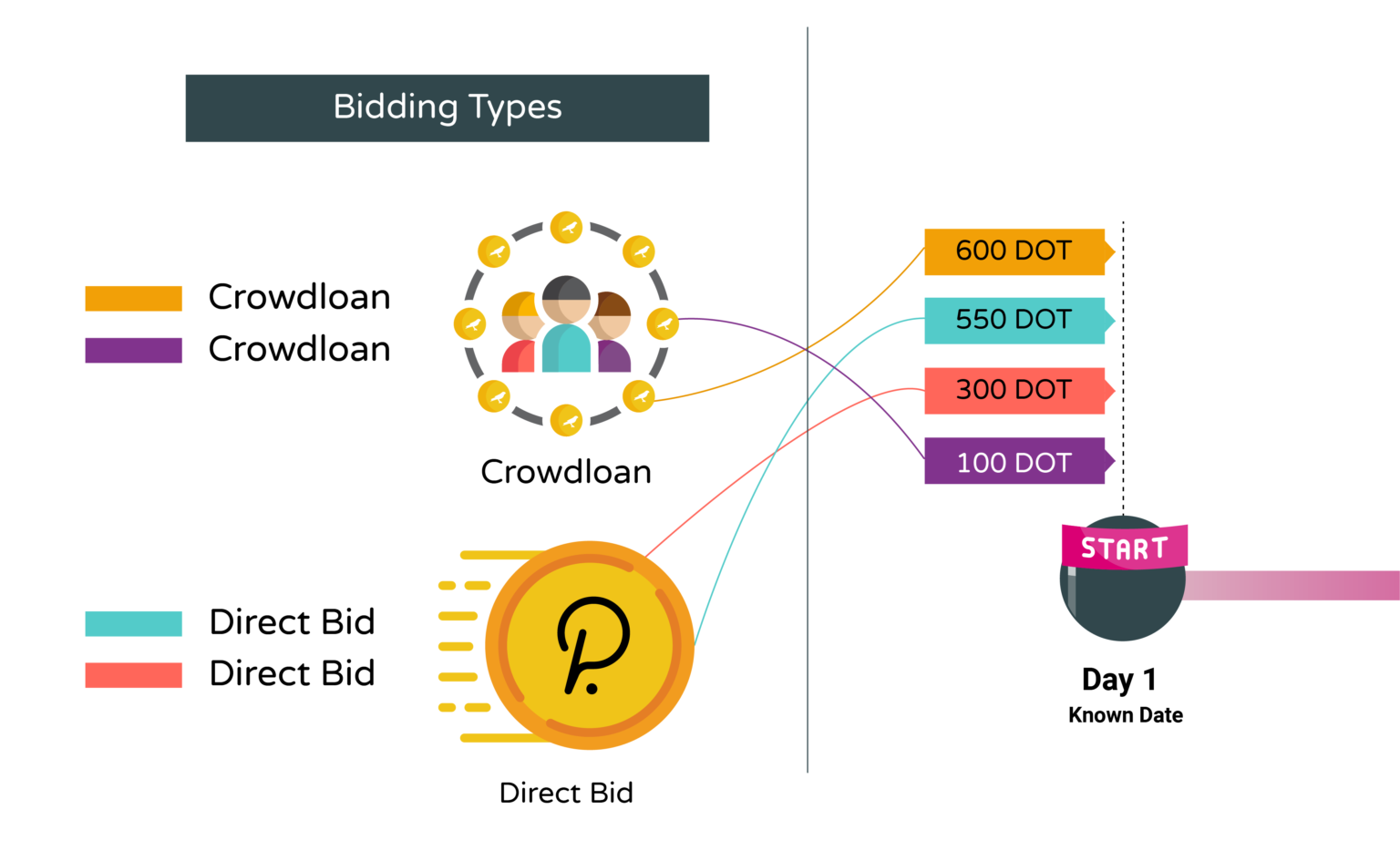
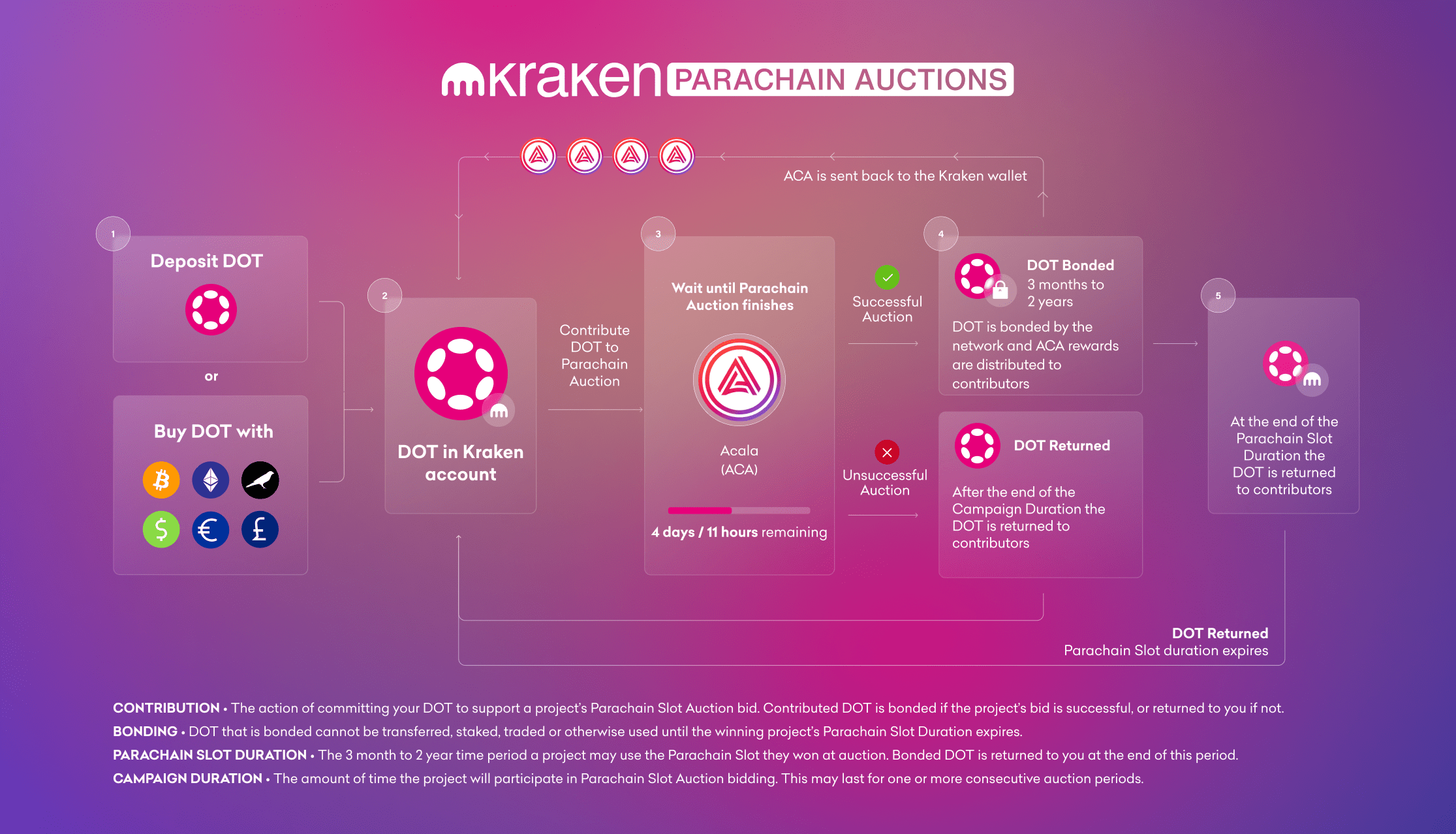
Parachain auctions are how these limited slots get allocated. Think of it something like bidding for prime real estate in a busy city. Projects compete by locking up DOT tokens — the network’s native currency — through a process called crowdloans, where individual supporters lend their own DOT to back a project they believe in. The highest bidder wins a lease on a parachain slot, typically lasting up to two years, giving that project dedicated access to the relay chain’s resources and letting it process transactions efficiently without constant competition for space.
The auction itself uses a “candle” mechanism specifically designed to prevent last-minute sniping — bids get accepted over a set period, but the actual winner is determined retroactively from a randomly chosen point within that window, which adds a real layer of fairness to the process. Once connected, parachains benefit from shared security, since validators on the relay chain secure every attached chain collectively, eliminating the need for each individual project to build and maintain its own validator set. It’s something like sharing one top-tier security system across an entire apartment complex, rather than every unit hiring its own separate guard.
Interoperability as a Growing Priority
Interoperability isn’t just a buzzword at this point — it’s become a genuine necessity. As blockchains proliferate, the ability to move assets and data seamlessly between them increasingly drives real adoption. Polkadot’s Cross-Consensus Message Passing protocol lets parachains communicate directly with one another, fostering new applications across DeFi, NFTs, and beyond. Projects like Moonriver, for instance, secured their own parachain slots specifically to build cross-chain DeFi products, which meaningfully spiked on-chain activity across the ecosystem.
One interesting example worth watching involves potential integrations with XRP. While not yet fully realized, Polkadot’s overall focus on bridging separate ecosystems complements XRP’s own strength in cross-border payments reasonably well. Developments like Hyperbridge’s expansion of interoperability tooling to Polygon hint at where broader connections across chains might head next. XRP’s fast, low-cost transfers could plausibly pair with Polkadot’s parachain infrastructure for hybrid use cases — tokenized real-world assets moving fluidly between networks being one concrete example worth following.
Broader trends showed altcoins genuinely benefiting from this model. Polkadot’s ecosystem counted over 2,400 monthly active developers by this point, outpacing many rival networks and signaling real, sustained growth. This positions Polkadot as a genuine hub for altcoin innovation, where smaller chains can thrive without shouldering the full cost of building standalone infrastructure on their own.

Pros, Risks, and Common Misconceptions
The genuine advantages here are fairly clear. Parachains offer real scalability — Polkadot as a whole can handle thousands of transactions per second across its connected chains collectively, all while maintaining meaningful decentralization. Shared security reduces attack risk considerably, and interoperability opens the door for altcoins to collaborate directly, potentially boosting both their practical utility and their value. For XRP specifically, easier integration into DeFi protocols running on Polkadot parachains could amplify its existing strength in payments even further.
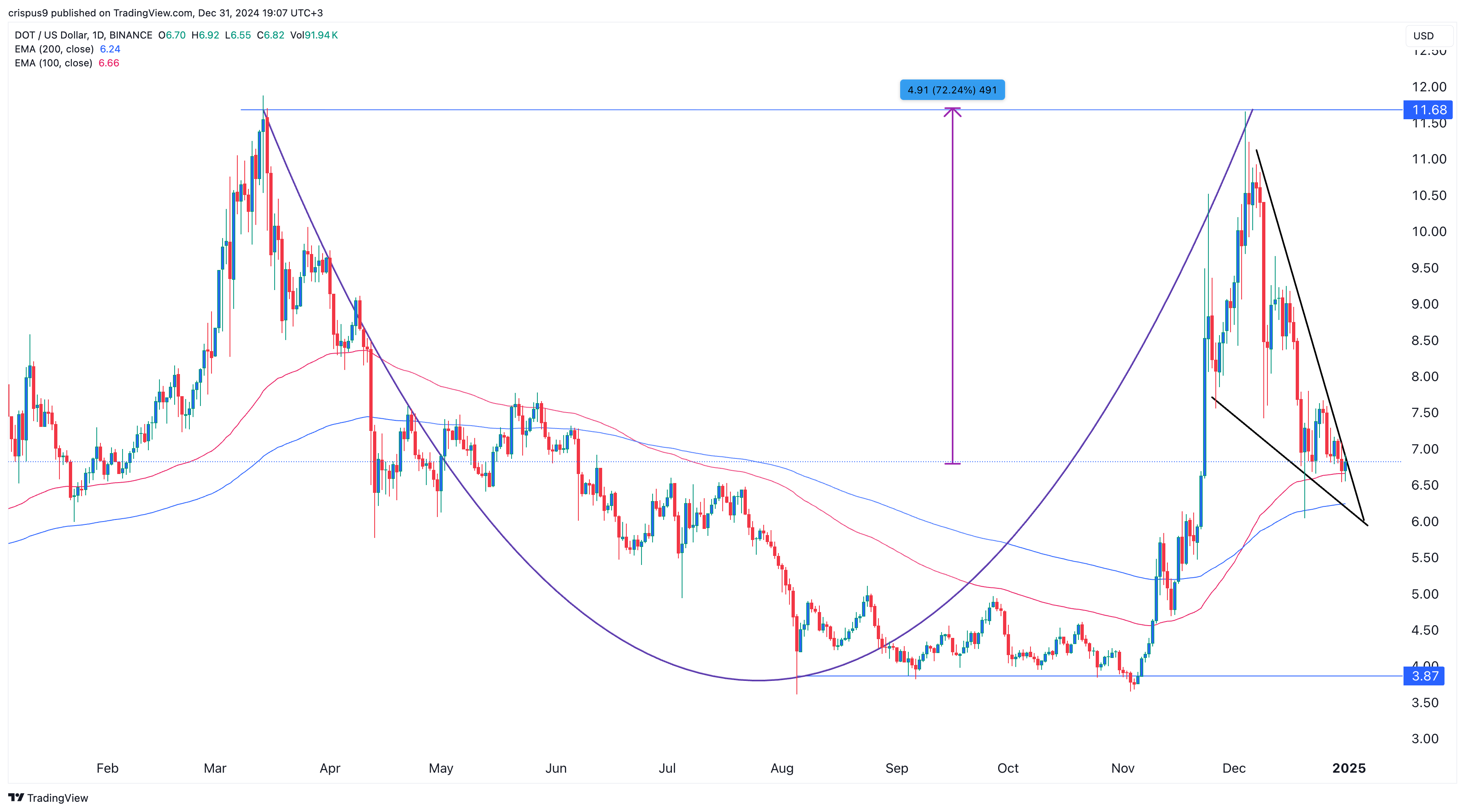
Real risks exist alongside these advantages, though. Auctions require locking up significant amounts of DOT, which creates a real opportunity cost if the project a supporter backed ends up losing the auction. Market volatility affects DOT’s price directly too, which in turn impacts overall bidding power — Polkadot’s market cap sat around $2.89 billion in late 2025, down considerably from earlier peaks but reasonably stable amid broader crypto market trends. Regulatory uncertainty, including ongoing scrutiny from the SEC, could slow adoption of the model further as well.
A common misconception treats parachains as simply another form of sidechain. That’s not quite accurate — unlike typical sidechains, which often lack any shared security model, parachains inherit the relay chain’s full validation strength, making them considerably more secure by design. Another persistent myth suggests auctions only favor large, well-capitalized players. In reality, crowdloans genuinely democratize participation, letting everyday retail users contribute smaller amounts and earn rewards alongside the bigger backers.
Actionable Insights for Investors
Curious investors can start by monitoring upcoming auctions directly through Polkadot’s official channels or through Kusama, its canary network used for testing new features first. Tracking metrics like the number of active parachains — over 100 slots were being targeted at this point — alongside developer activity reports from sources like Electric Capital offers a useful window into the ecosystem’s ongoing health.
Considering diversification into DOT for direct exposure to the broader interoperability trend makes sense for some investors. Watching for any concrete XRP-Polkadot bridging developments is worth doing too — if genuine integrations materialize, that could plausibly signal renewed altcoin momentum tied to the two ecosystems combining strengths. Using on-chain data tools like Subscan helps gauge individual parachain health beyond price alone.
For beginners specifically, staking DOT through established exchanges can earn yield while directly supporting network security. Assessing tokenomics matters too — Polkadot’s supply is capped at 2.1 billion DOT by 2040, which curbs long-term inflation and works in favor of patient holders.
Frequently Asked Questions
What is a Polkadot parachain auction?
A parachain auction is how projects bid DOT tokens, often raised through crowdloans, to lease a dedicated parachain slot connected to Polkadot’s relay chain. The winning project gets shared security and interoperability with other connected chains for a lease period of up to two years.
How do parachains differ from sidechains?
Unlike typical sidechains, which often lack any shared security model of their own, parachains inherit the relay chain’s full validator security. This makes them considerably more secure than a standalone sidechain that has to build and maintain its own independent validator set.
Can everyday retail investors participate in parachain auctions?
Yes. Crowdloans let retail users contribute DOT to back a project’s bid without needing large capital individually. Contributors typically earn rewards from the winning project in exchange for lending their tokens toward the auction.
Is there a real connection between XRP and Polkadot?
Not a formal, fully realized one as of this writing. The two ecosystems’ strengths complement each other conceptually — XRP’s fast payments and Polkadot’s interoperability infrastructure — but concrete bridging integrations remain more speculative than confirmed.
A Long-Term Bet on Connected Chains
Polkadot’s parachain auctions aren’t a short-term gimmick — they’re building genuine infrastructure for a more interconnected blockchain world over time. As altcoins continue evolving, this model could elevate smaller underdogs by enabling real, seamless collaboration, much like XRP’s potential role in global payments could be amplified further through deeper integration with Polkadot’s ecosystem. In a market projected to reach as many as 100 million daily active users by 2028, interoperability leaders like Polkadot stand to gain considerably from that continued growth.
Will Polkadot’s vision of a genuinely unified blockchain landscape eventually redefine how altcoins operate, or will isolated silos persist regardless of the infrastructure available to connect them?
References Used for This Article
- Moonbeam Network – How Polkadot Parachain Auctions Work – https://moonbeam.network/news/how-polkadot-parachain-auctions-work/
- Kraken Blog – Polkadot Parachain Auctions Are Now Live On Kraken – https://blog.kraken.com/news/polkadot-parachain-auctions-are-now-live-on-kraken
- Global Market Insights – Blockchain Interoperability Market Size and Forecast Report, 2032 – https://www.gminsights.com/industry-analysis/blockchain-interoperability-market
- crypto.news – Polkadot Price May Wake Up in 2025 as a Rare Chart Pattern Forms – https://crypto.news/polkadot-price-may-wake-up-in-2025-as-a-rare-chart-pattern-forms/
This is not financial advice. Crypto is volatile — always do your own research and only invest what you can afford to lose.