The history and evolution of Bitcoin began on January 3, 2009, when an anonymous creator known as Satoshi Nakamoto mined the genesis block

The History and Evolution of Bitcoin: From 2009 to 2026 Timeline of Key Milestones, Halvings, Adoption Growth, and Lessons Learned—Original Narrative with Data Charts
Short answer: Bitcoin began on January 3, 2009, when Satoshi Nakamoto mined the genesis block, embedding a headline about bank bailouts as a quiet rebellion against traditional finance. Since then it’s moved through four halvings, multiple crashes, an ETF approval, and a run past $126,000 — evolving from an obscure experiment into a trillion-dollar asset class. Here’s the full timeline, and what it teaches about where Bitcoin might go next.
Why Bitcoin’s Origins Still Resonate Today
Bitcoin emerged from the ashes of the 2008 financial meltdown. Satoshi’s whitepaper, published that October, proposed a peer-to-peer electronic cash system free from central authorities. It solved the double-spending problem through blockchain — a distributed ledger secured by cryptography. Like inventing email in a world of postal mail, Bitcoin offered instant, borderless transfers without intermediaries.
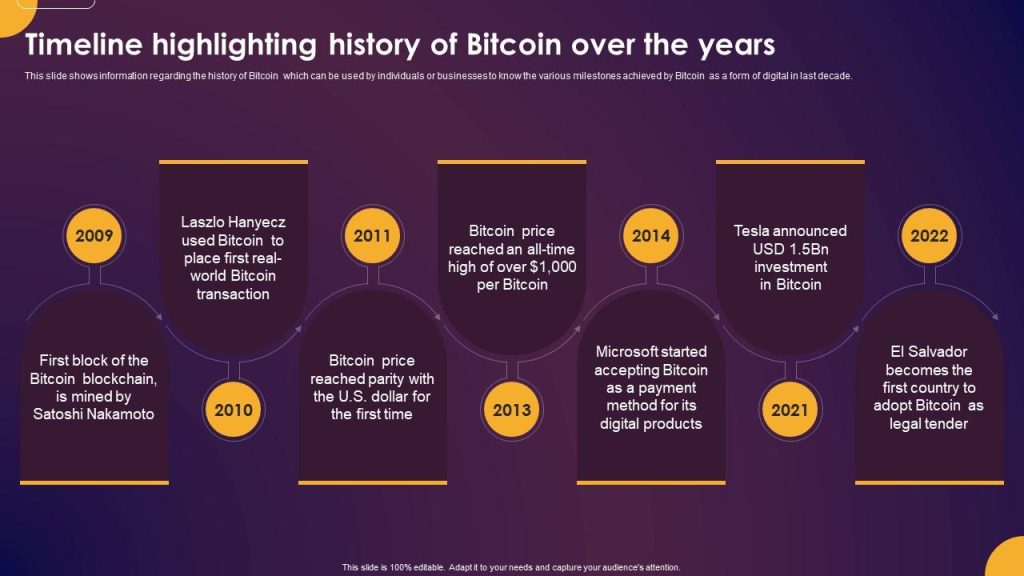
Its early days were humble, though. In 2009, Bitcoin had no monetary value at all — enthusiasts mined it on personal computers, drawn to the idea rather than any hope of profit. By 2010, the first real-world transaction happened: 10,000 BTC for two pizzas, now worth billions. That “pizza day” moment proved Bitcoin could function as currency, but it also revealed just how volatile it would be.
Looking back from 2026, these foundations explain a lot of Bitcoin’s resilience since. Amid ongoing economic uncertainty — inflation spikes, geopolitical tension — Bitcoin has settled into a role as “digital gold,” a hedge backed by a fixed supply of 21 million coins.
Breaking Down the Core Concepts
At its heart, Bitcoin is a decentralized network. Miners validate transactions using proof-of-work, spending real energy to solve computational puzzles and add blocks to the chain. That process is what secures the network, though it’s also drawn real criticism over environmental impact.
Halvings are central to Bitcoin’s design. Every 210,000 blocks — roughly four years — the mining reward cuts in half, reducing new supply. The first halving in November 2012 dropped rewards from 50 to 25 BTC. Later ones followed in July 2016 (to 12.5 BTC), May 2020 (to 6.25 BTC), and April 2024 (to 3.125 BTC). These events echo gold’s built-in scarcity, and they’ve often correlated with price surges tied to the resulting supply shock.
Adoption tells its own story here. From niche forums to mainstream finance, Bitcoin’s user base has exploded — global crypto adoption sits around 9.9% as of 2026, with roughly 559 million users worldwide. That S-curve mirrors the internet’s own rise, accelerating as infrastructure keeps improving.
Think of Bitcoin’s trajectory like a startup’s: early adopters dealt with real bugs and real skepticism, but iterative improvements — the Lightning Network for faster transactions, for example — steadily improved usability over time.
Timeline of Key Milestones
2009-2012: Inception and Early Struggles
- 2009: Genesis block mined. Bitcoin software released publicly.
- 2010: First exchange rate set at $0.00099 per BTC. Pizza day transaction.
- 2011: Price hits $1, bubbles to $31, then crashes 94% to $2. Parity with USD sparks early media interest.
- 2012: First halving. Price climbs to $13. Foundation established for regulatory advocacy.
These years built the earliest community. Volatility was extreme, but so was the pace of innovation.
2013-2016: Boom, Bust, and Recovery
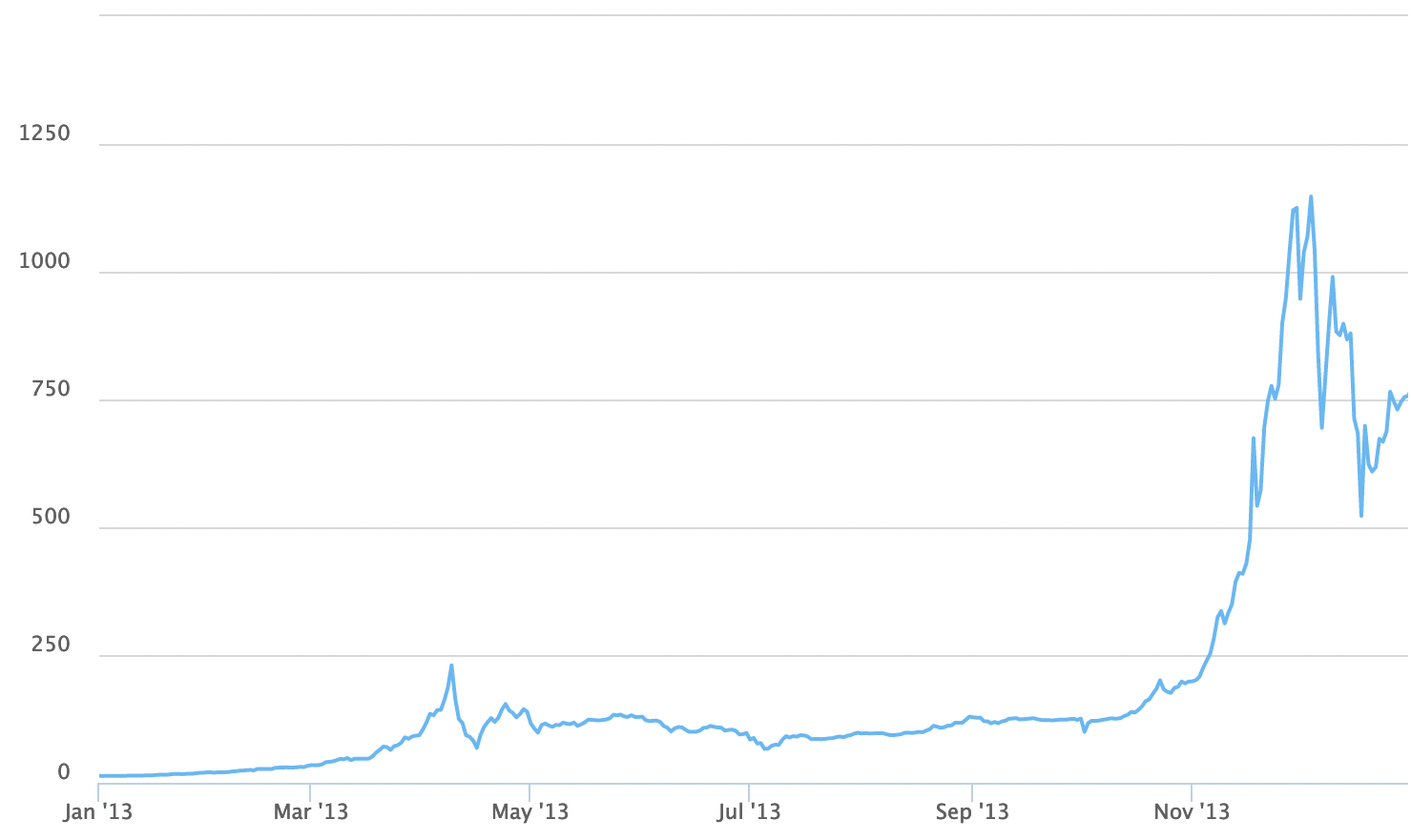
- 2013: Price surpasses $1,000 amid the Cyprus banking crisis. China bans financial institutions from handling BTC, causing a dip.
- 2014: Mt. Gox hack loses 850,000 BTC, worth billions today. Price falls 58%.
- 2015: Recovery begins alongside improved security protocols across exchanges.
- 2016: Second halving. Price roughly doubles to around $966. Brexit and broader economic instability boost appeal.
This period tested Bitcoin’s durability directly, and it proved the network could survive genuine scandal without collapsing.
2017-2020: Mainstream Breakthrough and Pandemic Resilience
- 2017: Bull run to nearly $20,000, fueled largely by ICO hype. CME launches futures, adding institutional legitimacy.
- 2018: Bear market; price drops 73% to $3,800.
- 2019: Rebound to $7,400 as Facebook announces Libra, drawing heavy regulatory scrutiny.
- 2020: Third halving. COVID crash to $3,800, then a surge to $29,000 as institutions started entering in size.
Bitcoin’s role as a safe haven solidified during this period of global turmoil, for better or worse.
2021-2023: Institutional Era and Market Corrections
- 2021: All-time high near $69,000. El Salvador adopts BTC as legal tender. Tesla buys $1.5 billion worth.
- 2022: FTX collapse triggers a 65% drop to $16,600. The bear market exposes overleveraged players across the industry.
- 2023: Recovery to $42,000. BlackRock files for a spot ETF, signaling Wall Street’s real embrace of the asset.
The lessons from these crashes were expensive, but they pushed real risk-management discipline into an industry that badly needed it.
2024-2026: Maturity and Institutional Scale
- 2024: Spot ETF approvals in January drive major inflows. Fourth halving in April. Price crosses $100,000 for the first time.
- 2025: Peaks at $126,000 before correcting to $87,800 amid profit-taking. Nation-state interest grows further; MicroStrategy continues expanding its treasury holdings.
- Early 2026: Price hovers around $89,000 as the year opens, with several analysts calling for a run toward $150,000 by year-end, driven by expectations of lower interest rates and continued institutional inflows.
Across all of this, Bitcoin’s arc has been a shift from speculative curiosity toward something closer to a strategic reserve asset.

Current Trends and Real-World Relevance
In 2026, Bitcoin’s relevance extends well beyond price. Institutional adoption keeps rising — firms like Galaxy Digital have floated forecasts as high as $250,000 by 2027. Stablecoins are integrating deeper into the ecosystem, enabling practical real-world applications like cross-border remittances.
Other trends worth tracking: the tokenization of traditional assets, and Bitcoin’s growing presence in national reserves. El Salvador’s experience continues to inspire other governments to consider similar moves, while ongoing energy debates are pushing miners toward renewable sources.
Adoption curves show an S-shaped trajectory that’s actually moving faster than the internet’s own historical rise.

With roughly 559 million users globally, Bitcoin’s influence now extends well into broader fintech — from DeFi to NFTs and beyond.
Pros, Risks, and Common Misconceptions
Bitcoin’s advantages come through clearly across its history: decentralization protects against censorship, built-in scarcity offers a hedge against inflation, and full transparency on-chain builds a certain kind of trust that traditional finance can’t easily replicate. It’s also opened up real financial access for unbanked populations in a way few other tools have.
The risks are just as real, though. Volatility can wipe out gains fast — the 2022 crash is a clear example. Regulatory uncertainty persists, with outright bans in some countries continuing to limit growth. And energy use remains a genuine environmental concern, with Bitcoin’s network consuming roughly as much power as some entire nations.
A few misconceptions are worth clearing up. “Bitcoin is anonymous” — not quite; transactions are pseudonymous but traceable on a public ledger. “It’s a Ponzi scheme” — unlike an actual Ponzi scheme, Bitcoin has genuine utility and no central promoter collecting from new entrants to pay old ones. And halvings aren’t a guarantee of a price spike; broader market forces still dominate the outcome each cycle.
Actionable Insights for Investors
Consider Bitcoin’s trajectory over the long run rather than reacting to any single week. Watch the halving cycle — the next one in 2028 could spark renewed rallies, based on the historical pattern. Keep an eye on adoption metrics too; a rising user count has historically signaled real underlying strength rather than pure speculation.
Diversify according to your own risk tolerance, and track institutional moves like ETF flows as a leading indicator. Tools like TradingView’s Bitcoin chart make it easy to follow price action directly rather than relying on secondhand summaries.
Stay informed through sources like CoinDesk, and remember that patience has historically paid off — the earliest holders weathered genuinely brutal storms to get where they are now.
Frequently Asked Questions
Who actually created Bitcoin?
An anonymous person or group using the pseudonym Satoshi Nakamoto, who published Bitcoin’s whitepaper in October 2008 and mined the first block in January 2009. Their real identity has never been confirmed.
What actually happens during a Bitcoin halving?
The reward miners receive for adding a new block gets cut in half, roughly every four years. This slows the rate at which new Bitcoin enters circulation, reinforcing the asset’s built-in scarcity over time.
Are Bitcoin transactions actually anonymous?
No — they’re pseudonymous. Every transaction is publicly visible on the blockchain tied to a wallet address, and with enough analysis, those addresses can often be linked back to real identities.
Does a halving guarantee Bitcoin’s price will go up?
No. Halvings have historically correlated with price increases, but that’s not a guarantee — broader market conditions, macroeconomic factors, and investor sentiment all play a bigger role in any given cycle.
A Long-Term Perspective
Bitcoin’s path from obscure experiment to global force teaches a lesson in endurance more than anything else. Through halvings, booms, and busts, it’s evolved into a genuinely mature asset. With adoption approaching 10% globally, Bitcoin continues to challenge how fiat systems work — whether or not that ends in a fully decentralized future.
What if Bitcoin’s real revolution is still just getting started — could it end up redefining money itself?
Top References Used for This Article
- Bankrate – Bitcoin’s Price History With Charts From 2009 To 2025 – https://www.bankrate.com/investing/bitcoin-price-history/
- Bitbo – Bitcoin Price History Chart (2009-2025) – https://charts.bitbo.io/price/
- Wikipedia – History of Bitcoin – https://en.wikipedia.org/wiki/History_of_bitcoin
- OANDA – Bitcoin’s Price History (2009-2025): Key Events and Insights – https://www.oanda.com/us-en/trade-tap-blog/asset-classes/crypto/oanda-bitcoin-price-history-key-market-events-data-charts-insights-volatility/
- Demand Sage – Bitcoin Price History (2009 to 2026): Data & Analysis – https://www.demandsage.com/bitcoin-price-history/
- Investopedia – Bitcoin’s Price History – https://www.investopedia.com/articles/forex/121815/bitcoins-price-history.asp
- 99Bitcoins – Bitcoin Price History Chart + Historical Events 2009-2026 – https://99bitcoins.com/cryptocurrency/bitcoin/historical-price/
- CoinGecko – Bitcoin Halving Countdown – https://www.coingecko.com/en/coins/bitcoin/bitcoin-halving
- Demand Sage – Global Crypto Adoption (2026): Users, Rates & Country Data – https://www.demandsage.com/crypto-adoption-statistics/
- Bitwise – The Year Ahead: 10 Crypto Predictions for 2026 – https://bitwiseinvestments.com/crypto-market-insights/the-year-ahead-10-crypto-predictions-for-2026
This is not financial advice. Crypto is volatile — always do your own research and only invest what you can afford to lose.
Read More