As we enter 2026, the cryptocurrency market stands at a crossroads, with bitcoin price prediction 2026 dominating discussions among investors.

Bitcoin and Crypto Outlook for 2026: Bull Run Extension or Cycle Peak?
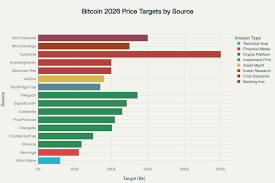
Short answer: Bitcoin enters the back half of 2026 sitting at a genuine crossroads. After a volatile 2025 that saw the price dip roughly 6% overall, analysts are split between a bull-run extension toward $150,000-$250,000 and the possibility that the market is closer to a cycle peak. Institutional money via ETFs is the strongest bullish argument; quantum computing risk and plain old volatility are the clearest counterweights. Here’s how the case breaks down on both sides.
Bitcoin’s journey has always been cyclical, tied to halving events that cut mining rewards and have historically sparked major price surges. But 2026 could break that mold. Analysts at firms like Grayscale and Bitwise have suggested a departure from the traditional four-year cycle, driven by broader institutional adoption rather than pure retail speculation. Balanced perspective matters here, though — volatility hasn’t gone anywhere, and emerging risks like quantum computing add a genuinely new layer of uncertainty that earlier cycles didn’t have to contend with.
Decoding Bitcoin’s Market Cycles
To understand where Bitcoin’s price might head this year, start with the basics. Bitcoin runs on a proof-of-work blockchain, where halvings occur roughly every four years, cutting the supply of new coins in half. Think of it like a digital gold rush where the gold gets progressively harder to mine over time, which can push value higher if demand holds steady or grows.
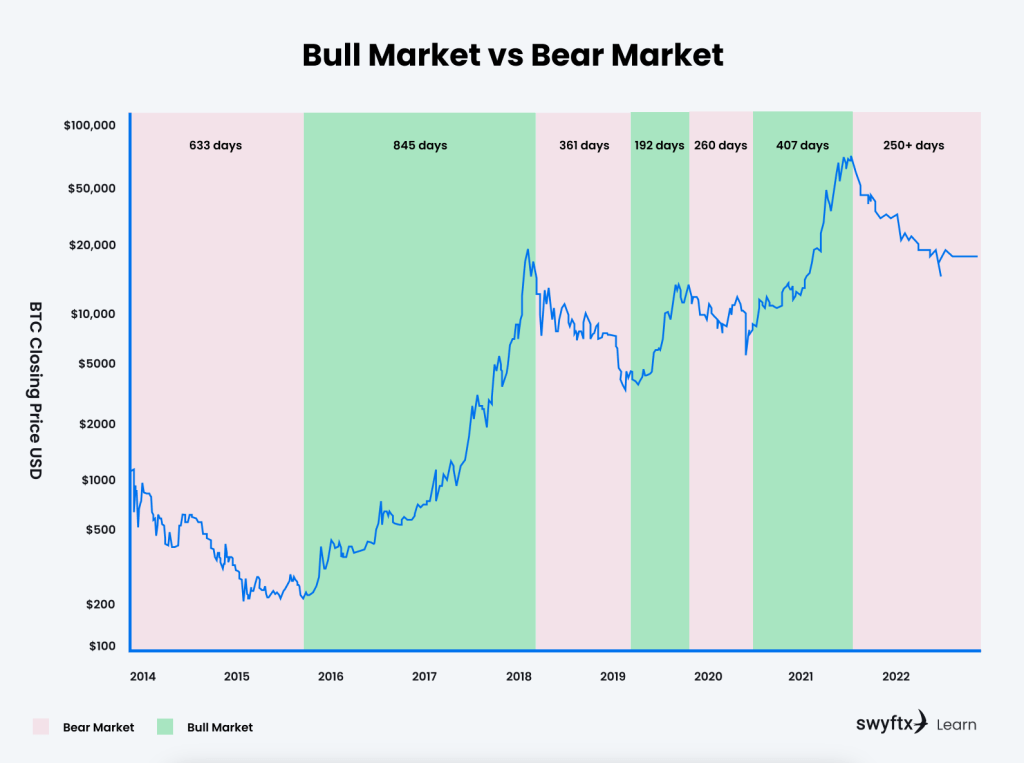
The last halving in 2024 set the stage for 2025’s genuinely mixed performance. Prices fluctuated wildly, but the underlying trend pointed upward. Research from K33, for instance, pointed to a strong rebound in 2026, fueled by Federal Reserve rate cuts and supportive policy shifts. This isn’t hype — it’s grounded in real economic conditions that tend to favor risk assets like crypto.
Forecasting Bitcoin’s price often comes down to historical pattern-matching. Past cycles saw peaks followed by 80% drawdowns, but each recovery brought new highs above the last cycle’s peak. If that pattern holds, BTC could well extend its bull run further. If instead we’re closer to a cycle peak, a real correction could follow — some more bearish forecasts have floated drops back toward $40,000 as a possibility.
Current Trends Shaping the Crypto Landscape
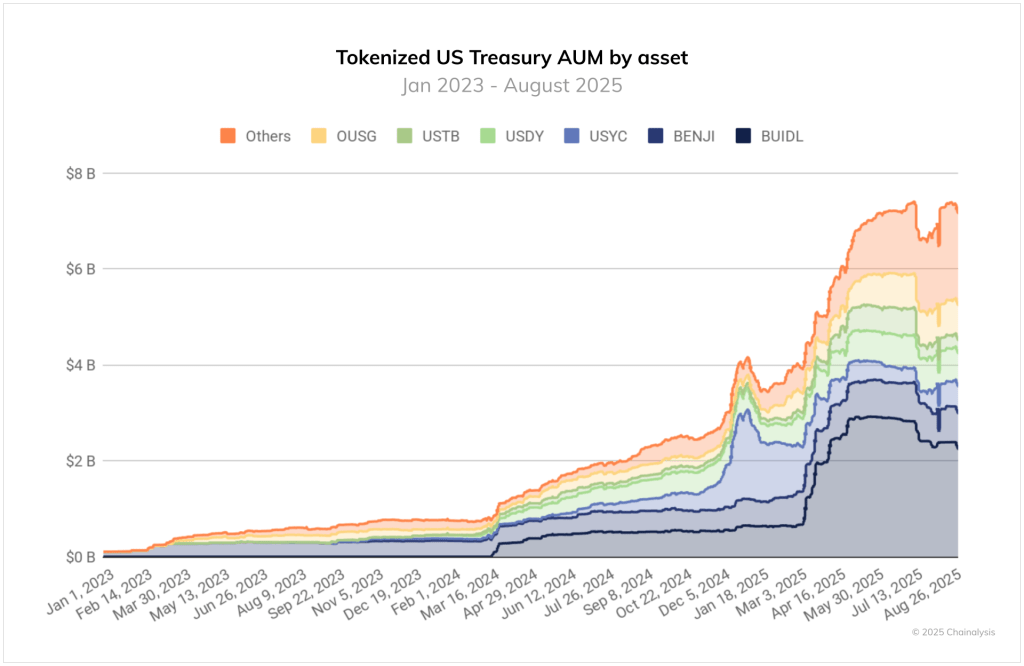
Institutional adoption via ETFs has genuinely transformed crypto’s investor base. In 2025, spot Bitcoin ETFs attracted net inflows of around $21.8 billion, according to data from The Block — that’s not retail frenzy, that’s serious capital from wirehouses like Charles Schwab, which has signaled plans to enter Bitcoin spot trading in 2026.
ETFs aren’t limited to Bitcoin either. Ethereum and Solana products followed the same playbook, with Ethereum ETFs netting $9.6 billion in 2025 alone. DL News has projected Bitcoin ETF holdings could reach $180-220 billion by the end of 2026. Inflows at that scale signal a real shift: crypto moving from speculative sideshow toward genuine portfolio staple for institutional allocators.
Regulatory progress has added its own momentum here. Grayscale anticipated bipartisan U.S. legislation arriving in 2026 that would integrate crypto more formally into traditional finance, and Coinbase’s institutional outlook has highlighted tokenization and stablecoins as themes that clearer rules should accelerate. Globally, frameworks like Europe’s MiCA continue maturing, reducing uncertainty and drawing in more capital that had previously stayed on the sidelines.
Real-world relevance extends well beyond pure finance too. Chainlink’s oracles, for example, let smart contracts on altcoins pull in real-world data, powering practical DeFi applications — supply chain tracking or automated insurance payouts are two concrete examples that go beyond simple token speculation.
The Case for a Bull Run Extension
Institutional adoption is the clearest tailwind here — ETFs provide easy, regulated access that lowers real barriers for pension funds and endowments that couldn’t otherwise touch crypto directly. Bitwise has even predicted Bitcoin will show lower volatility than individual stocks like Nvidia in 2026, which, if it holds, makes the asset meaningfully more appealing to conservative institutional mandates.
Regulatory tailwinds could unlock significant additional capital too. With clearer laws, banks might start offering custody and lending services directly, something several forecasts have floated as increasingly plausible. Charles Hoskinson of Cardano has gone as far as envisioning BTC reaching $250,000, pointing to fixed supply against rising demand as the core driver.
Macro conditions matter here too — continued Fed easing tends to favor Bitcoin as an inflation hedge in the same way it favors other risk assets. If gold has long been the traditional safe haven, Bitcoin has increasingly positioned itself as the digital equivalent, with scarcity built directly into its code rather than dependent on mining economics.
The Risks: Volatility, Quantum Threats, and More
No honest outlook skips the risks, though. Volatility remains crypto’s defining feature — prices can swing 10% in a single day, wiping out gains almost as fast as they built up. Bitcoin’s 6% dip through 2025 was a reminder of exactly that.
A more novel, longer-term threat is quantum computing. Deloitte has warned that sufficiently advanced quantum machines could theoretically crack Bitcoin’s encryption and expose private keys. It’s not an imminent risk — CoinDesk has estimated the necessary hardware advances could still take 5-10 years — but it’s genuinely worth monitoring rather than dismissing outright. Chainalysis has noted that a sufficiently powerful quantum computer could compromise blockchain security in principle, though experts at firms like River Financial argue the near-term threat is more theoretical than practical right now.
Common misconceptions tend to amplify the fear here beyond what’s warranted. Many assume quantum threats are essentially imminent, but Fortune’s reporting has suggested 2030 as a more realistic earliest timeline for real risk. Another persistent myth is that crypto remains entirely unregulated chaos — in truth, regulatory progress has been steady, even if real gaps remain that still invite scams or manipulation in certain corners of the market.
On balance, volatility can be managed through diversification, and quantum-resistant cryptographic upgrades are already in active development across the industry.

Addressing Common Misconceptions
One frequent error is viewing Bitcoin purely through a short-term lens. The cycle-level data shows genuine long-term appreciation, even though panic-selling during any given dip remains extremely common in practice.
Another misconception is assuming ETFs eliminate risk entirely. They democratize access meaningfully, but they don’t shield investors from the underlying market’s swings — an ETF holder still feels the full volatility of the asset itself.
And a price forecast for 2026 isn’t crystal-ball gazing, whatever the skeptics say — it’s informed by real data, not a guarantee of any specific outcome. The “crypto is a get-rich-quick scheme” framing also tends to ignore its growing genuine utility across fintech infrastructure.
Actionable Insights for Investors
So what’s actually worth doing with all this? Start by monitoring ETF inflows — they’re a genuinely useful signal of institutional sentiment. Tools like CoinGlass track daily flows, and sustained positive inflows would tend to confirm a bull-run extension is still intact.
Watch regulatory news closely too. Bipartisan legislative progress in 2026 has the potential to trigger real rallies when it lands. Consider diversifying into altcoins built on infrastructure like Chainlink’s oracles, which bring real-world data integration into the picture rather than relying on speculation alone. And think in terms of the long run: if Bitcoin does reach the $150,000-$250,000 range some forecasters have floated, position according to your own risk tolerance rather than chasing the number itself — and always size any single bet sensibly.
For ongoing price context, TradingView’s BTCUSD chart is a solid tool for tracking historical patterns directly rather than relying on secondhand summaries.
Frequently Asked Questions
Is Bitcoin more likely to extend its bull run or hit a cycle peak in 2026?
Opinions genuinely diverge here. Bullish analysts point to sustained ETF inflows and regulatory progress as reasons this cycle could break from the historical four-year pattern; more cautious voices note that every prior cycle eventually corrected sharply after a peak, and there’s no guarantee this one is fundamentally different.
How real is the quantum computing threat to Bitcoin right now?
It’s a genuine long-term concern rather than an immediate one. Most estimates put the hardware needed to threaten Bitcoin’s encryption at 5-10 years away, and quantum-resistant cryptographic upgrades are already being developed across the industry in anticipation.
Do Bitcoin ETFs make investing safer than holding Bitcoin directly?
They remove some operational risk — no need to manage private keys or wallets yourself — but they don’t shield you from Bitcoin’s underlying price volatility. An ETF holder still experiences the same market swings as a direct holder.
What’s actually driving institutional Bitcoin adoption in 2026?
Mainly regulated ETF access, which lets pension funds and endowments get exposure without the operational complexity of direct custody, combined with growing regulatory clarity that reduces the compliance risk banks and asset managers previously faced.
A Long-Term Perspective
2026 could well extend Bitcoin’s bull run, propelled by ETF inflows, regulatory progress, and broader adoption. But a cycle peak remains a real possibility if any of the underlying risks materialize at once. The crypto ecosystem, from Bitcoin itself down to altcoin smart contracts, keeps promising genuine innovation — it also keeps demanding real caution alongside the optimism.
Ultimately, fundamentals matter more than hype here. As digital assets keep maturing as a category, they’re increasingly offering real portfolio diversification in an uncertain broader economic environment.
What if 2026 turns out to mark not a peak, but the actual dawn of crypto’s mainstream era?
References Used for This Article
- Business Insider – Bitcoin Price Prediction: Why BTC Will Beat Stocks and Gold in 2026 – https://www.businessinsider.com/bitcoin-price-prediction-2026-btc-gold-stocks-crypto-outlook-2025-12
- Binance – Bitcoin (BTC) Price Prediction 2026-2031 – https://www.binance.com/en/price-prediction/bitcoin
- Changelly – Bitcoin (BTC) Price Prediction 2025-2030 – https://changelly.com/blog/bitcoin-price-prediction/
- CoinMarketCap – Bitcoin 2026 Price Predictions: Will BTC See $250K or $10K Next – https://coinmarketcap.com/academy/article/bitcoin-2026-price-predictions-btc-price-250k-10k-next-year
- Grayscale – 2026 Digital Asset Outlook: Dawn of the Institutional Era – https://research.grayscale.com/reports/2026-digital-asset-outlook-dawn-of-the-institutional-era
- Bitwise – The Year Ahead: 10 Crypto Predictions for 2026 – https://bitwiseinvestments.com/crypto-market-insights/the-year-ahead-10-crypto-predictions-for-2026
- Deloitte – Quantum Computers and the Bitcoin Blockchain – https://www.deloitte.com/nl/en/services/consulting-risk/perspectives/quantum-computers-and-the-bitcoin-blockchain.html
- Chainalysis – Quantum Computing and Cryptocurrency – https://www.chainalysis.com/blog/quantum-computing-crypto-security/
- The Block – The Year in Data: 5 Charts That Show How Crypto Changed in 2025 – https://www.theblock.co/post/381902/the-year-in-data-5-charts-that-show-how-crypto-changed-in-2025
- Coinbase – 2026 Crypto Market Outlook – https://www.coinbase.com/institutional/research-insights/research/market-intelligence/2026-crypto-market-outlook
This is not financial advice. Crypto is volatile — always do your own research and only invest what you can afford to lose.
Read More