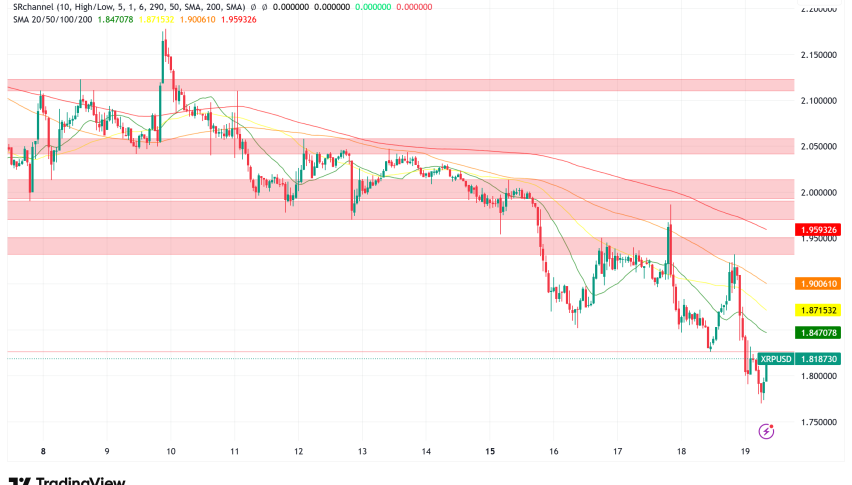
Short answer: XRP ETFs crossed $1 billion in assets under management by mid-December 2025 with zero days of net outflows since launch, yet XRP’s price stayed roughly flat near $1.90 rather than rallying. The disconnect came down to market mechanics: T+1 settlement delays between ETF inflows and actual spot purchases, whale selling of over 200 million tokens offsetting institutional demand, and a broader 35% crypto market pullback over the prior three months that outweighed the positive ETF catalyst.
A Milestone in Crypto Adoption
In the fast-evolving world of digital assets, XRP exchange-traded funds crossed a significant threshold in December 2025: $1 billion in total assets under management. As of mid-December, data showed these funds holding approximately $1.18 billion, with no single day of net outflows since their launch. That achievement marked XRP as one of the fastest-growing crypto ETF categories beyond Bitcoin and Ethereum at the time.
But here was the puzzle for many investors watching closely: despite this influx of capital, XRP’s price hadn’t surged dramatically. Trading around $1.90 per token, it hovered near levels seen earlier in the year, defying the explosive rallies often associated with ETF approvals for other cryptocurrencies. That disconnect highlighted a genuinely maturing market where institutional money doesn’t always translate into immediate price fireworks. For curious investors and fund managers alike, understanding this specific dynamic offered real insight into the next phase of crypto’s integration into traditional finance.
Understanding XRP ETFs
At their core, XRP ETFs are investment vehicles that let people gain exposure to XRP’s price without directly buying or storing the token themselves. Think of them like a basket that holds XRP on investors’ behalf, traded on stock exchanges just like shares of any major company.
XRP, the native token of the Ripple network, is designed for fast, low-cost cross-border payments. Unlike Bitcoin, which is often framed as digital gold, XRP acts more like a bridge currency in global transactions. ETFs tracking it provided a regulated way for institutions and retail investors alike to participate, bypassing the complexities of crypto wallets and exchange accounts.
These ETFs launched in November 2025, following SEC approvals earlier in the year. Canary Capital’s XRP ETF debuted on November 13, pulling in nearly $250 million on its first day — a record for 2025 crypto ETF launches. Grayscale’s version followed on November 24, adding further momentum. This all came after years of legal battles, including Ripple’s partial victory against the SEC in 2023, which clarified XRP’s status as a non-security in secondary markets.
What Drove the Surge in ETF Inflows
The growth had been genuinely remarkable. Going from zero to over $1 billion in assets under management in just over a month, XRP ETFs saw 30 consecutive days of net inflows by early December 2025. Cumulative net inflows reached about $1 billion, with funds like Canary Capital’s XRPC accounting for over a third of that total at $376.5 million.
This trend reflected broader shifts underway across fintech and digital assets. Institutions were diversifying beyond Bitcoin and Ethereum, drawn to XRP’s potential in real-world applications like remittances and tokenized assets. Ripple’s partnerships with banks for cross-border settlements had gained real traction, especially as stablecoins and tokenization moved toward the mainstream.
One useful data point: while Bitcoin and Ethereum ETFs experienced $3.5 billion in combined outflows over the same period, XRP funds bucked that trend entirely with consistent inflows. This divergence suggested investors viewed XRP somewhat as a hedge against broader crypto volatility during that stretch, prioritizing its utility case over pure speculative hype.
Why the Price Didn’t Rally Immediately
With billions flowing in, why wasn’t XRP’s price soaring in tandem? The answer came down to a few overlapping market mechanics that tempered short-term enthusiasm.
First, ETF inflows don’t directly buy XRP on the spot market the moment they land. Due to T+1 settlement rules — where trades settle the next business day — a lag exists before funds actually purchase the underlying tokens. This delayed the price impact, unlike direct crypto purchases that hit exchanges essentially instantly.
Second, counteracting forces were genuinely at play at the same time. Large holders, or “whales,” had been selling over 200 million tokens during this period, offsetting a meaningful chunk of ETF demand. Derivatives markets added pressure too, with elevated short positions and high trading volumes in futures struggling to lift spot prices upward.
Third, broader market stress weighed on the picture too. XRP had dropped about 35% over the prior three months, mirroring a wider crypto downturn happening across the sector. Despite the ETF milestone, utility-driven demand — meaning actual use in payments — hadn’t scaled enough yet to fuel a genuine rally on its own. As one analyst put it at the time, these inflows seemed geared toward long-term accumulation rather than speculative spikes.
A simple way to think about it: ETFs functioned like a steady stream filling a reservoir, but leaks from selling pressure and broader market sentiment kept the water level relatively stable in the near term.
The Case for Legitimacy and Access
XRP ETFs offered clear advantages regardless of the price lag. They brought real regulatory oversight, making crypto more palatable for fund managers wary of direct exposure to unregulated exchanges. This had genuine potential to accelerate adoption in fintech, where XRP’s transaction speed — settling in seconds — outpaces traditional wire transfers by a wide margin.
Diversified portfolio access stood out as another real benefit: investors could now allocate to XRP alongside stocks and bonds through a single regulated brokerage account rather than juggling separate crypto infrastructure.
Risks and Common Misconceptions
No investment comes without pitfalls. XRP remained volatile, tied in part to Ripple’s own fortunes as a company. Ongoing regulatory scrutiny, even after the 2023 SEC settlement, could still introduce uncertainty down the line. Market consolidation — fewer players holding larger token positions — carried some manipulation risk worth acknowledging honestly.
A key misconception worth addressing directly: ETFs don’t guarantee price explosions on their own. Bitcoin’s 2024 ETF launch did spark a notable bull run, but XRP’s context differed meaningfully. Without explosive utility growth happening at the same time, inflows alone weren’t enough to ignite comparable fireworks. Another myth treats all crypto ETFs as behaving identically — XRP’s focus on payments infrastructure sets it apart from pure store-of-value assets like Bitcoin, and that distinction genuinely matters for how each responds to institutional inflows.
Actionable Insights for Investors
For those evaluating XRP, thinking strategically rather than reactively tends to serve better. Monitoring ETF flow data weekly through platforms like SoSoValue offers a useful gauge of institutional sentiment over time. Watching Ripple’s ongoing partnerships, such as expansions in tokenization or payment infrastructure, can help identify what might eventually drive real demand rather than just inflow headlines.
Considering dollar-cost averaging into ETF positions offers exposure without needing to time the market precisely. Staying informed on derivatives volumes matters too — if short positions decrease over time, price pressure from that source tends to ease. Above all, assessing XRP’s actual role within your portfolio matters most: is it a bet on fintech infrastructure, or simply another speculative crypto position?
Frequently Asked Questions
Why does T+1 settlement delay an ETF’s price impact?
T+1 settlement means trades finalize the next business day rather than instantly. This creates a lag between when investors buy ETF shares and when the fund actually purchases the underlying XRP tokens, delaying any direct price impact compared to buying XRP on an exchange directly.
Do crypto ETF launches always cause a price rally?
No. While Bitcoin’s 2024 ETF launch triggered a notable rally, XRP’s ETF launch showed that inflows alone don’t guarantee a price surge, especially when offset by whale selling, derivatives pressure, or a broader market downturn happening at the same time.
What offset XRP ETF demand in December 2025?
Whale holders sold over 200 million XRP tokens during this period, and a broader crypto market downturn saw XRP drop about 35% over the prior three months, both of which weighed against the positive ETF inflow catalyst.
How does an XRP ETF differ from a Bitcoin ETF?
Both track the underlying asset’s price, but XRP’s utility case centers on payments infrastructure and cross-border transaction speed, while Bitcoin is more commonly framed as a store-of-value asset, meaning each can respond differently to the same institutional demand.
A Long-Term Perspective
XRP ETFs hitting $1 billion underscored a genuine shift toward mainstream acceptance, but the price stability that followed served as a useful reminder that true value tends to come from adoption over time, not just capital flows in isolation. As the crypto landscape continued evolving, XRP’s strengths in efficient cross-border transactions positioned it for potentially sustained growth, provided regulatory tailwinds continued and utility-driven demand caught up with the institutional interest already in place.
Did XRP’s real-world utility eventually propel its price beyond those December 2025 levels, or did broader market forces keep it grounded for longer? That’s worth checking against the actual price history that followed rather than speculating further here.
This is not financial advice. Crypto is volatile — always do your own research and only invest what you can afford to lose.