Michael Selig Sworn In as CFTC Chair: What It Means for XRP’s Commodity Status and 2026 Rally

Michael Selig Sworn In as CFTC Chair: What It Means for XRP’s Commodity Status and 2026 Rally
Short answer: Michael Selig was sworn in as the 16th CFTC Chairman on December 22, 2025, bringing a background in derivatives and digital assets law directly to the agency overseeing crypto commodities. His confirmation mattered specifically for XRP because a CFTC-SEC harmonization push — including the CLARITY Act — aimed to resolve lingering questions about whether XRP counts as a commodity, a classification that could meaningfully ease institutional entry into the asset.

Selig’s swearing-in brought fresh focus to XRP’s commodity status at a genuinely pivotal moment. The appointment arrived amid ongoing debate over crypto oversight more broadly, with investors seeking real resolution to regulatory uncertainties that had shadowed XRP for years.
The event underscored a landscape genuinely in flux. With Selig at the helm, closer coordination between the CFTC and SEC looked increasingly plausible — a shift that could clarify XRP’s position and fuel renewed market optimism. Regulatory clarity has historically driven price rallies in crypto, and XRP holders watched closely for similar signs following this appointment.
Who Is Michael Selig?
Michael Selig took the oath as the 16th CFTC Chairman on December 22, 2025, following Senate confirmation just days earlier.
Before this role, Selig built a substantial career in finance law. He served as a partner at Willkie Farr & Gallagher from 2022 to 2025, where he advised clients directly on derivatives and digital asset matters.
Earlier in his career, Selig held key government positions, including chief counsel for the SEC’s Crypto Task Force — experience that shaped much of his thinking on crypto regulation more broadly. He also worked closely with former SEC Chairman Paul Atkins, and this dual background bridging securities and commodities law proved genuinely valuable heading into the CFTC role.
In private practice, Selig represented futures merchants and guided crypto firms through complex regulatory requirements — hands-on experience that directly informed his approach to leadership at the agency.
Selig voiced consistent support for industry innovation and criticized what he called “regulation by enforcement,” favoring clear guidelines established in advance over litigation after the fact. He pledged a comprehensive crypto framework for early 2026, a timeline that signaled real urgency around harmonizing CFTC and SEC approaches to digital assets.
For XRP specifically, this pledge held genuine promise. Lingering questions tied to the earlier SEC dispute stood a real chance of resolving further, and Selig’s background suggested a genuinely balanced path forward rather than a purely industry-friendly or purely restrictive approach. His pro-crypto stance drew considerable attention from industry leaders, many of whom welcomed the appointment.
XRP’s Commodity Status Explained
XRP powers the Ripple network, enabling fast, low-cost payments across international borders. The core regulatory question has long centered on classification: is XRP a security or a commodity? Securities fall under SEC jurisdiction, while commodities belong to the CFTC.
Bitcoin and Ether had already been treated as commodities by regulators, avoiding the stricter rules that apply to securities. XRP’s status remained more contested by comparison. In 2023, a federal court ruled XRP wasn’t a security for secondary market sales specifically, though appeals and further legal questions persisted well beyond that ruling.
This lingering ambiguity created what’s often called regulatory overhang — a cloud of uncertainty that tends to deter institutional investors and slow broader adoption, even when the underlying asset has real utility. A more comprehensive framework under Selig carried real potential to formally classify XRP as a commodity, shifting primary oversight to the CFTC and likely bringing less stringent rules than securities classification would require.
Think of it as a traffic light: red means stop due to uncertainty, green signals room for growth. Regulatory clarity, whichever direction it lands, at least lets market participants plan around known rules rather than guessing.
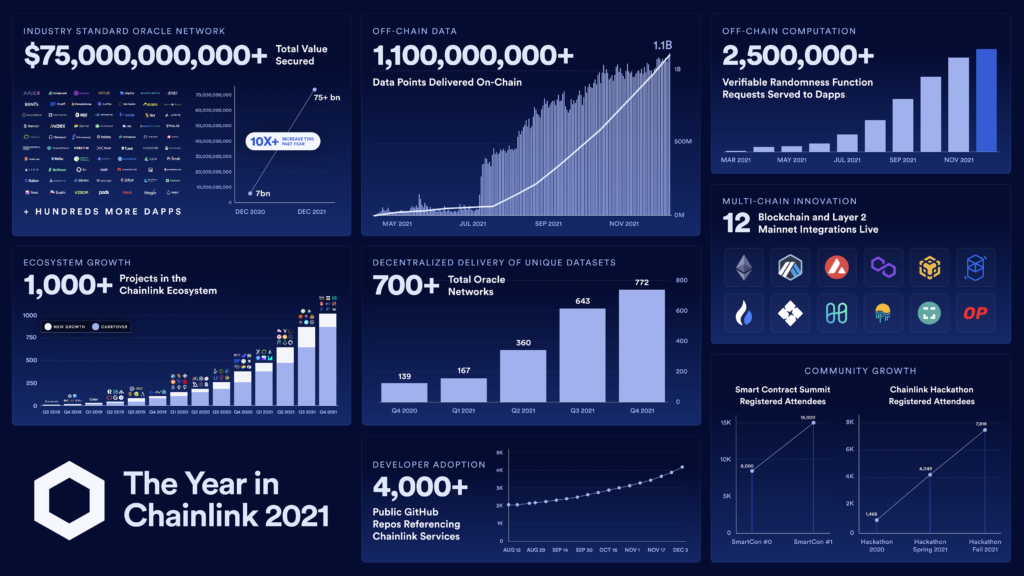
Separately, Chainlink’s oracles play a related supporting role in this broader ecosystem. Smart contracts are self-executing code, but they can’t access external information on their own — oracles solve this by fetching outside data like prices or weather conditions. Chainlink specifically provides decentralized oracles that enable more advanced altcoin smart contracts, the kind DeFi applications rely on for things like collateralized loans. Like a trusted messenger, oracles help ensure the data feeding these contracts stays accurate; without them, contracts remain isolated from real-world conditions entirely. For XRP, greater commodity status clarity would help it integrate more smoothly with these oracle-fed systems, and CFTC-SEC harmony more broadly reduces the kind of regulatory overlap that complicates compliance for firms building on top of XRP.
How Chainlink’s Oracles Work
Chainlink stands out specifically in the oracle space. Its network connects blockchains to off-chain data, and decentralization is central to how it operates — multiple independent nodes verify each piece of data, which helps prevent the kind of single-point failures that could otherwise compromise a smart contract’s inputs.
Real-world applications span several industries already. Insurance contracts use weather data fed through oracles to automate payouts. In finance, price feeds drive automated trading strategies, with Chainlink supplying accurate crypto price data to numerous protocols. Altcoins benefit considerably from this infrastructure, since many build complex decentralized applications that genuinely need external inputs to function. Prediction markets, for instance, rely on oracles to settle bets tied to real-world events accurately.
Chainlink’s Cross-Chain Interoperability Protocol further expands its reach by linking different blockchains together. Security remains a genuine priority throughout — oracles must resist manipulation, and Chainlink uses staking mechanisms to build in accountability among its data providers.
Adoption has grown steadily as major projects integrate Chainlink into their infrastructure, enhancing broader altcoin ecosystems in the process. Regulatory clarity tends to support this trend too — clear rules generally encourage oracle use in ways that stay compliant rather than operating in a gray zone. XRP specifically could leverage oracle infrastructure more heavily going forward, since cross-border payments genuinely need real-time foreign exchange data to function accurately at scale.
Regulatory Harmony and Market Relevance
CFTC-SEC harmony gained real traction through late 2025. The two agencies issued a joint statement in September and hosted a roundtable specifically focused on digital asset harmonization efforts.
The CLARITY Act advanced alongside this, with markup scheduled for January 2026. This legislation aimed to define asset classes more precisely and assign regulatory oversight clearly between the two agencies — genuinely pivotal for XRP’s commodity status specifically, since Ripple’s substantial token supply meant that any thresholds written into the act mattered considerably for how XRP would ultimately be classified.
Broader trends pointed toward increasing tokenization of real-world assets on-chain, with Chainlink’s oracles facilitating much of this by providing verifiable data for things like tokenized bonds. DeFi continued expanding alongside this trend, with oracle integration serving as a genuine growth driver.
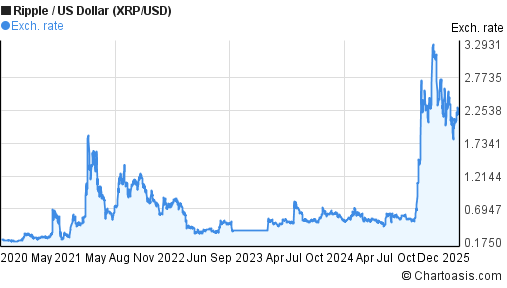
As of December 23, 2025, XRP’s price hovered around $1.88, with market cap exceeding $100 billion. One genuinely data-backed signal worth noting: over the preceding five years, XRP’s value had increased 322% — a sign of real resilience despite ongoing volatility, even as the token dipped roughly 9.45% year-to-date at that point. Institutional interest continued rising regardless, and payment firms increasingly adopted XRP for remittance use cases as regulatory progress reduced enforcement risk.
Pros, Risks, and Misconceptions
The advantages here start with clarity itself. Defined commodity status would lift much of the regulatory overhang that has weighed on XRP for years, letting institutions enter the market more freely and accelerating adoption in payments specifically. Some analysts suggested prices could climb meaningfully higher if this clarity materialized, though such forecasts carry real uncertainty and shouldn’t be treated as guaranteed outcomes. Chainlink’s oracle infrastructure exemplifies the broader benefit here too — it makes altcoins genuinely viable for real-world use cases, not just speculative trading. Regulatory harmony between agencies also streamlines compliance, letting firms avoid navigating dual, sometimes conflicting regulatory regimes.
Real risks accompanied this optimism, though. Legislation like the CLARITY Act could still stall in Congress despite momentum, and volatility remained a persistent feature of the market — XRP had fallen roughly 50% from its 2025 peak at one point during the year. Global regulatory factors mattered too, since international rules didn’t always align neatly with U.S. frameworks and could still create friction even with domestic clarity achieved.
A common misconception holds that regulatory clarity automatically translates to instant price gains. Markets react far less predictably than that in practice, and clarity alone doesn’t guarantee any particular price outcome. Another persistent myth suggests XRP is tied solely to Ripple the company — in reality, it’s a decentralized asset that operates independently of any single entity’s control. Worth noting too: oracles aren’t entirely foolproof either, since data manipulation risks exist even in decentralized systems, though staking mechanisms help mitigate this. And regulatory harmony doesn’t eliminate oversight altogether — stronger rules in certain areas may well emerge even as overall clarity improves.
Actionable Insights for Investors
Tracking the CLARITY Act’s progress closely makes sense, since its markup could meaningfully clarify XRP’s commodity status one way or another. Following Selig’s public statements is worthwhile too, as details of his promised early-2026 framework continued emerging through official channels.
Diversifying holdings rather than concentrating entirely in one asset remains sound practice — including altcoins like Chainlink offers a different kind of exposure through oracle infrastructure specifically. Exploring Chainlink’s various use cases can help investors understand how oracles enhance smart contract functionality more broadly.
Monitoring XRP price charts through reputable tools remains useful for tracking technical trends. Considering positions only after genuine clarity emerges — rather than reacting impulsively to headlines — tends to serve investors better over time. Reading official CFTC and SEC updates directly, rather than relying solely on secondhand commentary, provides more reliable information about where the regulatory picture actually stands.
Frequently Asked Questions
When was Michael Selig sworn in as CFTC Chairman?
Michael Selig was sworn in as the 16th CFTC Chairman on December 22, 2025, following Senate confirmation just days earlier.
What is the CLARITY Act and why does it matter for XRP?
The CLARITY Act is legislation aimed at defining crypto asset classes more precisely and assigning regulatory oversight clearly between the SEC and CFTC. For XRP, the thresholds written into the act matter considerably given Ripple’s substantial token supply, making it central to how XRP’s commodity status ultimately gets resolved.
Is XRP solely controlled by Ripple the company?
No. This is a common misconception. XRP operates as a decentralized asset independent of Ripple’s direct control, even though the company remains closely associated with it and holds a significant share of the total supply.
What was Michael Selig’s background before becoming CFTC Chairman?
Selig was a partner at Willkie Farr & Gallagher from 2022 to 2025, advising on derivatives and digital assets. Earlier, he served as chief counsel for the SEC’s Crypto Task Force, giving him direct experience on both the securities and commodities sides of crypto regulation.
A Long-Term View on Crypto’s Evolution
Selig’s leadership heralded genuine change for the regulatory landscape. Closer CFTC-SEC harmony carried real potential to resolve key outstanding issues, and for XRP’s commodity status specifically, the fog surrounding its classification looked set to lift gradually over time as the overhang faded.
Chainlink’s oracle infrastructure highlights the kind of real innovation happening alongside this regulatory shift, connecting altcoins to practical, real-world use rather than pure speculation. Markets tend to reward clarity over time, and patience continues paying off more often than not in crypto specifically.
What if XRP’s eventual commodity status genuinely unlocks a new era of institutional adoption — could it help redefine how global payments work at scale?
References Used for This Article
- CFTC – Michael Selig Sworn In as 16th CFTC Chairman – https://www.cftc.gov/PressRoom/PressReleases/9164-25
- WilmerHale – Michael Selig Confirmed as CFTC Chairman: Six Issues to Watch – https://www.wilmerhale.com/en/insights/client-alerts/20251218-michael-selig-confirmed-as-cftc-chairman—six-issues-to-watch-in-2026
- Willkie Farr & Gallagher – Willkie Alum Michael Selig Confirmed as 16th CFTC Chairman – https://www.willkie.com/news/2025/12/willkie-alum-michael-selig-confirmed-as-16th-cftc-chairman
- Davis Wright Tremaine – CFTC Under Chair Selig: Expectations for Crypto – https://www.dwt.com/blogs/financial-services-law-advisor/2025/12/cftc-under-chair-selig-expectations-crypto
- PLANADVISER – Senate Approves Michael Selig to Head CFTC – https://www.planadviser.com/senate-approves-michael-selig-to-head-cftc/
- Gemini – What Is Chainlink and How Does It Work? – https://www.gemini.com/cryptopedia/what-is-chainlink-and-how-does-it-work
- Yahoo Finance – XRP-USD Historical Data – https://finance.yahoo.com/quote/XRP-USD/history/
- CoinMarketCap – XRP Historical Data – https://coinmarketcap.com/currencies/xrp/historical-data/
- TradingView – XRPUSD Ripple Price and Chart – https://www.tradingview.com/symbols/XRPUSD/
This is not financial advice. Crypto is volatile — always do your own research and only invest what you can afford to lose.
Read More