
Short answer: Ethereum’s post-Merge upgrade cycle — Dencun, Pectra, and Fusaka — has pushed average gas fees down to roughly $0.38 and shifted 63% of transaction volume onto layer-2 networks like Arbitrum and Optimism. That efficiency gain puts pressure on altcoins competing in the same space, including XRP, while also deepening interoperability between Ethereum and other chains through cross-network bridges.

In the ever-evolving landscape of blockchain technology, Ethereum has remained a cornerstone through 2025 and into 2026. Its ongoing upgrade cadence has continued shaping not just its own network but the broader cryptocurrency market as a whole. With institutional adoption accelerating and regulatory frameworks gradually clarifying, these developments have drawn sustained attention from investors seeking durable, sustainable growth rather than speculative spikes. Understanding Ethereum’s post-Merge trajectory matters because it influences everything from raw transaction efficiency to competitive dynamics among the altcoins jostling around it.
The Merge back in 2022 marked a pivotal shift from proof-of-work to proof-of-stake, reducing Ethereum’s energy consumption by over 99% in one move. But the story didn’t end there. Subsequent upgrades have built on that foundation steadily, addressing the scalability bottlenecks that once plagued the network. For investors trying to track how Ethereum’s enhancements ripple through altcoin ecosystems, these changes offer a useful window into how market trends actually shift underneath the headlines.
Understanding Ethereum’s Upgrade Path in Plain Terms
Ethereum 2.0, often used as shorthand for the network’s multi-phase evolution, was never a single event but a series of iterative improvements stacked on top of each other. Think of it like upgrading a busy highway: the Merge added more lanes by swapping the engine, while later phases have focused on smarter traffic management instead.
Key post-Merge upgrades have included Dencun in 2024, which introduced proto-danksharding to lower costs for layer-2 solutions meaningfully. Pectra, activated in May 2025, enhanced account functionality, letting everyday wallets behave more like smart contracts for easier batching and account recovery. Most recently, Fusaka arrived in December 2025, expanding data availability through PeerDAS — making individual nodes lighter to run while boosting blob capacity for cheaper layer-2 transactions across the board.
Sharding, a core original promise of Ethereum’s roadmap, evolved into what’s now called danksharding. Instead of splitting the chain into 64 separate shards as first planned years ago, it uses blobs — temporary data packets — to scale layer-2 rollups instead. Picture dividing a massive database into manageable chunks, but only for data storage, not for execution itself. As a result, Ethereum can handle far more transaction volume off the main chain without compromising the security guarantees of the base layer.
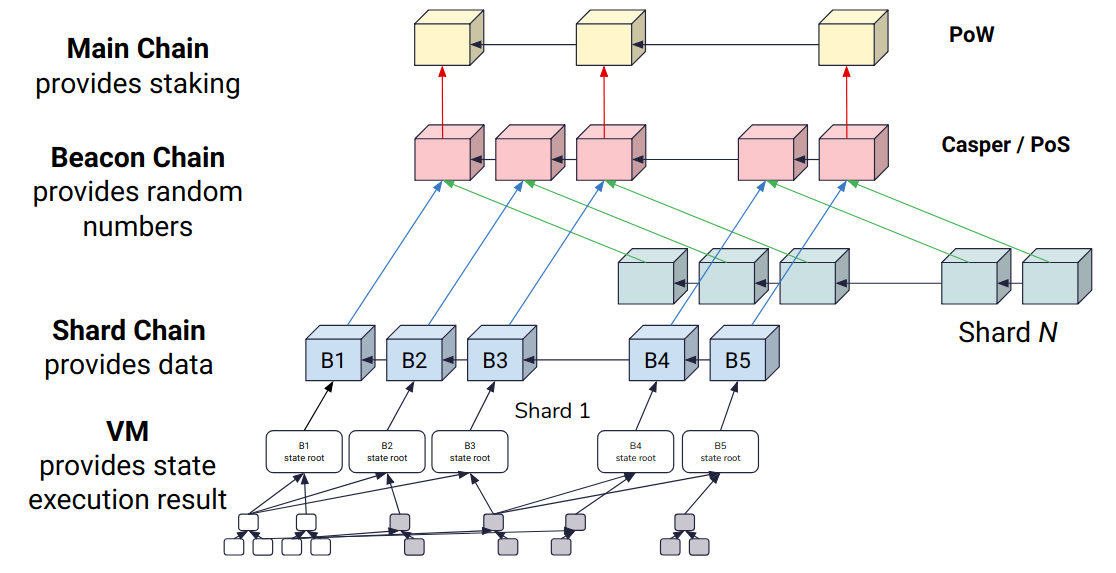
These upgrades collectively aim to push Ethereum’s throughput toward 100,000 transactions per second across its full layer-2 ecosystem, far beyond the roughly 25-35 TPS the base layer handles on its own.
Market Trends and Real-World Relevance
Through 2025, Ethereum’s upgrades tangibly reshaped market dynamics. Layer-2 networks like Arbitrum and Optimism processed 63% of Ethereum-related transactions by year’s end, according to data from CoinLaw. That shift drove average gas fees down to roughly $0.38 — a stark contrast to pre-Merge peaks. For context, mid-2025 fees had hovered around $1.85, and Fusaka’s enhancements pushed layer-2 swap costs down toward fractions of a cent in many cases.
These efficiencies extended outward to altcoins too. Ethereum’s dominance in DeFi and NFTs sets industry benchmarks that other chains have to compete against; when its fees drop, altcoins face more pressure to justify their own value proposition. XRP, focused specifically on cross-border payments, saw mixed effects from this dynamic. While Ethereum’s scalability improvements pressured XRP’s niche somewhat, they also fostered greater interoperability in practice — bridges between Ethereum and the XRP Ledger grew throughout the year, enabling more seamless asset transfers between the two ecosystems.
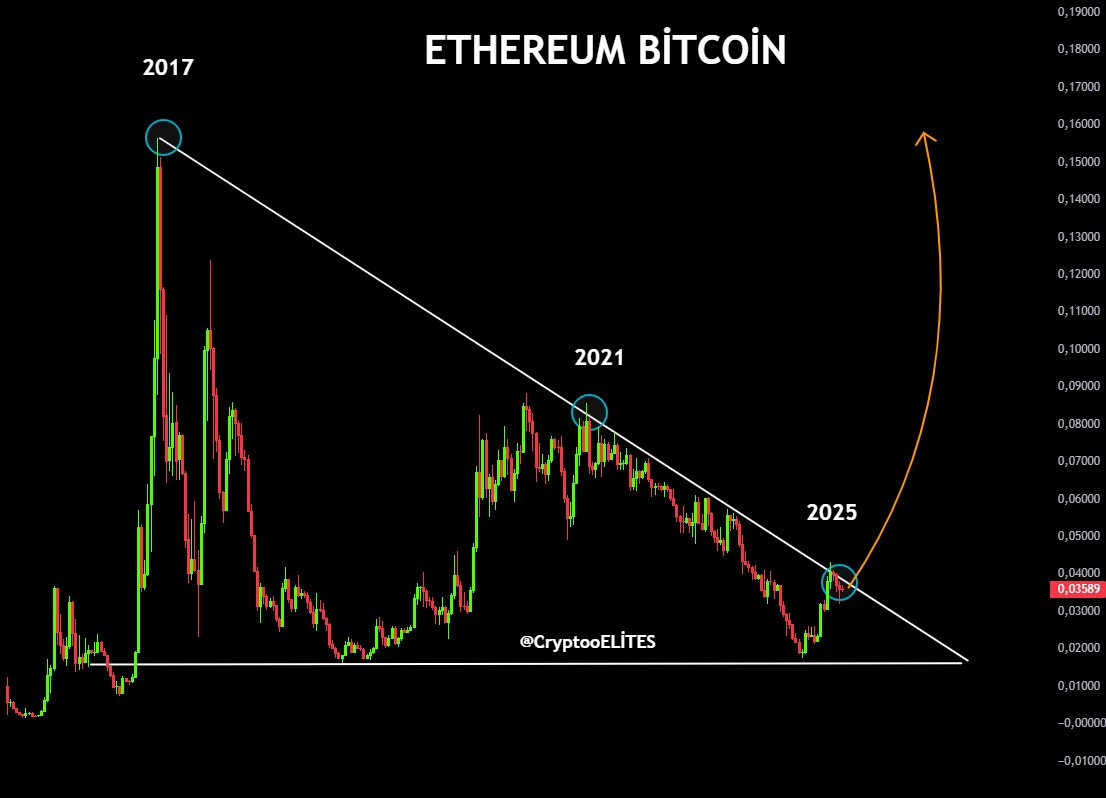
Correlations between the two assets have been notable. Ethereum’s ETF flows influenced broader altcoin pricing with roughly a 0.79 correlation coefficient during 2025, per market analysis published on Medium. XRP nonetheless underperformed for stretches of the year, reflecting broader market corrections rather than any single Ethereum-specific cause. Fintech integration continued regardless: banks using Ethereum for tokenized asset settlement increasingly integrated XRP for cross-border transfers too, blending what were once fairly separate ecosystems into overlapping infrastructure.
Pros, Risks, and Common Misconceptions
The advantages of these upgrades are fairly clear on their face. Scalability boosts adoption; lower fees democratize access in a way not unlike how smartphones made computing genuinely portable for the first time. For altcoins, Ethereum’s improvements have created real spillover effects too — enhanced liquidity and better tooling benefit projects like XRP by raising the overall bar for what “good infrastructure” looks like industry-wide.
Real risks persist alongside these gains, though. Layer-2 centralization could introduce new vulnerabilities — the 2025 Bybit exchange hack, which exposed roughly $1.5 billion in ETH due to custody failures, illustrates exactly the kind of risk that concentrated infrastructure can create. Upgrade delays, a fairly consistent historical pattern for Ethereum, have also periodically eroded short-term confidence even when the underlying technical work was sound.
One common misconception worth addressing directly: upgrades don’t eliminate fees entirely, no matter how good they get. As DeFi researcher Vivek Raman has explained, fees ultimately depend on demand — the Merge itself didn’t slash fees, and Fusaka alone won’t either, no matter how much throughput it adds. Another persistent myth suggests sharding means full chain fragmentation. In reality, danksharding supports rollups without splitting the core chain apart at all; it’s an additive scaling layer, not a structural division.
Actionable Insights for Investors
For those navigating this space, monitoring a few key indicators helps cut through the noise. Tracking Fusaka’s post-activation metrics — blob usage and layer-2 total value locked, both available through tools on ethereum.org — gives a clearer read on real adoption than price action alone. Diversifying exposure makes sense too: while Ethereum leads on general-purpose infrastructure, altcoins like XRP still offer complementary strengths in specific niches like cross-border payments.
Staking is worth considering as well, since Pectra raised effective balance limits, easing entry for validators who previously had to manage multiple smaller stakes. Watching regulatory shifts matters too — the U.S. GENIUS Act, passed in 2025, clarified Ethereum’s regulatory status and helped boost institutional inflows meaningfully. Using analytics platforms to track cross-asset correlations can also sharpen timing decisions, since altcoin rallies have historically tended to mirror Ethereum’s own momentum more often than not.
Frequently Asked Questions
What did the Dencun upgrade do?
Dencun, activated in 2024, introduced proto-danksharding to Ethereum. This lowered data costs for layer-2 networks significantly, making rollups like Arbitrum and Optimism substantially cheaper to use for everyday transactions.
What does the Fusaka upgrade change?
Fusaka, which activated in December 2025, expanded data availability through a mechanism called PeerDAS. This made running Ethereum nodes lighter while increasing blob capacity, further reducing costs for layer-2 transactions.
Does danksharding split Ethereum into separate chains?
No. Danksharding uses temporary data packets called blobs to help layer-2 rollups scale, but it doesn’t fragment Ethereum’s core chain. The base layer remains unified while rollups handle increased transaction volume off-chain.
How do Ethereum’s upgrades affect XRP?
Ethereum’s scalability gains put competitive pressure on XRP in areas where the two overlap, but they’ve also driven more interoperability through cross-chain bridges, letting assets move more seamlessly between the Ethereum and XRP Ledger ecosystems.
A Long-Term Perspective
Ethereum’s upgrade cycle underscores its underlying commitment to resilience and continuous improvement. By addressing scalability through danksharding and layer-2 optimization, it hasn’t just strengthened its own position — it’s elevated the broader altcoin ecosystem along with it. The impacts on tokens like XRP highlight an interconnected market where advancements in one chain tend to spur evolution across others, whether directly competitive or complementary.
Looking back on 2025, Ethereum’s trajectory pointed toward a more efficient, more inclusive blockchain landscape overall. Challenges like volatility and ongoing competition remain, though, as useful reminders that this sector is still working through its maturity phase rather than having fully arrived.
If Ethereum’s scalability push keeps unlocking new use cases in global finance, will competing altcoins adapt fast enough to keep pace, or will some get left behind?
References Used for This Article
- Ethereum Foundation – Official Roadmap – https://ethereum.org/en/roadmap/
- CoinGecko – Ethereum Historical Data – https://coingecko.com/en/coins/ethereum/historical_data
- CoinGecko – XRP Historical Data – https://coingecko.com/en/coins/ripple/historical_data
- CoinDesk – State of the Blockchain Research 2025 – https://www.coindesk.com/research/state-of-the-blockchain-2025
This is not financial advice. Crypto is volatile — always do your own research and only invest what you can afford to lose.