Short answer: Beyond Bitcoin and Ethereum, several smaller altcoins built genuinely differentiated technology heading into 2026 — Kaspa’s BlockDAG architecture for high-throughput transactions, Sui’s object-centric model for fast finality, Aptos’s Move-based virtual machine for developer safety, and Celestia’s specialized data availability layer for rollups. Each carried real technical merit alongside real risk, and analysts like Raoul Pal pointed to 2026 as a potential window for broader altcoin liquidity following Bitcoin’s earlier 2025 dominance.

The crypto market shifted quickly through late 2025. As Bitcoin dominated headlines throughout much of the year, smaller underdogs like Kaspa and Sui quietly built real momentum in the background. Why focus on names like these specifically? Genuine tech upgrades and growing adoption pointed toward potential breakouts in 2026 for tokens that had solved real technical problems rather than simply riding broader market sentiment.
Institutions continued eyeing crypto more broadly, and retail investors increasingly sought diversification beyond the two largest assets. These emerging altcoins offered genuinely fresh opportunities on that front. Volatility remained high throughout, though, meaning smart, research-backed choices mattered considerably more than chasing hype alone.
Why These Altcoins Matter
Crypto continued evolving well beyond Bitcoin’s original use case. Altcoins drove much of the technical innovation in the space, tackling real problems like transaction speed and network scalability that Bitcoin’s own architecture wasn’t originally designed to solve.
2025 saw Bitcoin ETFs surge in popularity, and altcoins lagged behind for much of the year even as they gained ground technically. Analysts predicted a broader “altseason” for 2026, with macro strategist Raoul Pal specifically forecasting liquidity floods that could lift smaller-cap tokens once Bitcoin’s dominance eased somewhat.
The emerging names specifically stood out by tackling real blockchain limitations — faster transaction throughput, more modular network designs, and specialized infrastructure that established chains hadn’t fully addressed. For investors, timing mattered here — early entry into genuinely useful technology tends to yield the strongest long-term gains, but thorough research remained essential before committing capital to any single name.
Understanding Emerging Altcoins
Altcoins simply refers to any cryptocurrency besides Bitcoin. Emerging altcoins specifically are lesser-known tokens with real growth potential still ahead of them, rather than established names that have already captured most of their addressable market.
Picture Bitcoin as the main highway and altcoins as side roads branching off it. Some of those roads are genuinely bumpy and lead nowhere useful, while others open up entirely new destinations that the highway itself never reached. These particular underdogs used genuinely unique technology to carve out that space — Kaspa employs a BlockDAG structure for speed rather than a traditional single-chain blockchain, while Sui leverages the Move programming language specifically for enhanced security around asset handling.
They differ meaningfully from more established coins too. Ethereum, for instance, focuses broadly on general-purpose smart contracts, while these emerging names tend to aim for more specific technical niches instead. The comparison to startups versus established giants fits reasonably well here — higher risk, but potentially higher reward if the underlying technology finds real product-market fit.
Current Trends and Real-World Relevance
Altcoins increasingly integrated with broader fintech infrastructure through this period. DeFi continued growing, and real-world assets increasingly moved on-chain through tokenization efforts. Sui specifically powered a growing number of gaming applications, while Celestia provided specialized data availability infrastructure for rollup-based networks.
Adoption climbed steadily — Manta Pacific, for instance, used Celestia’s infrastructure specifically to reduce its own transaction fees. Broader trends pointed toward modular blockchain designs gaining real traction, with Celestia commanding roughly $1 billion in total value secured by this measure.
Real-world use cases emerged clearly for several of these names. Kaspa targeted fast payment settlement specifically, while Sui aimed to enable secure, low-latency asset transfers. By 2025, the total crypto market cap had climbed into the trillions, with altcoins collectively claiming roughly 40% of that total.
Emerging altcoins fit neatly into this broader shift. Many increasingly relied on oracle infrastructure like Chainlink to bring outside data on-chain — things like real-time prices or other external conditions — which meaningfully boosted their practical utility by bridging crypto systems with real-world information.
Profiling Four Emerging Altcoins
Kaspa: Built for Speed
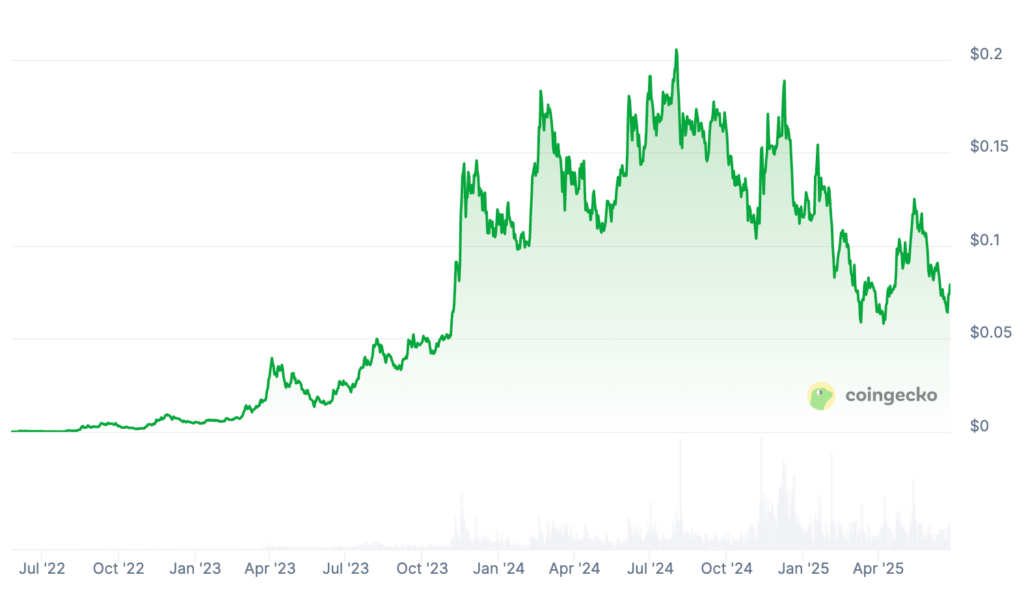
Kaspa uses a BlockDAG structure rather than a traditional single-chain blockchain, processing over 3,000 transactions per second — a genuinely data-backed figure that sets it apart from most proof-of-work networks. Market cap sat around $1.26 billion at the time, with price near $0.047 and an all-time high of $0.207.
The advantages here include genuinely high throughput and a fair launch structure with no pre-mine allocated to insiders. Real risks included competition from faster established chains like Solana, along with the volatility typical of proof-of-work assets more broadly. A common misconception treats Kaspa as simply another mining-focused coin — in reality, its BlockDAG architecture allows it to scale natively in ways traditional blockchains struggle to replicate. The project’s community remained active around planned technical upgrades aimed at increasing block production rates further.
Sui: A Scalable Layer-1

Sui functions as a layer-1 network built specifically around an object-centric model for handling digital assets, and reported theoretical throughput of up to 125,000 transactions per second. Market cap stood around $5.4 billion, with price near $1.44 against an all-time high of $5.35.
Genuine advantages here include fast transaction finality and the Move programming language, which was specifically designed to prevent common smart contract bugs at the language level. Real risks included some centralization concerns around validator distribution, along with scheduled token unlocks that could add selling pressure. A common misconception treats Sui as functionally similar to Solana — in reality, its object-centric design and Move-based security model set it apart architecturally. Sui notably outperformed Bitcoin’s own price action at points during 2025.
Aptos: Security-Focused Layer-1
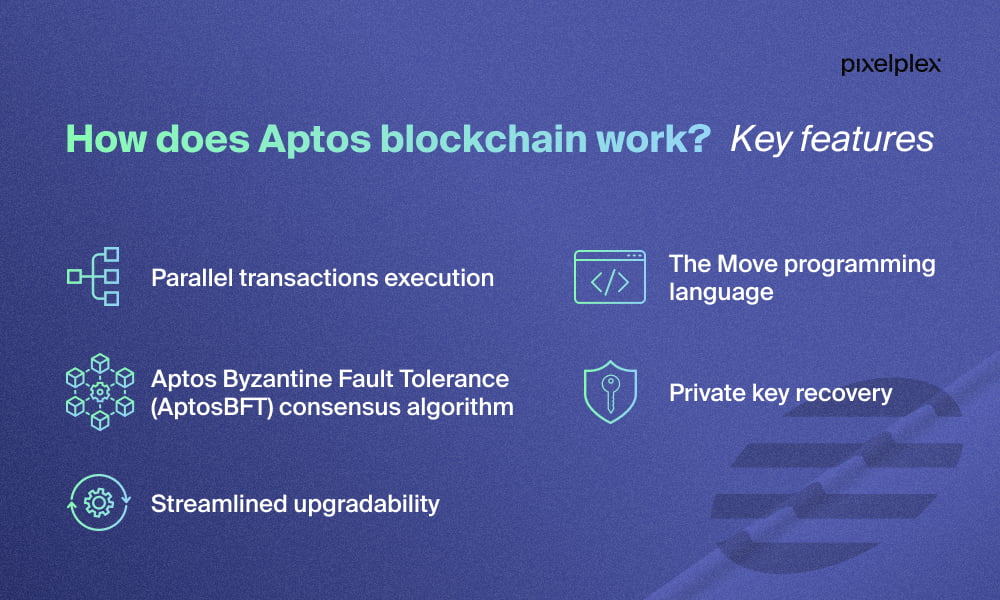
Aptos traces its technical roots back to Meta’s discontinued Diem project, and emphasized transaction safety and correctness as its core differentiator. The network reported a notably high staking participation rate around 73%. Market cap sat around $1.17 billion, with price near $1.56 against a considerably higher all-time high of $19.92.
Advantages included the Move virtual machine for developers, alongside publicly stated plans around quantum-resistant cryptography for future-proofing the network. Real risks included continued price pressure and scheduled token unlocks during 2025. A common misconception frames Aptos simply as a failed Meta project — in reality, it operated fully independently by this point, with its own development team and roadmap. Some analysts at the time suggested the token could reach the $6 range during 2025, though such forecasts remained inherently speculative.
Celestia: A Data Availability Specialist

Celestia provides specialized data availability infrastructure with a distinctly modular focus, rather than trying to be a general-purpose blockchain in its own right. Adoption grew as the network came to power multiple different layer-2 rollups. Market cap sat around $390 million, with price near $0.457 against an all-time high of $20.85.
Genuine advantages included cost reductions of roughly 95% for rollups building on top of Celestia’s infrastructure, along with support for a growing range of onchain applications. Real risks included ecosystem fragmentation across the modular blockchain space, along with relatively low native transaction fees limiting near-term revenue for the network itself. A common misconception treats Celestia as simply another layer-1 blockchain — in reality, its specialization in data availability specifically sets it apart from general-purpose chains. 2025 saw meaningful rollup growth broadly, with Celestia positioned as a genuine leader in that specific niche.
Pros, Risks, and Common Misconceptions
Broadly speaking, genuine innovation tends to drive long-term value across this category. Speed and modular architecture attract serious developers, which in turn tends to attract more sustainable capital over time compared to purely speculative tokens.
Real risks accompanied this potential regardless. Sharp market corrections remain entirely possible for any of these smaller-cap assets, and while outright technical failures are rare, they do happen occasionally and can meaningfully damage a project’s credibility.
A common misconception holds that all altcoins are scams by default. That’s not accurate — many genuinely solve real technical problems, even if their token prices don’t always reflect that underlying value in the short term. Another persistent myth suggests hype alone equals eventual success — in reality, underlying fundamentals tend to matter considerably more over any meaningful time horizon. Chainlink’s oracle infrastructure aids many of these projects specifically by enabling reliable outside data for their smart contracts, which boosts their practical relevance beyond pure speculation — price feeds for DeFi applications being one common example.
Actionable Insights for Investors
Monitoring planned technical upgrades matters considerably — Kaspa, for instance, had a Rust-based rewrite planned that could meaningfully improve network performance. Watching for potential major exchange listings offers another useful signal, since broader availability tends to correlate with liquidity and price discovery.
Diversifying with smaller position sizes across multiple emerging names, rather than concentrating heavily in one, makes sense given the elevated risk profile here. Tracking on-chain metrics through tools like CoinGecko helps separate genuine growth from short-term price noise.
Reading project whitepapers directly and engaging with developer communities offers deeper insight than price charts alone ever could. Considering how a given project integrates with oracle infrastructure like Chainlink can help assess its real-world utility too. Staying informed through reputable industry sources — rather than social media hype cycles specifically — tends to produce better-informed decisions over time.
Frequently Asked Questions
What makes Kaspa different from other proof-of-work coins?
Kaspa uses a BlockDAG structure instead of a traditional single-chain blockchain, allowing it to process over 3,000 transactions per second while maintaining a fair launch with no pre-mine allocated to insiders.
Is Aptos still connected to Meta or Facebook?
No. Aptos traces its technical origins to Meta’s discontinued Diem project, but it now operates fully independently with its own development team, roadmap, and governance structure.
What does Celestia’s network actually do?
Celestia provides specialized data availability infrastructure for rollup-based networks, rather than functioning as a general-purpose blockchain itself. This modular approach can reduce rollup transaction costs by roughly 95% compared to handling data availability independently.
Are emerging altcoins riskier than Bitcoin or Ethereum?
Generally yes. Smaller-cap emerging altcoins tend to carry higher volatility, less liquidity, and greater technical and adoption risk than established assets like Bitcoin and Ethereum, though they can also offer greater growth potential if the underlying technology gains real traction.
A Long-Term View
These emerging altcoins held real promise heading into 2026, with genuine technical advances positioned to potentially spark meaningful breakouts. Patience tends to pay off in this specific corner of crypto — focusing on genuine utility rather than short-term hype cycles serves investors better over time.
Markets will continue fluctuating regardless, and today’s underdogs may well rise considerably, or fade, depending on how their underlying technology and adoption plays out. Will any of these particular names meaningfully redefine their respective corners of crypto in the years ahead?
References Used for This Article
- StealthEX – Kaspa Price Prediction 2025, 2026, 2030-2040 – https://stealthex.io/blog/kaspa-price-prediction-kas-coin-forecast/
- Google Cloud Marketplace – Sui Blockchain Community Dataset – https://console.cloud.google.com/marketplace/product/bigquery-public-data/crypto-sui-mainnet-us
- PixelPlex – Aptos Blockchain: The Future of Secure and Transparent Transactions – https://pixelplex.io/blog/aptos-blockchain/
- Stakin – What Is Celestia? A Comprehensive Overview of the First Modular Blockchain – https://stakin.com/blog/what-is-celestia-a-comprehensive-overview-of-the-first-modular-blockchain
- TradingView – KASUSD Chart – https://www.tradingview.com/symbols/KASUSD/
This is not financial advice. Crypto is volatile — always do your own research and only invest what you can afford to lose.