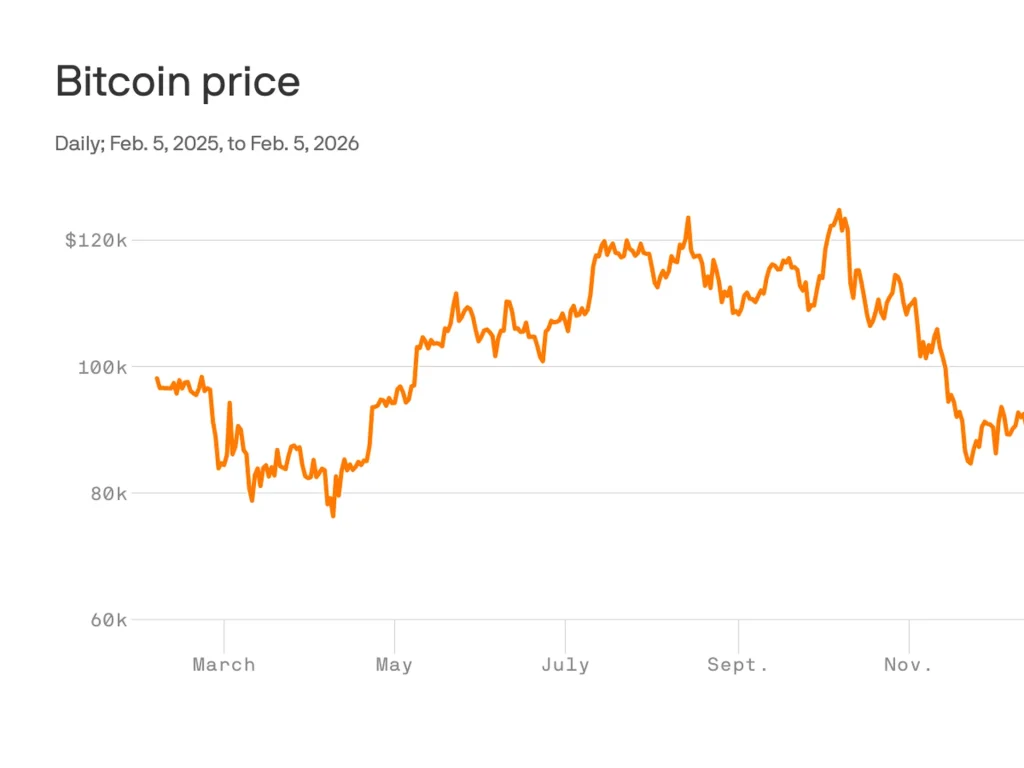
As the crypto market navigates volatility in early 2026, identifying the best crypto to buy in February 2026 requires a focus on fundamentals rather than fleeting trends. With Bitcoin dipping below $66,000 and Ethereum facing downward pressure around $1,900, this guide explores high-potential assets amid institutional shifts and technological advancements.

Best Crypto to Buy in February 2026: Expert Guide to High-Potential Investments Like Bitcoin and Ethereum for Long-Term Gains
Short answer: there’s no single “best” crypto — it depends on whether you want stability (Bitcoin), utility and DeFi exposure (Ethereum), or higher-risk upside (mid-cap altcoins). This guide breaks down how each fits into a diversified portfolio, using February 2026’s market conditions as the working example, with a comparison table and an actionable allocation strategy.
Editor’s update (August 27, 2026): This guide reflects February 2026 market conditions and is kept here for reference. Prices and the broader market picture have moved a lot since — see our current crypto market outlook and latest Bitcoin price analysis for up-to-date figures.
Understanding Crypto Investment Basics
Crypto investments involve digital assets secured by blockchain technology — a decentralized ledger that records transactions across a network of computers, ensuring transparency and immutability. Think of it like a shared digital notebook where entries can’t be erased once written.
Picking a crypto to buy goes beyond hype, though. Market cap indicates stability — Bitcoin’s dominance dwarfs most altcoins, signaling lower relative volatility. Price isn’t everything either; utility matters. Ethereum powers smart contracts, automated agreements that execute when conditions are met, similar to a vending machine dispensing goods upon payment.
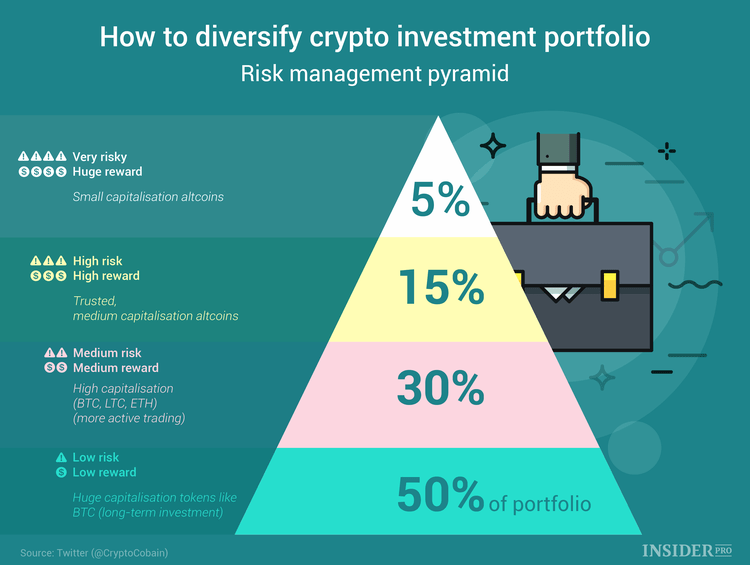
Diversification spreads risk. A common approach splits holdings across a large-cap anchor like Bitcoin, a mid-cap like Solana, and smaller positions in higher-risk assets — balancing potential reward against exposure.
Current Trends Shaping the Crypto Landscape
The crypto market in February 2026 showed bearish signals, with Bitcoin falling roughly 7.8% in 24 hours to around $65,928, while Ethereum saw a short-term bounce even as its broader trend stayed lower. Institutional adoption kept accelerating regardless — firms like BlackRock and JP Morgan were integrating blockchain for tokenization, converting real-world assets into digital tokens.
One data point worth noting: global crypto ETPs reached roughly $180 billion in assets under management by late 2025, reflecting a real surge in institutional inflows that carried into 2026 and boosted overall liquidity.
Chainlink’s oracles are also worth watching — they bridge blockchains to real-world data, letting smart contracts access off-chain information like weather or stock prices. Chainlink’s decentralized network aggregates data from multiple sources to reduce manipulation risk, which unlocks applications in DeFi and supply chains for altcoins built on top of it.
Regulatory clarity has been improving too. The GENIUS Act on stablecoins passed in 2025, paving the way for broader frameworks in 2026 — developments that make assets like Ethereum more appealing for long-term holds.
Bitcoin vs. Ethereum: A Detailed Comparison
Bitcoin and Ethereum are the two most common starting points. Bitcoin, often called digital gold, focuses on store-of-value with a fixed 21 million supply cap. Its market dominance has historically hovered around 55-60%, which makes it more resilient during downturns than most altcoins.
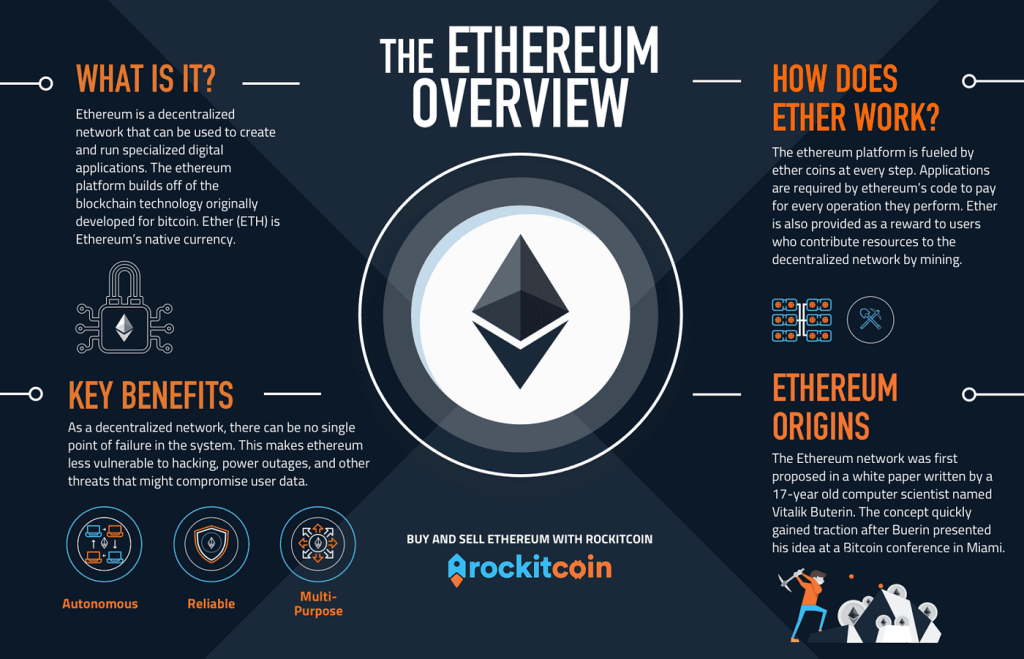
Ethereum, sometimes called the world computer, supports dApps and NFTs via smart contracts. Since its 2022 transition to proof-of-stake, it uses roughly 99% less energy than before. Network activity has kept setting records even during price pullbacks, with daily transfer counts well into seven figures.
| Aspect | Bitcoin | Ethereum |
|---|---|---|
| Purpose | Store of value | Smart contracts platform |
| Supply | 21M fixed | No cap |
| Consensus | Proof-of-work | Proof-of-stake |
| 24h Change (Feb 2026 snapshot) | -7.82% | +9.84% (short-term bounce) |
| Key Strength | Institutional hedge | DeFi ecosystem |
Bitcoin has outperformed historically over long timeframes, though Ethereum’s ongoing upgrades could narrow that gap as network usage keeps growing.
Pros, Risks, and Common Misconceptions
Crypto investing offers real advantages: decentralization removes intermediaries, and Bitcoin’s fixed scarcity is a genuine driver of long-term value, while Ethereum’s utility fosters ongoing innovation. Chainlink adds to this by providing reliable data feeds, solving what’s known as the “oracle problem” — smart contracts otherwise can’t access information outside their own blockchain.
The risks are just as real. Volatility is the defining feature — Bitcoin has seen drawdowns of 40%+ from local highs within a matter of weeks before. Regulatory shifts can move prices fast, and security threats like exchange hacks persist, even though best practices mitigate most of that risk.
A common misconception is that crypto is a get-rich-quick scheme. It isn’t — it’s volatile, and plenty of people lose money chasing hype rather than fundamentals. Another myth: that every crypto behaves like Bitcoin. Ethereum and Chainlink serve entirely different roles, with Chainlink specifically enabling real-world data access for altcoin smart contracts rather than functioning as a store of value at all.
Actionable Insights for Selecting Crypto to Buy
Dollar-cost averaging (DCA) is one of the simplest ways to navigate a volatile market like this one — invest a fixed amount on a regular schedule (say, $100 into Bitcoin monthly) rather than trying to time the bottom. It buys more when prices dip and less when they spike, smoothing out the entry price over time.
Secure your holdings properly: use hardware wallets like Ledger for cold storage, enable two-factor authentication everywhere, and never share your seed phrase with anyone. On diversification, a common split allocates roughly half to Bitcoin/Ethereum, a meaningful chunk to a mid-cap like Solana, and smaller positions in trusted mid-caps like Chainlink or higher-risk altcoins.
Watch exchange fees — they vary significantly between platforms and eat into returns over time if ignored. For taxes, track your cost basis per wallet; broker cost-basis reporting via Form 1099-DA is rolling out for the 2026 tax year in the US, with gains taxed at ordinary rates short-term and preferential rates long-term.
Frequently Asked Questions
Should I buy Bitcoin or Ethereum first?
Most beginners start with Bitcoin for its relative stability and market dominance, then add Ethereum for DeFi and smart-contract exposure once they’re comfortable with how the market moves.
Is dollar-cost averaging actually better than trying to time the market?
For most investors, yes — consistently timing dips correctly is extremely difficult even for professionals. DCA removes that guesswork by spreading purchases across highs and lows automatically.
How many different cryptocurrencies should I hold?
There’s no universal number, but concentrating too heavily in one small-cap altcoin is a common mistake. A large-cap anchor (Bitcoin, Ethereum) plus a handful of researched mid-caps is a more resilient starting structure than chasing a dozen speculative tokens.
Do I need a hardware wallet if I’m just starting out?
For small amounts you’re actively trading, an exchange or software wallet is usually fine. Once your holdings grow past what you’d be comfortable losing to a hack, moving to cold storage on a hardware wallet is worth the extra step.
Embracing a Long-Term Perspective
Choosing what crypto to buy really comes down to strategy — dollar-cost averaging, real diversification, and taking security seriously. Bitcoin for stability, Ethereum for utility, and infrastructure plays like Chainlink for the data layer underneath it all each serve a different role in a resilient portfolio.
As markets keep evolving, will the next wave of institutional adoption reshape which assets lead, or will new challengers emerge?
References
- Forbes – Top 10 Cryptocurrencies Of February 5, 2026 – https://www.forbes.com/advisor/investing/cryptocurrency/top-10-cryptocurrencies
- CoinDCX – Top 10 Cryptos To Invest In February 2026 [By Market Cap] – https://coindcx.com/blog/crypto-highlights/top-10-cryptos-to-invest
- YouHodler – Top 10 Cryptocurrencies to Invest in February 2026 – https://www.youhodler.com/blog/top-10-cryptocurrencies-to-invest-in-february
- The Motley Fool – The Best Cryptocurrency to Buy With $500 Right Now – https://www.fool.com/investing/2026/02/03/the-best-cryptocurrency-to-buy-with-500-right-now
- Yahoo Finance – Thinking About Investing in Crypto in 2026? Here Are My Top Picks – https://finance.yahoo.com/news/thinking-investing-crypto-2026-top-113000712.html
- CoinMarketCap – Top Cryptocurrencies – https://coinmarketcap.com/
- Mudrex Learn – Cheapest Cryptocurrencies To Invest In February 2026 – https://mudrex.com/learn/cheapest-cryptos-to-buy
- Chainlink – Decentralized Oracles for Blockchain Use Cases – https://chain.link/use-cases
- The Motley Fool – Better Crypto Buy: Bitcoin vs. Ethereum – https://www.fool.com/investing/2026/01/30/better-crypto-buy-bitcoin-vs-ethereum
- Fidelity Investments – Dollar-cost averaging for crypto – https://www.fidelity.com/learning-center/trading-investing/crypto/dollar-cost-averaging
This is not financial advice. Crypto is volatile — always do your own research and only invest what you can afford to lose.