Dharma DeFi stands at the forefront of a rapidly evolving decentralized finance landscape. As investors seek reliable ways to generate yields amid market volatility, platforms like Dharma DeFi are drawing attention for their innovative approaches to lending and liquidity provision. This article explores how Dharma DeFi is enabling high-yield opportunities while addressing the challenges of risk management in decentralized lending.

Dharma DeFi 2026: Unlocking High-Yield Opportunities in Decentralized Lending
Short answer: Dharma DeFi refers to Bitcoin-focused decentralized lending protocols — most notably Velar’s Dharma AMM — that let users earn yield on otherwise idle Bitcoin through automated market makers and over-collateralized lending. It’s part of a broader shift bringing DeFi to a network that’s traditionally been underutilized for lending.
The Rise of Decentralized Lending in a Maturing Market
Decentralized lending has transformed from a niche experiment into a cornerstone of the crypto economy. At its core, it lets users borrow and lend digital assets without intermediaries like banks. Protocols facilitate this through smart contracts on blockchains, keeping the process transparent and efficient.
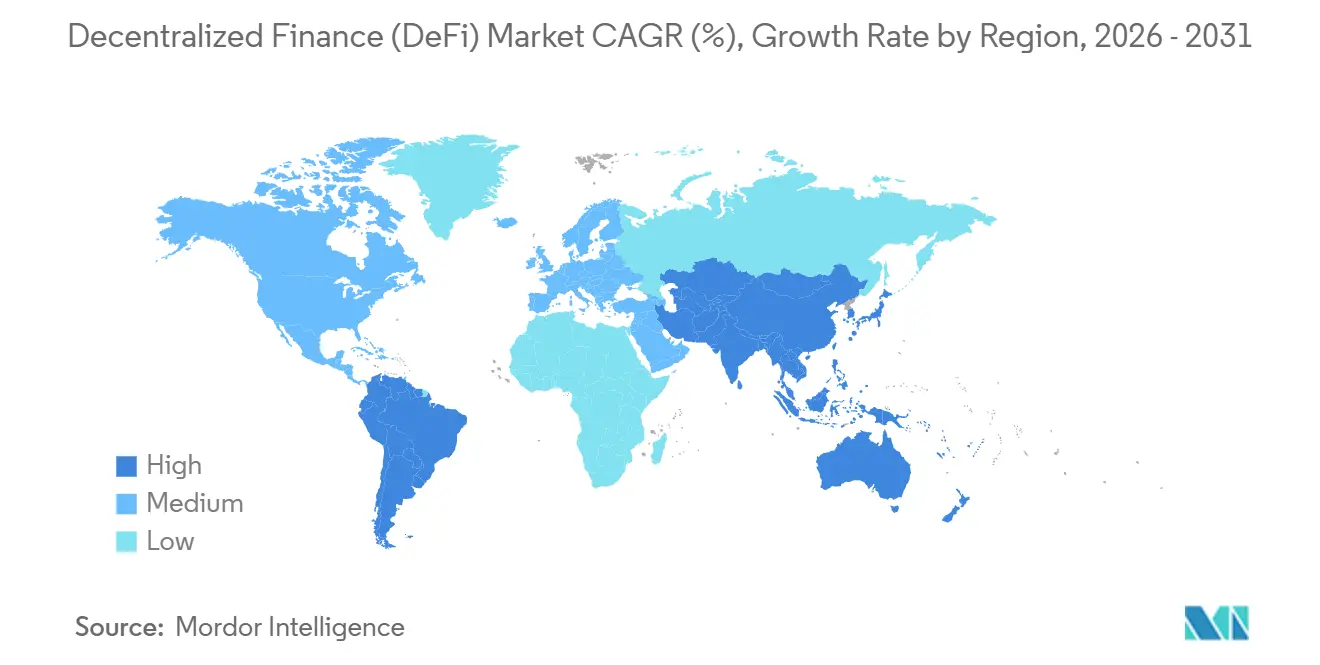
Dharma DeFi, particularly through developments like Velar’s Dharma AMM, exemplifies this shift. Launched to unlock liquidity on Bitcoin, it integrates automated market makers with lending features, letting users earn yield on otherwise idle assets. This comes at a time when the overall DeFi market is projected to grow from $42.56 billion in 2025 to $60.73 billion in 2026 — a growth rate that reflects sustained investor interest, not a passing trend.
What’s driving this growth? Partly, the integration of real-world assets into DeFi platforms. Tokenized treasuries and similar instruments are now commonplace, offering stable yields around 4-5% that rival traditional savings accounts. As markets mature, the focus is shifting from speculative gains toward sustainable returns.
Think of it this way: traditional banking is like a locked vault where your money sits dormant. Decentralized lending, powered by protocols like Dharma DeFi, turns that vault into something more active — assets working continuously to generate interest instead of just sitting there.
Innovative Protocols Fueling Dharma DeFi’s Growth
Dharma DeFi’s lending protocols build on foundational DeFi mechanics but add enhancements for scalability and accessibility. Peer-to-peer lending models, once popularized by early iterations of Dharma, now come with cross-chain capabilities. Users can lend USDC or other stablecoins directly, earning competitive rates while minimizing counterparty risk through over-collateralization.
A key feature is the use of automated market makers (AMMs) in lending pools. In Velar’s Dharma AMM, token pairs trade on-chain, providing liquidity that supports borrowing activity. This setup boosts yields and reduces fees compared to centralized exchanges. With Bitcoin DeFi gaining traction in 2026, protocols like this enable asset movement without wrappers, addressing the fragmentation that plagued earlier systems.
Dharma DeFi also leans on oracles to keep pricing accurate. Without reliable data feeds, lending protocols risk under-collateralized loans that lead to unfair liquidations — which is exactly where Chainlink’s oracles come in.
Chainlink’s Oracles: Real-World Data for Altcoin Smart Contracts
Chainlink oracles bridge the gap between blockchains and external data sources, making them essential for DeFi lending. In smart contracts, oracles provide real-time price feeds, interest rates, and other metrics needed for accurate risk assessment.
For altcoin-based lending, Chainlink ensures volatile assets like ETH or SOL are valued accurately against stablecoins. This prevents manipulation and supports features like flash loans, where borrowers access funds instantly for arbitrage opportunities and repay within the same transaction.
In Dharma DeFi specifically, oracles enable dynamic yield adjustments based on market conditions. If Bitcoin’s price surges, oracle data triggers recalibrations in lending pools to maintain stability. Chainlink’s decentralized network aggregates data from multiple providers, reducing single points of failure and improving security overall.
This matters because DeFi is increasingly reaching into real-world applications. Prediction markets and tokenized assets rely on oracles for settlement, and Chainlink alone secures over $137 billion in DeFi value. It’s the equivalent of a trusted referee in a game where the rules enforce themselves automatically.
Current Trends Shaping Dharma DeFi and DeFi Lending
The DeFi sector in 2026 is emphasizing sustainability over hype. Total value locked (TVL) in lending protocols has risen steadily, with outstanding loans up 37.2% year-to-date. That growth tracks with stablecoin market cap expansion, now exceeding $300 billion, as users look for lower-volatility ways to earn yield.
Search interest in related terms has surged too — queries for “onchain” have increased fivefold since early 2024, reaching all-time highs. Specific data on Dharma DeFi shows fairly niche interest so far, but the broader Bitcoin DeFi narrative, including protocols like Dharma AMM, reflects that same momentum. Social discussions on X show these tools simplifying asset flows in a way that’s attracting more mainstream investors.
Another trend worth watching: the convergence of TradFi and DeFi. Institutional players are tokenizing assets, which is pushing DeFi’s boundaries outward. Dharma DeFi stands to benefit here, offering high-yield opportunities on Bitcoin — a network traditionally underutilized for lending.
Pros, Risks, and Common Misconceptions in Decentralized Lending
The advantages of Dharma DeFi are clear. High yields — often 4-8% on stablecoins — outpace what traditional finance typically offers. Accessibility is another plus; anyone with a wallet can participate, which genuinely democratizes access to these strategies. Protocols like Dharma AMM reduce silos and enable more efficient liquidity provision.
The risks are real, though. Volatility can trigger liquidations if collateral values drop sharply. Smart contract vulnerabilities, while reduced by audits, remain a genuine concern. Heavy reliance on oracles also introduces oracle-failure risk, where inaccurate data can lead to unfair liquidations.
A common misconception is that DeFi is “risk-free” simply because it’s decentralized. In reality, it’s pseudonymous and still requires real due diligence. Another myth: that all yields are sustainable. Many stem from token emissions, which can dilute value over time — real yield, generated from actual fees and funding rates, is the more durable version to look for.
Strategies for Maximizing Yields While Managing Risks
To engage with Dharma DeFi lending sensibly, start with diversification. Spread exposure across stablecoins, LSTs (liquid staking tokens), and RWAs rather than concentrating in one. Some protocols currently offer 6-7% on SOL or ETH derivatives, for comparison.
Monitor oracle health — Chainlink’s feeds are transparent, so it’s worth verifying data sources yourself rather than assuming. Use leverage looping cautiously if at all: borrowing against collateral can amplify yields, but you need to maintain a healthy loan-to-value ratio to avoid getting liquidated.
Watch market indicators. In 2026, that means keeping an eye on trends like unified stablecoin layers and privacy enhancements. Engaging with communities on X can give you a faster read on protocol updates than waiting for news coverage.
Finally, prioritize security. Use hardware wallets, and audit a protocol’s track record before committing real funds. That’s what turns “high-yield opportunity” into a calculated play instead of a gamble.
Frequently Asked Questions
What exactly is Velar’s Dharma AMM?
It’s an automated market maker built to unlock DeFi liquidity directly on Bitcoin, combining AMM trading with lending features so users can earn yield on Bitcoin that would otherwise sit idle.
Is decentralized lending actually safer than a traditional bank?
Not inherently — it’s different, not automatically safer. DeFi removes a central intermediary, but it introduces smart-contract risk, oracle risk, and liquidation risk that a traditional bank account simply doesn’t carry.
What’s the difference between “real yield” and emissions-based yield?
Real yield comes from actual protocol revenue — trading fees, funding rates, interest paid by borrowers. Emissions-based yield comes from a protocol printing new tokens as rewards, which can look attractive short-term but dilutes value as supply grows.
What actually triggers a liquidation in DeFi lending?
When the value of your collateral drops far enough relative to what you’ve borrowed, the protocol automatically sells (liquidates) part or all of your collateral to repay the loan and protect the lender.
A Long-Term Perspective on Dharma DeFi’s Role in Finance
As DeFi matures, Dharma DeFi represents a bridge toward more inclusive finance. By unlocking yield on an underutilized network like Bitcoin, it’s reshaping how everyday investors can engage with crypto. With oracles like Chainlink keeping the system reliable, the ecosystem looks positioned for deeper integration with traditional finance over time.
Success here still hinges on adaptation, though — sustainable models will win out, rewarding patient participants over pure speculators.
What if decentralized lending becomes the default for global finance — how prepared are you to adapt?
Top References Used for This Article
- Finance Magnates – Velar Launches Dharma AMM to Unlock DeFi Liquidity on Bitcoin – https://www.financemagnates.com/thought-leadership/velar-launches-dharma-amm-to-unlock-defi-liquidity-on-bitcoin
- The Business Research Company – Decentralized Finance Global Market Report – https://www.thebusinessresearchcompany.com/report/decentralized-finance-global-market-report
- Chainlink – DeFi Use Cases – https://chain.link/use-cases/defi
- Galaxy – Chainlink Oracle, CCIP, and Price Feeds – https://www.galaxy.com/insights/research/chainlink-oracle-ccip-price-feeds
- The Block – 2026 DeFi Outlook – https://www.theblock.co/post/383120/2026-defi-outlook
- World Economic Forum – Digital Economy Inflection Point: What to Expect for Digital Assets in 2026 – https://www.weforum.org/stories/2026/01/digital-economy-inflection-point-what-to-expect-for-digital-assets-in-2026
- The Block – Google Search Volume for “Onchain” Is Hitting Unprecedented Heights – https://www.theblock.co/post/306736/google-search-volume-for-onchain-is-hitting-unprecedented-heights
- Yahoo Finance – Top DeFi Trends to Watch in 2026 – https://finance.yahoo.com/news/top-defi-trends-watch-2026-060000080.html
- OneKey – Oracles: The Backbone Securing $137 Billion in DeFi – https://onekey.so/blog/learn/oracles-the-backbone-securing-137-billion-in-defi
This is not financial advice. Crypto is volatile — always do your own research and only invest what you can afford to lose.