XRP and the Trump Regulatory Reset: Selig’s Swearing-In Signals End of Uncertainty

XRP and the Trump Regulatory Reset: Selig’s Swearing-In Signals End of Uncertainty
Short answer: Two regulatory shifts converged to reshape XRP’s outlook: Michael Selig’s confirmation as CFTC Chairman on December 18, 2025, and SEC Chair Paul Atkins’ “Project Crypto” initiative, which introduced a token taxonomy classifying assets like XRP as digital commodities rather than securities when used for genuine utility. Together, these developments resolved years of jurisdictional ambiguity that had kept banks and institutions cautious about integrating XRP into regulated financial infrastructure.
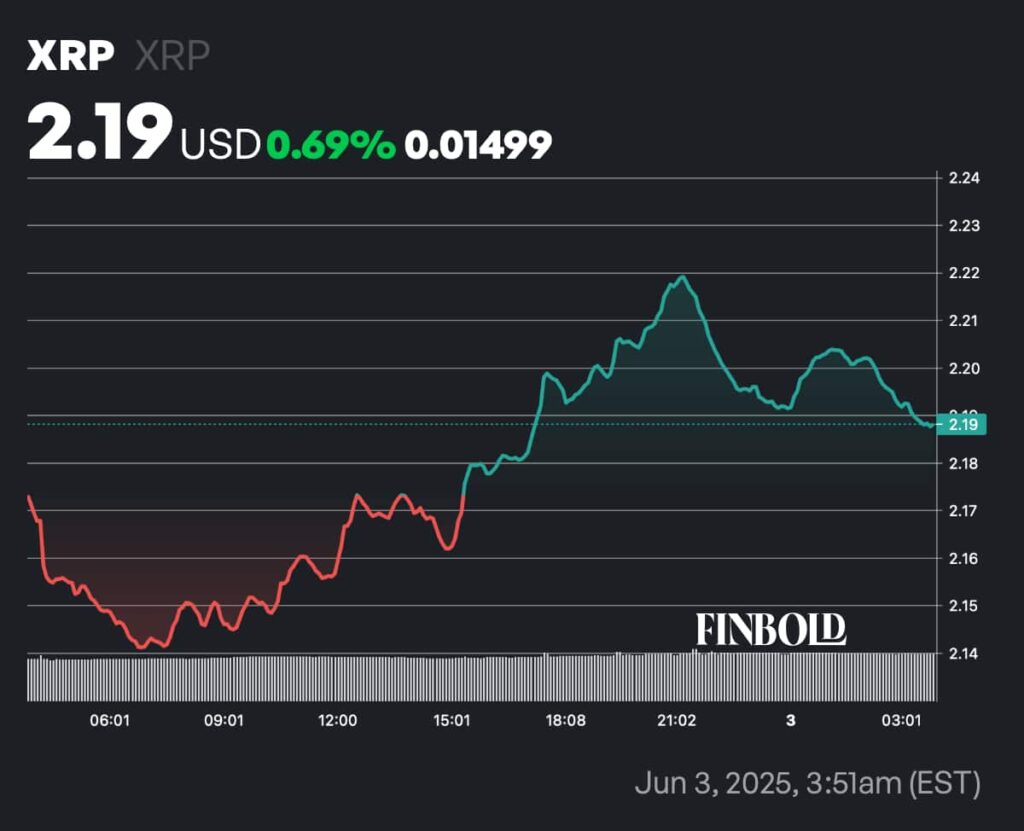
The regulatory reset was reshaping the cryptocurrency landscape broadly, and XRP stood at the forefront of it. As Michael Selig took the oath as Chairman of the Commodity Futures Trading Commission (CFTC), a real wave of clarity swept away years of accumulated regulatory fog. This moment, coupled with Atkins’ push for a structured token taxonomy, positioned XRP for a genuine role in regulated financial markets. For investors watching digital assets, this wasn’t just policy talk — it represented a real potential catalyst for growth in cross-border payments and beyond.
Why did this matter specifically at that moment? With crypto markets hitting record highs through 2025 and institutional adoption accelerating, regulatory uncertainty had long been the clearest weakness for assets like XRP. Selig’s confirmation marked a genuine turning point. His background bridged both the SEC and CFTC directly, promising more coordinated oversight favoring innovation over litigation.
Understanding XRP: A Bridge for Global Finance
XRP, the native token of the Ripple network, isn’t a typical cryptocurrency. Think of it as a high-speed rail system for money transfers. Unlike Bitcoin, which focuses on store-of-value properties, XRP facilitates instant, low-cost cross-border payments specifically. Ripple’s On-Demand Liquidity (ODL) uses XRP to eliminate the need for pre-funded accounts in international transactions altogether.
Regulatory hurdles dogged XRP for years, though, dating back to the SEC’s 2020 lawsuit against Ripple Labs alleging unregistered securities sales. That case dragged on for years, creating persistent market volatility around every ruling. By the end of this regulatory reset period, the lawsuit had resolved, with Ripple paying a $50 million penalty and gaining clarity that secondary XRP sales aren’t securities transactions. This resolution, amid broader policy changes, positioned XRP for real mainstream integration going forward.
Selig’s dual-agency experience mattered considerably here — he served as chief counsel for the SEC’s Crypto Task Force before his CFTC nomination, ensuring a genuinely nuanced approach to the role. He advocated for the CFTC as the primary regulator for digital commodities specifically, reducing the jurisdictional overlaps that had previously stifled growth across the sector.
Paul Atkins’ Token Taxonomy
Paul Atkins, the SEC Chair, brought his own significant contribution to this shift. His “Project Crypto” initiative introduced a token taxonomy classifying digital assets into four distinct buckets: digital commodities (not securities), network tokens, digital collectibles, and investment contracts. This wasn’t abstract theory — Atkins emphasized that decentralized network tokens like XRP, when used genuinely for utility, escape securities classification under this framework.
Atkins’ efforts built on past proposals, like the earlier Token Taxonomy Act, but carried real regulatory weight under this administration’s approach. By clearly distinguishing utility from investment, this taxonomy had genuine potential to unlock XRP’s role in regulated markets. Banks previously hesitant due to compliance concerns, for instance, could now more comfortably embrace XRP for settlement purposes.
This broader regulatory shift amplified the effect further. With pro-crypto appointees across both agencies, policy increasingly favored collaboration between the SEC and CFTC, fostering an environment where XRP could genuinely thrive in fintech applications rather than remain sidelined by ambiguity.
XRP’s Surge and Institutional Embrace
2025 proved transformative for XRP. Despite lingering uncertainty early in the year, XRP surged 650% amid the lawsuit’s resolution and subsequent ETF launches. That data point underscores real market confidence: XRP’s price climbed above $3 at points during the year, driven by spot ETFs and expanding institutional partnerships.
Ripple processed $95 billion in payments cumulatively by this point, highlighting genuine real-world utility even as price occasionally decoupled from underlying transaction volume. Banks across Asia and Europe increasingly used ODL, reducing costs by up to 60% compared to traditional SWIFT-based systems.
The broader regulatory environment enabled much of this. With Selig at the CFTC, spot digital commodity trading gained real legitimacy. Atkins’ taxonomy complemented this directly, classifying XRP as a commodity in many practical contexts. The result: more exchanges listed XRP derivatives, and institutional inflows continued rising steadily.

This effect wasn’t isolated to XRP alone, either. Altcoins like Chainlink benefited similarly, as regulatory clarity boosted confidence across interconnected crypto ecosystems more broadly.
Chainlink’s Oracles: Bridging Blockchain to Reality
Shifting focus briefly, Chainlink’s oracles address a core structural limitation in blockchain technology: smart contracts can’t natively access off-chain data on their own. Imagine a self-executing insurance policy designed to pay out based on rainfall — without oracles, it has no way to actually verify whether rain fell at all.
Chainlink solves this with decentralized oracle networks (DONs), aggregating data from multiple independent sources to produce tamper-resistant inputs. For altcoins broadly, this enables genuinely real-world applications across DeFi, NFTs, and beyond what pure on-chain logic alone could support.
By this point in 2025, Chainlink counted over 2,000 integrations across chains including Ethereum and Polygon. Its Cross-Chain Interoperability Protocol (CCIP) went live with SWIFT in November, connecting roughly 11,000 banks to blockchain infrastructure directly.
How Chainlink Complements XRP
This broader regulatory reset extended to oracles too. Selig’s pro-crypto stance at the CFTC could plausibly classify oracle data feeds as commodities, ensuring greater reliability in regulated trading environments.
Atkins’ taxonomy views network tokens like Chainlink’s LINK as utilities rather than securities under this framework. This creates real synergy between the two projects: XRP handles payments, while Chainlink handles data verification for compliant smart contracts built on top.
A cross-border remittance using XRP, for example, could leverage Chainlink oracles for real-time exchange rate data, ensuring accuracy and reducing fraud risk throughout the transaction.
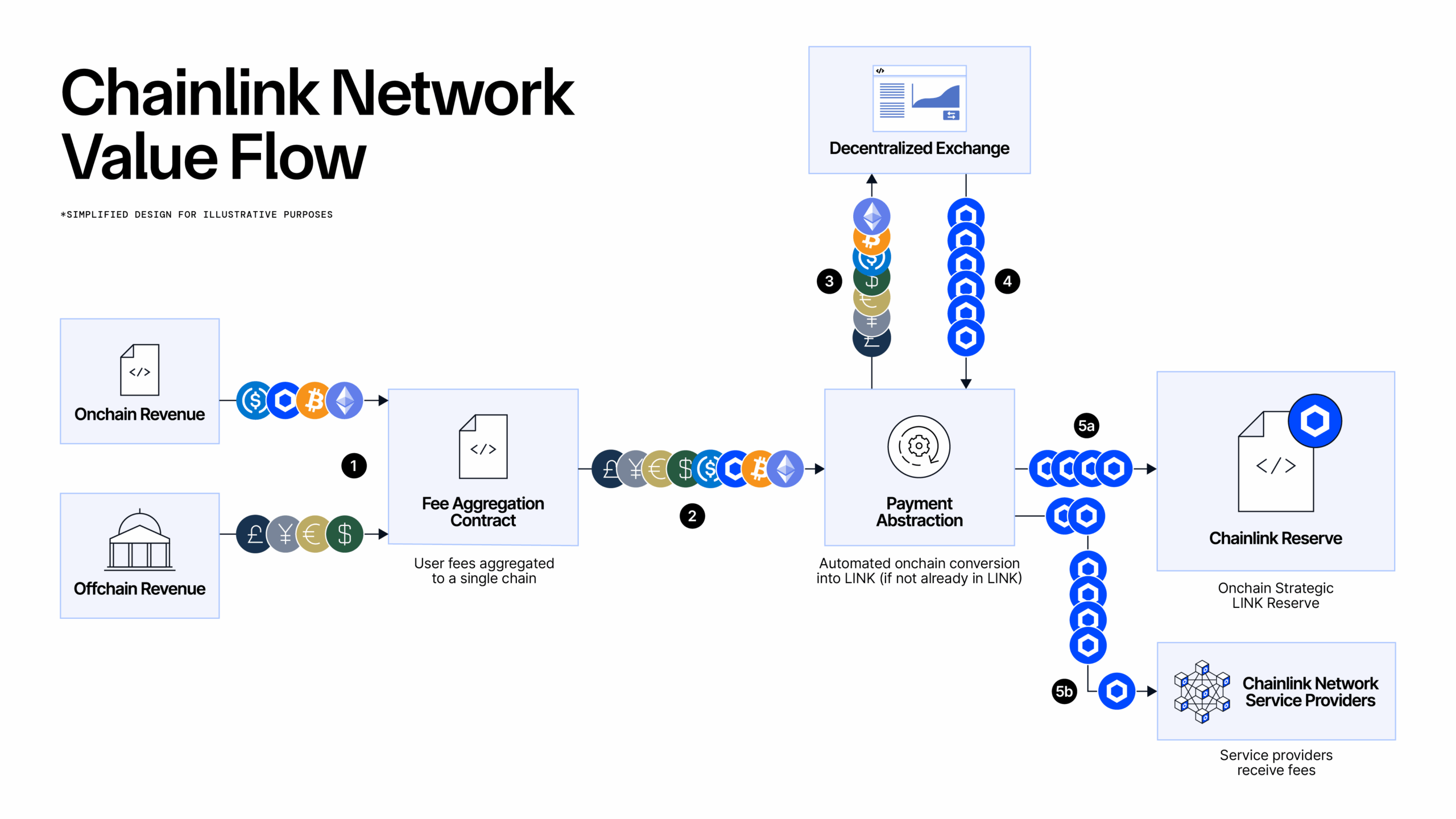
By December 2025, Chainlink was powering roughly 70% of DeFi value across the sector, with 15 new integrations added that month alone. As altcoins matured further, this kind of infrastructure became increasingly indispensable to the broader ecosystem.
Pros, Risks, and Common Misconceptions
The upsides were genuinely clear. For XRP specifically, regulatory clarity meant broader adoption potential. The pros include faster transactions — XRP settles in seconds versus days for traditional wire transfers — and meaningfully lower fees throughout. In fully regulated markets, it had real potential to disrupt a share of the roughly $120 trillion in annual cross-border payment flows.
Chainlink’s pros were similarly compelling: reliable data feeds unlock trillions in potential tokenized asset value. Its decentralized design minimizes single-point-of-failure risk, unlike centralized oracle alternatives.
Real risks persisted alongside these advantages, though. Market volatility remained a constant — XRP dropped 42% following its earlier surge in February 2025. Regulatory shifts could still reverse if political winds changed unexpectedly. For Chainlink specifically, oracle manipulation attacks, while rare, posed genuine ongoing threats worth monitoring.
Common misconceptions persisted too. Many still viewed XRP as simply “Ripple’s coin” — but it operates on a decentralized network with validators well beyond Ripple’s own control. For Chainlink, a common misconception frames it as a competitor to Ethereum, when it actually functions as an enhancer layered on top of existing blockchains. Another persistent myth held that this regulatory reset guaranteed price moonshots — it didn’t. Policy helps create favorable conditions, but underlying fundamentals still ultimately drive value.
Actionable Insights for Investors
Monitoring Selig’s early CFTC actions is worthwhile — watching for digital commodity guidelines expected in Q1 2026 gives a useful early signal of direction. Tracking Atkins’ token taxonomy rollout matters too, since public comment periods could still influence final classifications for various assets.
For XRP specifically, gaining exposure via ETFs offers a diversified entry point for most investors. Researching institutional partnerships, like those already in place with Asian banks, can offer useful signal about adoption trajectory. With Chainlink, evaluating projects that actually use its oracles is worth the effort — DeFi protocols built on this infrastructure can offer real yield, though genuine risk assessment still matters.
Diversifying between XRP’s payment focus and Chainlink’s data layer can offer a genuinely balanced approach to this part of the market. Staying informed through direct SEC and CFTC updates remains the most reliable path — resources like TradingView’s XRP/USD chart can help track price action alongside these regulatory developments.
Frequently Asked Questions
What is the SEC’s “Project Crypto” token taxonomy?
It’s an SEC initiative under Chair Paul Atkins that classifies digital assets into four categories — digital commodities, network tokens, digital collectibles, and investment contracts — with utility-focused network tokens like XRP generally escaping securities classification.
How was the SEC’s lawsuit against Ripple resolved?
Ripple paid a $50 million penalty and gained clarity that secondary XRP sales on exchanges aren’t securities transactions, closing out a case that originated with the SEC’s 2020 lawsuit.
How does Chainlink relate to XRP’s regulatory story?
Chainlink isn’t directly tied to XRP’s regulatory status, but it benefits from the same broader clarity — its LINK token is treated as a network utility under Atkins’ taxonomy, and its oracle infrastructure could support XRP-based transactions requiring real-world data like exchange rates.
Does regulatory clarity guarantee XRP’s price will keep rising?
No. XRP still dropped 42% following its earlier 2025 surge despite favorable regulatory developments, illustrating that policy clarity supports adoption but doesn’t eliminate normal market volatility.
A Long-Term View on Crypto’s Evolution
This regulatory reset, embodied by Selig’s swearing-in and Atkins’ taxonomy, heralded an era where XRP and altcoins like Chainlink could integrate more seamlessly into mainstream finance. This wasn’t an overnight transformation, but rather a steady build toward greater efficiency and broader inclusion across regulated markets.
As policy continues evolving, these technologies could genuinely help redefine how global markets function. Patience remains essential throughout, though — crypto’s inherent volatility demands it regardless of how favorable the regulatory backdrop becomes.
What if this reset unlocks not just XRP’s potential, but a broader global financial system where traditional borders dissolve entirely?
References Used for This Article
- WilmerHale – Michael Selig Confirmed as CFTC Chairman: Six Issues to Watch in 2026 – https://www.wilmerhale.com/en/insights/client-alerts/20251218-michael-selig-confirmed-as-cftc-chairman—six-issues-to-watch-in-2026
- The Block – Crypto Regulation in 2026: SEC’s Ambitious Agenda, Empowered CFTC – https://www.theblock.co/post/383241/crypto-regulation-2026-sec-ambitious-agenda-empowered-cftc
- Yahoo Finance – Senate Confirms Pro-Crypto Mike Selig as CFTC Chair – https://finance.yahoo.com/news/senate-confirms-pro-crypto-mike-110503917.html
- SEC – The SEC’s Approach to Digital Assets: Inside Project Crypto – https://www.sec.gov/newsroom/speeches-statements/atkins-111225-secs-approach-digital-assets-inside-project-crypto
- Yahoo Finance – The SEC Is Considering Establishing a “Token Taxonomy” – https://finance.yahoo.com/news/sec-considering-establishing-token-taxonomy-231048398.html
- AInvest – XRP’s Regulatory Uncertainty and Market Implications – https://www.ainvest.com/news/xrp-regulatory-uncertainty-market-implications-navigating-risks-strategic-opportunities-post-2025-sec-settlement-2512/
- Chainlink – What Is an Oracle in Blockchain? – https://chain.link/education/blockchain-oracles
- Yahoo Finance – Ripple Has Processed $95 Billion in Payments – https://finance.yahoo.com/news/ripple-processed-95b-payments-heres-133052327.html
- Sarson Funds – SWIFT-Chainlink Integration: From Pilot to Live Deployment – https://sarsonfunds.com/swift-chainlink-integration-set-for-november-2025-from-pilot-to-live-deployment/
This is not financial advice. Crypto is volatile — always do your own research and only invest what you can afford to lose.

[…] Historical analysis shows escrow events rarely cause sustained price drops; broader factors like regulatory clarity and adoption drive trends. For instance, XRP’s 2025 peak above $3.60 aligned more with […]
[…] Innovation for U.S. Stablecoins (GENIUS) Act, signed into law on July 18, 2025, by President Trump, marked a pivotal moment in US crypto regulation. This legislation created the first federal […]