From Lawsuit to Leadership: XRP’s Path Under Pro-Crypto Regulators Selig and Atkins

From Lawsuit to Leadership: XRP’s Path Under Pro-Crypto Regulators Selig and Atkins
Short answer: XRP’s legal cloud lifted in May 2025 when the SEC settled its long-running case against Ripple Labs for $125 million — far below the $2 billion originally sought — confirming that XRP itself isn’t a security and that most secondary market sales aren’t either. With pro-crypto regulators Paul Atkins at the SEC and Michael Selig at the CFTC now overseeing the space, XRP shifted from playing defense in court to expanding its role in cross-border payments and DeFi lending.

XRP’s path under these pro-crypto regulators marked a genuinely pivotal shift for digital assets broadly. Once entangled in years of legal battles, XRP found itself positioned for real growth by the end of 2025. This evolution mattered because it followed a long stretch of ambiguity that had shaped nearly every major decision around the token.
The Ripple-SEC Saga: A Recap
Ripple Labs first faced the SEC in late 2020, when the agency claimed XRP sales had violated securities laws. According to the suit, Ripple had raised over $1.3 billion through XRP sales over the years.
In July 2023, Judge Analisa Torres issued a genuinely split ruling. XRP itself, she found, isn’t a security. Sales on public exchanges to retail buyers weren’t securities transactions either. Direct sales to institutional investors, though, were treated differently under her ruling.
That split decision was still a real win for the broader crypto industry. It clarified that secondary market trades often escape securities classification entirely, even when the original issuance might not. The case dragged on well beyond that ruling, though, through appeals and continued negotiation.
By 2025, resolution finally arrived. The SEC settled in May, returning $75 million to Ripple and dropping its remaining appeals. Total fines came to $125 million — far below the $2 billion the agency had originally sought at the outset of the case.
Think of the underlying legal distinction this way: imagine selling apples. If you sell to stores for resale, that’s simply fruit changing hands. But promising buyers a share of future orchard profits specifically? That starts to look more like an investment contract under securities law. This same logic underpinned much of the court’s reasoning around XRP’s different sale types.
The 2023 ruling boosted XRP’s price briefly at the time, though real uncertainty lingered right up until the final 2025 settlement closed the matter for good.
A New Regulatory Era Begins
Paul Atkins took the SEC chair in April 2025, and Michael Selig became CFTC chair that December — both bringing genuinely pro-crypto perspectives to their respective agencies.
Atkins, a former SEC commissioner returning to the agency, pushed consistently for clearer rules over ad hoc litigation. He criticized what critics called “regulation by enforcement” — suing companies first and offering guidance only after the fact. Under his leadership, the SEC dropped several pending crypto cases rather than continuing to pursue them.
Selig, drawing on his own experience with the SEC’s Crypto Task Force, echoed much of this same philosophy at the CFTC. He aimed specifically to foster digital asset innovation at the agency rather than treat it primarily as an enforcement target. Together, the two regulators signaled a real shift toward coordinated oversight between their agencies.
For XRP specifically, this pairing changed the picture considerably. The CFTC generally views most cryptocurrencies as commodities, and XRP fit clearly within that category based on prior agency statements. Moving away from enforcement-heavy tactics freed XRP for considerably broader institutional use going forward.
In September 2025, the SEC and CFTC jointly greenlit updated spot crypto trading rules and dropped several remaining suits against major firms in the process. This shift directly aided XRP’s broader utility case across the industry.
XRP in Cross-Border Payments and DeFi
XRP’s clearest strength remained cross-border payments. Ripple’s On-Demand Liquidity (ODL) service uses XRP directly to bridge currencies, cutting both cost and settlement time compared to traditional wire transfers.
Traditional SWIFT transfers can take days and pile up in fees along the way. XRP, by contrast, settles in seconds for fractions of a cent. Over 11,000 banks reportedly tapped the XRP Ledger (XRPL) for this kind of settlement by this point, according to recent industry reports — a genuinely meaningful leap in real-world adoption.
XRPL’s DeFi capabilities continued evolving in parallel. The ledger now supports tokenization and NFTs directly, and decentralized exchanges built on XRPL let users trade without relying on centralized intermediaries.
XRP lending launched during 2025 as well, allowing institutions to borrow XRP on-chain much like a traditional cash loan — a development that meaningfully boosted overall liquidity across the ecosystem.
Broader market statistics reflected genuine resilience despite the volatility. As of December 2025, XRP’s market cap sat at $112.32 billion, with the price hovering near $1.87 — down 13% year-to-date even amid these clear regulatory wins.
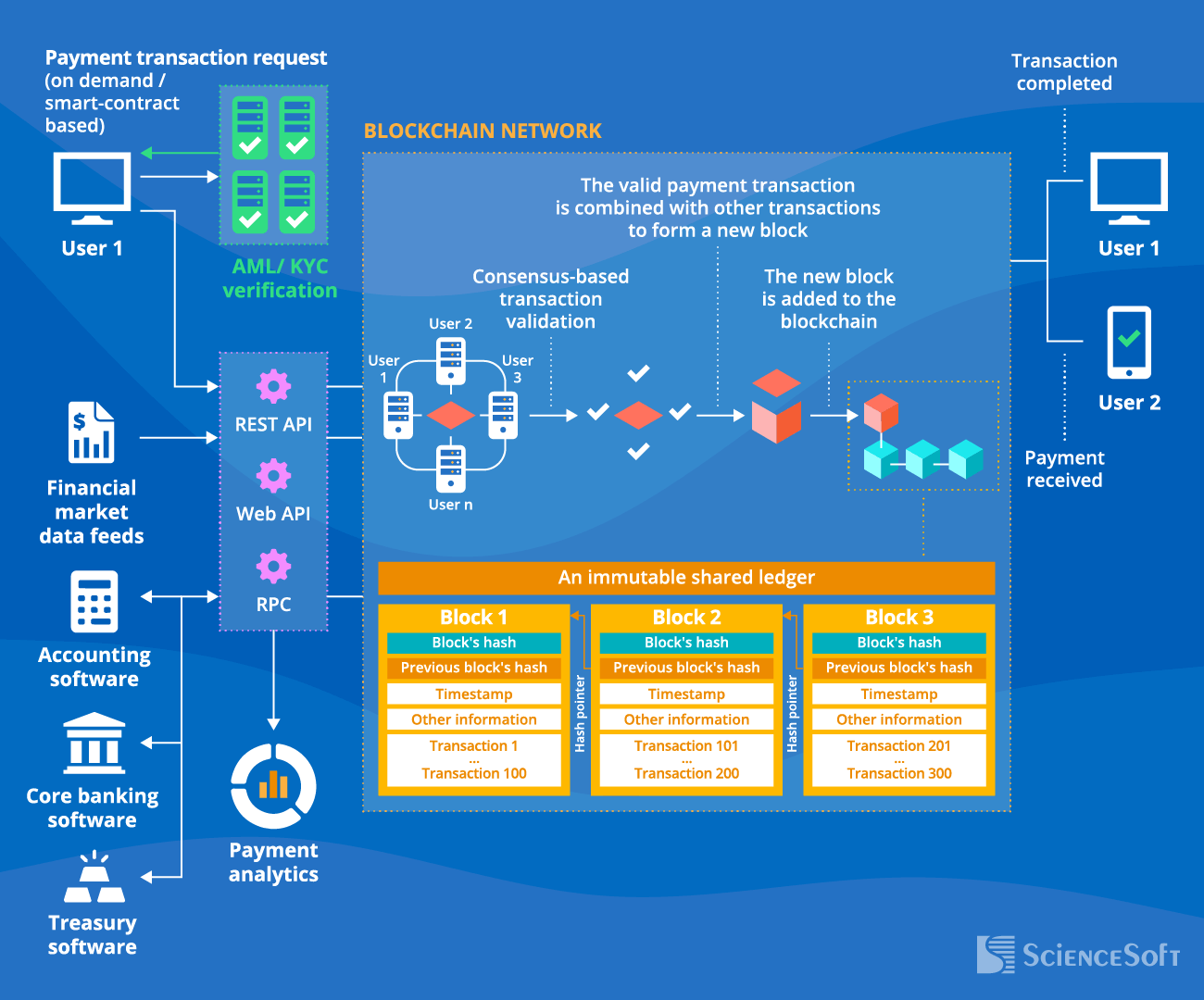
Broader fintech continued integrating blockchain infrastructure alongside this. Firms like JPMorgan tested comparable technology internally, though XRP remained a genuine leader in actual real-world payment use.
Pros, Risks, and Common Misconceptions
The advantages here are genuinely substantial. Speed and low fees make XRP well-suited for remittances specifically, and in DeFi it enables yield-generating strategies without the high transaction costs common on other networks. Under Selig and Atkins, regulatory clarity attracted real institutional interest — XRP ETFs launched during 2025 and pulled in over $1 billion in inflows.
Real risks persisted regardless. Volatility continued to dog crypto broadly, and XRP dropped roughly 50% from its July 2025 peak at one point during the year. Centralization concerns lingered too, since Ripple the company still holds a substantial share of the total XRP supply.
A common misconception holds that XRP is simply “Ripple’s token.” That’s not accurate — the XRPL is genuinely open-source, and anyone can build applications on top of it independently of the company. Another persistent myth suggests all XRP sales were ruled securities transactions; the 2023 court ruling specifically debunked that for retail exchange purchases.
Regulatory progress in the U.S. helped meaningfully, but it’s worth remembering that global rules still vary considerably — American clarity doesn’t automatically resolve regulatory questions in other jurisdictions.
Actionable Insights for Investors
Watching regulatory moves closely is worthwhile — tracking joint statements from Selig and Atkins specifically can reveal how far CFTC-SEC coordination will extend, and whether it opens the door to additional XRP use cases over time.
Monitoring XRPL upgrades is useful too. Automated market makers continue enhancing the ledger’s DeFi capabilities, and watching for new bank partnerships can offer a useful signal of continued institutional adoption.
Diversifying rather than concentrating entirely in XRP makes sense for most investors — XRP suits payment-focused strategies well, but pairing it with an asset like Bitcoin for store-of-value exposure offers a more balanced approach overall. Researching trading volumes helps gauge liquidity too — XRP’s 24-hour trading volume reached $1.9 billion at points, supporting relatively easy entry and exit for most position sizes.
Frequently Asked Questions
How much did Ripple ultimately pay in its SEC settlement?
Ripple’s total fines came to $125 million, far below the $2 billion the SEC had originally sought, with $75 million returned to the company as part of the May 2025 settlement.
Did the courts rule that XRP is a security?
No. Judge Analisa Torres ruled in 2023 that XRP itself isn’t a security, and that sales on public exchanges to retail buyers aren’t securities transactions — though direct institutional sales were treated differently under that same ruling.
Does Ripple the company control the XRP Ledger?
No. The XRPL is open-source, and anyone can build applications on it independently — though Ripple does hold a substantial share of the total XRP supply, which raises legitimate centralization concerns for some observers.
How many banks reportedly use the XRP Ledger for settlements?
Over 11,000 banks reportedly tapped the XRPL for settlement purposes by late 2025, according to industry reports, representing a meaningful leap in real-world institutional adoption.
A Long-Term View on XRP’s Potential
XRP’s path under pro-crypto regulators Selig and Atkins genuinely transformed the token’s position — from years spent playing legal defense to a more offense-oriented posture built around clear rules that unlock real payments and DeFi utility.
Real challenges remained, but the broader trends favored continued growth. Patience tends to pay off in crypto more often than not, and XRP’s trajectory through this period reflected that pattern clearly.
What if XRP eventually becomes a genuine standard for global transfers — could it meaningfully redefine how international finance actually works?

References Used for This Article
- Gordon Law – SEC vs. Ripple: A Turning Point for US Crypto Regulation? – https://gordonlaw.com/learn/sec-turning-point-crypto-regulation/
- Coincub – Ripple vs SEC: Full Case Timeline, Rulings, and 2025 Settlement – https://coincub.com/ripple-vs-sec/
- SEC – Statement on the Agency’s Settlement With Ripple Labs, Inc. – https://www.sec.gov/newsroom/speeches-statements/crenshaw-statement-ripple-050825
- SEC – Paul S. Atkins Sworn In as SEC Chairman – https://www.sec.gov/newsroom/press-releases/2025-68
- CFTC – Michael Selig Sworn In as 16th CFTC Chairman – https://www.cftc.gov/PressRoom/PressReleases/9164-25
- CFTC – Acting Chairman Pham Lauds DOJ Policy Ending Regulation by Enforcement – https://www.cftc.gov/PressRoom/PressReleases/9063-25
- XRPL.org – XRP Ledger Home – https://xrpl.org/
- AInvest – XRP’s Untapped DeFi Potential: How earnXRP Is Unlocking Sustainable Yield – https://www.ainvest.com/news/xrp-untapped-defi-potential-earnxrp-unlocking-sustainable-yield-opportunities-2512/
- CoinMarketCap – XRP Price, Market Cap and Chart – https://coinmarketcap.com/currencies/xrp/
- 24/7 Wall St – XRP 2025 Year in Review: Down 13% Despite SEC Victory and $1B ETF Inflows – https://247wallst.com/investing/2025/12/18/xrp-2025-year-in-review-down-13-despite-sec-victory-and-1b-etf-inflows-what-went-wrong/
This is not financial advice. Crypto is volatile — always do your own research and only invest what you can afford to lose.