
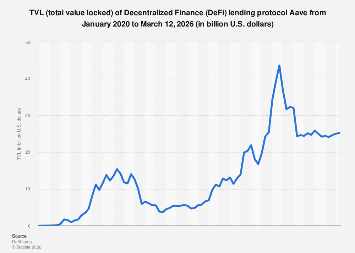
Short answer: DeFi yield farming means locking crypto into a protocol’s liquidity pools or lending markets in exchange for rewards, and heading into 2026 the leading platforms — Aave for lending, Uniswap for decentralized swaps — moved well beyond niche single-chain ecosystems like XRP’s XRPL toward multi-chain scalability and real-world asset integration. Total value locked across DeFi swung considerably through 2025, falling from a peak near $137 billion to roughly $94 billion by mid-December amid a broader crypto correction, before partially recovering to around $121 billion by year end.
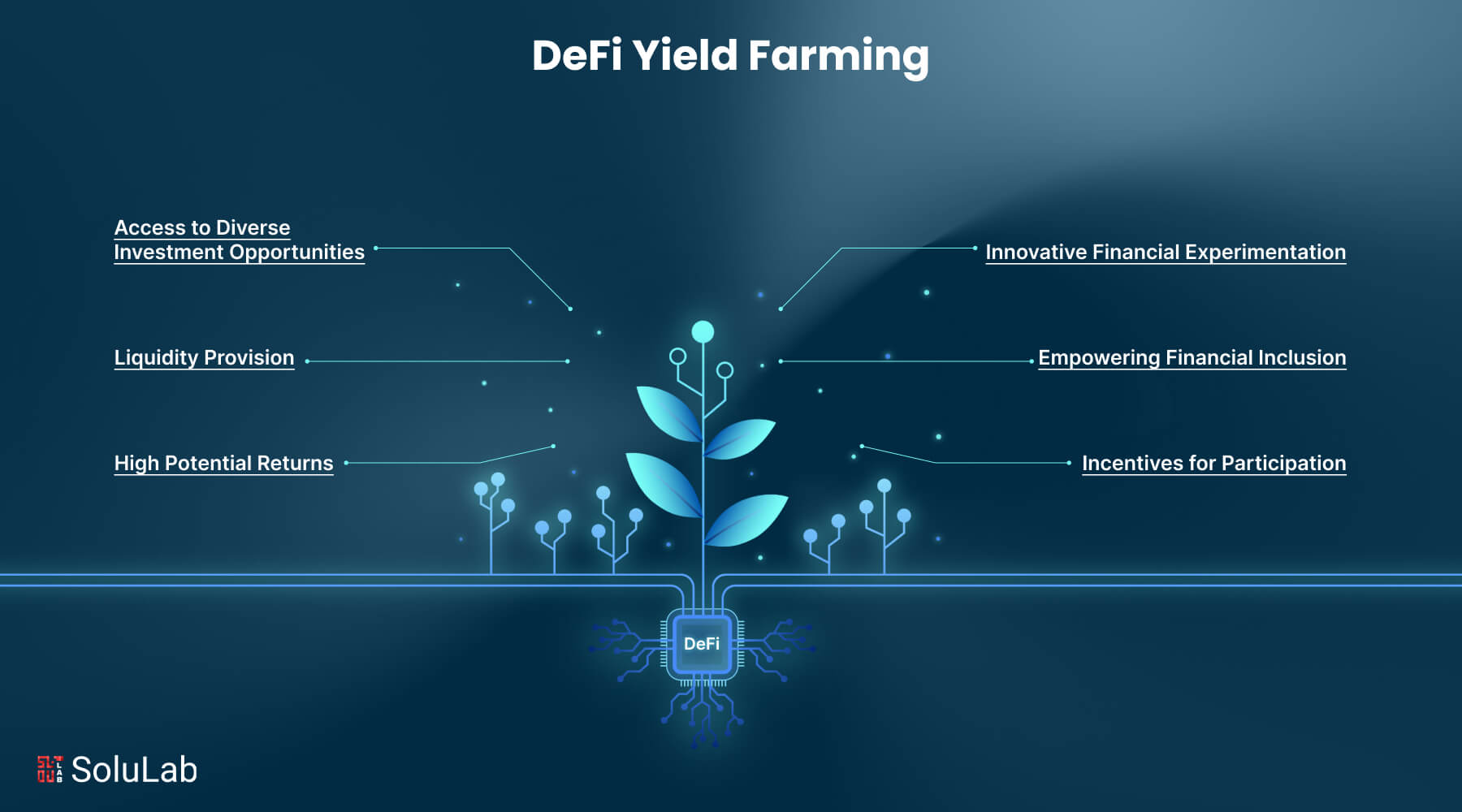
In the evolving landscape of decentralized finance, yield farming continued to captivate investors seeking returns beyond traditional assets. Heading into 2026, protocols like Aave and Uniswap redefined what was possible in the space, moving past narrower ecosystems to embrace multi-chain scalability and considerably more advanced features. This mattered because DeFi’s total value locked rebounded from real volatility earlier in 2025, signaling markets that were genuinely maturing and readying themselves for broader adoption. Investors eyeing sustainable yields needed to understand these tools to navigate a sector increasingly integrating real-world assets and AI-driven strategies.
Understanding Yield Farming in Plain English
Yield farming is essentially lending or providing liquidity to DeFi protocols in exchange for rewards, often in the form of tokens or accrued interest. Think of it like planting seeds in a digital farm — you deposit assets into a pool, and over time, they grow through fees or incentives generated by the platform’s underlying activity.
At its core, users lock cryptocurrencies into smart contracts on blockchains like Ethereum. These contracts facilitate trades, loans, or other financial services, distributing earnings proportionally among participants. Unlike traditional banking, there’s no intermediary involved — everything runs directly on code, which offers real transparency but also requires users to take on genuine self-custody of their funds.
For beginners, starting with stablecoins helps minimize volatility while learning the ropes. Platforms automate much of the process, but grasping the concept of impermanent loss — where asset prices shift relative to each other within a pool, potentially reducing the dollar value of your holdings — remains genuinely important. It’s something like sharing a pie that changes size depending on the market’s mood.
DeFi Trends Shaping 2026
DeFi headed into 2026 poised for real transformation, driven by growing institutional interest and steady technological advancement. Real-world asset tokenization stood out as a major trend, where physical items like real estate back digital tokens directly, expanding the range of yield opportunities available. Cross-chain liquidity and AI-optimized yield strategies gained real traction too, allowing assets to move more seamlessly across networks for better overall efficiency.
Aave, a leading lending protocol, was set for a full V4 rollout in early 2026, introducing enhanced risk management and stronger liquidation mechanisms aimed at attracting millions of additional users. Uniswap V4, launched in 2025, had already boosted adoption meaningfully through “hooks” — customizable plugins that enable dynamic fees and custom logic — effectively turning the protocol into a genuine developer platform for building innovative liquidity pools.
Beyond these two leaders, stablecoin dominance in lending markets continued growing, with yields of roughly 4-9% on dollar-pegged tokens even amid the possibility of further rate cuts. Forecasts for 2026 suggested DeFi’s total value locked could eventually exceed $500 billion, fueled largely by continued real-world asset growth.
Pros, Risks, and Common Misconceptions
Yield farming offers genuinely compelling advantages. High returns — often double-digit APYs — can meaningfully outpace traditional savings, particularly in low-interest environments. It democratizes finance in a real sense too, letting anyone participate without needing a bank as an intermediary. Diversifying across protocols like Aave for lending and Uniswap for swaps helps build a considerably more resilient portfolio than concentrating in a single platform.
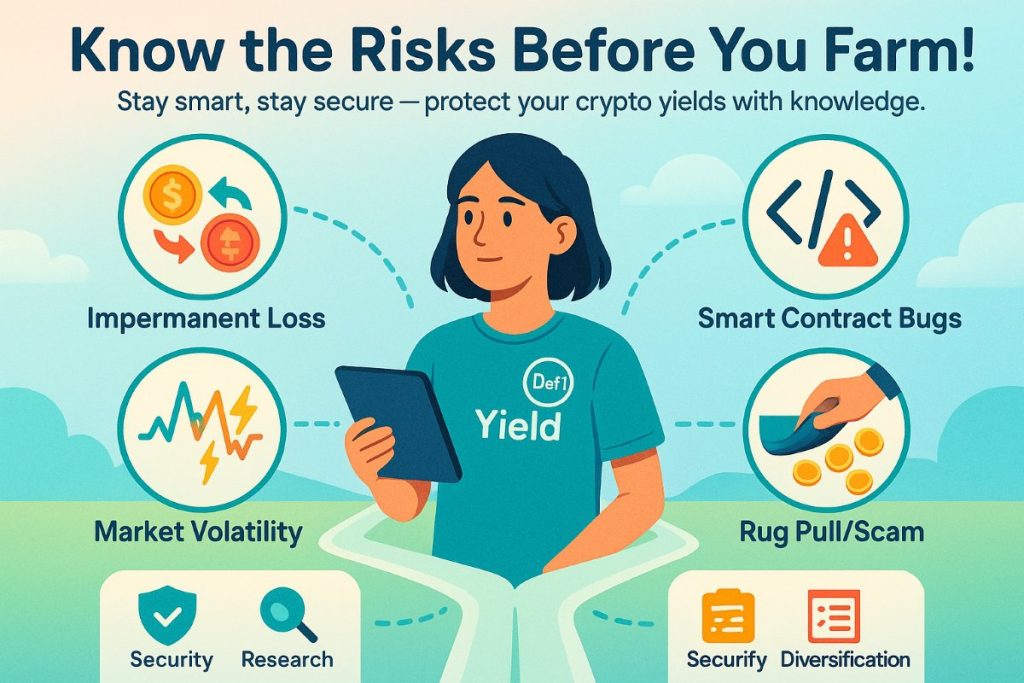
Real risks accompany these advantages, though. Market volatility can erode gains quickly, as the broader 2025 TVL swings from roughly $137 billion down to $94 billion demonstrated clearly. Smart contract vulnerabilities remain a genuine, ongoing threat too — exploits across crypto stole well over $3 billion in total during 2025 alone. Impermanent loss stands as another real pitfall, where pool assets diverge in price and can lead to a net loss relative to simply holding the underlying assets outright.
A common misconception holds that yield farming amounts to “free money.” Rewards actually come from protocol incentives or genuine trading fees, and they’re taxable in most jurisdictions while also potentially diluting token value through ongoing inflation. Another persistent myth suggests it’s only for experienced experts. Beginners can genuinely start small on well-audited platforms, though ignoring gas fees or the risk of rug pulls — where developers abandon a project outright — can prove costly regardless of experience level.
Actionable Insights for Safe Participation
Prioritizing audited protocols matters considerably for anyone entering this space. Aave’s V4 rollout emphasized security with public testnets and strengthened safeguards throughout its development. Starting by depositing stablecoins into Aave’s lending pools for steadier yields, then gradually exploring Uniswap’s V4 hooks for more customized farming strategies, gives beginners a sensible progression.
Diversifying across chains helps mitigate single-network risk, and using hardware wallets for self-custody alongside two-factor authentication adds meaningful protection. Monitoring APYs through tools like DeFiLlama and aiming for sustainable returns in the 5-15% range, rather than chasing triple-digit hype yields, remains sound practice.
Watching for red flags matters too — unaudited code or fully anonymous development teams both signal real danger. For Uniswap specifically, the protocol’s singleton contract design offers meaningful gas savings on swaps compared to earlier versions. Considering yield optimizers for automated rebalancing can help, though verifying their actual track record first remains essential before committing capital. Reviewing whitepapers and community forums directly rounds out solid due diligence.
Frequently Asked Questions
What is impermanent loss in yield farming?
Impermanent loss happens when the prices of assets deposited into a liquidity pool diverge from each other, potentially leaving a participant with less dollar value than if they had simply held the assets outside the pool. It’s one of the more overlooked risks in yield farming.
Is yield farming genuinely free money?
No, this is a common misconception. Rewards come from real protocol incentives or trading fees, are typically taxable, and can dilute a token’s value through inflation. Yield farming carries genuine risk, including smart contract vulnerabilities and impermanent loss.
What are Uniswap V4 “hooks”?
Hooks are customizable plugins introduced in Uniswap V4 that let developers add dynamic fees and custom logic to liquidity pools, effectively turning Uniswap into a broader developer platform rather than a single fixed-function exchange.
What kind of yield should beginners realistically target?
Sustainable yields in the 5-15% range are generally more realistic and safer than chasing triple-digit APYs, which often signal unsustainable tokenomics or elevated risk. Stablecoin lending on established platforms like Aave has historically offered roughly 4-9%.
A Long-Term View
As DeFi matured heading into 2026, protocols like Aave and Uniswap exemplified real innovation well beyond isolated ecosystems like XRP’s XRPL, fostering more inclusive and efficient finance broadly. By focusing on genuine education and disciplined risk management, investors could harness yield farming’s real potential while building resilience against the volatility that continues to define this corner of crypto.
What if yield farming eventually becomes a genuine gateway to mainstream financial inclusion — will you be ready to participate when it does?
References Used for This Article
- SoluLab – Best DeFi Yield Farming Platforms – https://www.solulab.com/best-defi-yield-farming-platforms/
- Forbes – Could Rate Cuts Accelerate DeFi’s $150 Billion Market? – https://www.forbes.com/sites/roomykhan/2025/08/20/could-rate-cuts-accelerate-defis-150-billion-market/
- CoinMarketCap Academy – DeFi TVL Falls Below $95 Billion, Down 30% From December Levels – https://coinmarketcap.com/academy/article/defi-tvl-falls-below-dollar95-billion-down-30percent-from-december-levels
- Statista – Aave DeFi Total Value Locked, 2020-2025 – https://www.statista.com/statistics/1298710/daily-tvl-of-aave-defi/
- Uniswap Blog – Uniswap v4 – https://blog.uniswap.org/uniswap-v4
- The Block – Aave Founder’s Master Plan Amid DAO Tensions as SEC Ends Probe – https://www.theblock.co/post/382958/aave-founder-master-plan-dao-tensions-sec-ends-probe
This is not financial advice. Crypto is volatile — always do your own research and only invest what you can afford to lose.