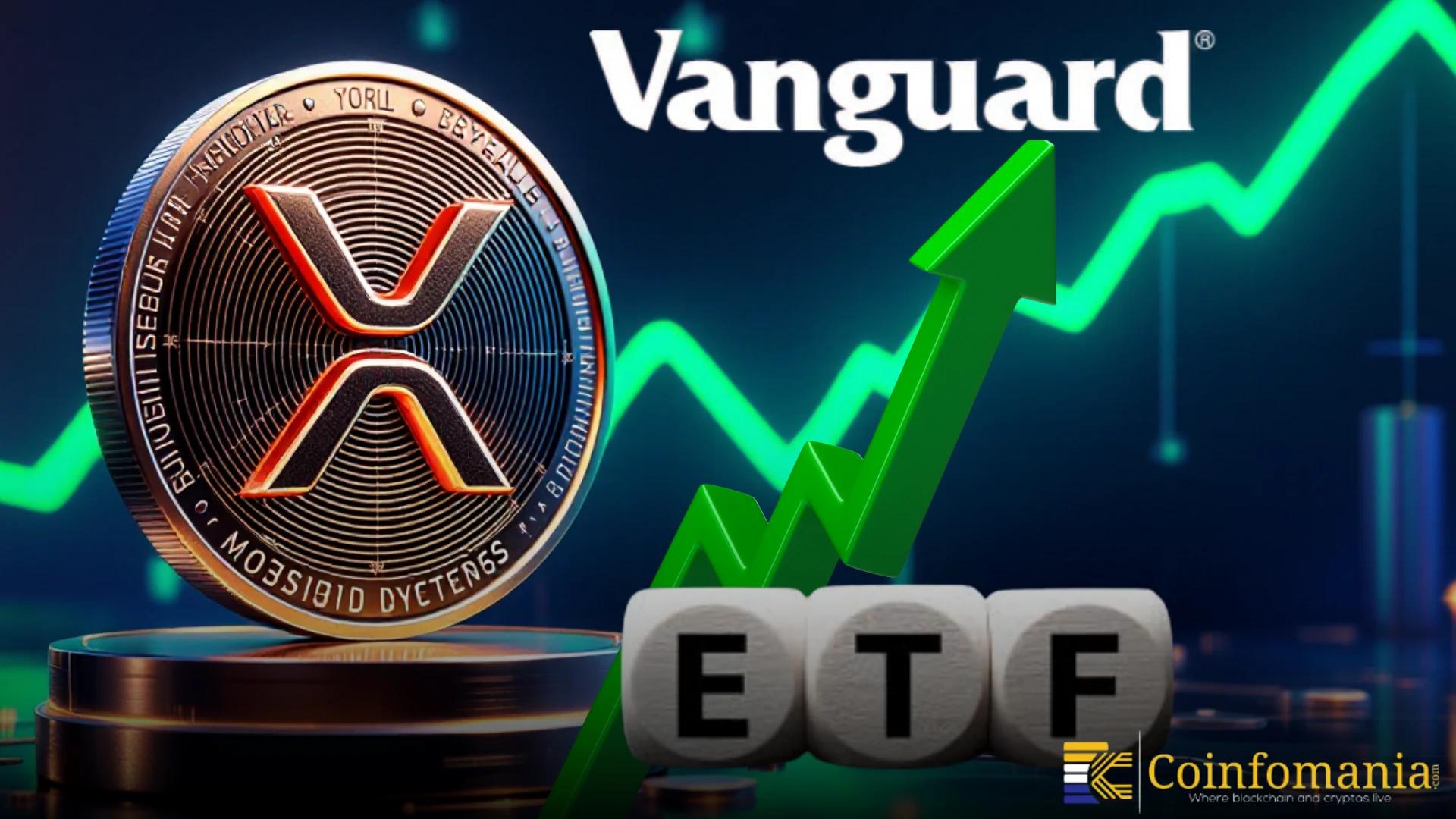
Short answer: On December 2, 2025, Vanguard — the $11 trillion asset manager that had long avoided cryptocurrency entirely — reversed course and opened its platform to select crypto ETFs, including those tracking XRP, for its roughly 50 million clients. XRP ETFs had already pulled in over $1 billion in inflows since their November 2025 launch with no single day of net outflows, and Vanguard’s move gave that momentum access to a dramatically larger pool of retirement and brokerage accounts.
A Pivotal Shift in Institutional Access
On December 2, 2025, Vanguard, the asset management giant overseeing roughly $11 trillion in assets, reversed its long-standing aversion to cryptocurrency. That policy change permitted its 50 million clients to access select crypto ETFs, including funds tracking XRP, Bitcoin, and Ether. For years, Vanguard had emphasized low-cost, diversified indexing while steering clear of what it publicly viewed as speculative assets. This reversal marked a genuine watershed moment for XRP specifically, Ripple’s native token, which had battled regulatory hurdles for years but now gained a real foothold in mainstream finance.
The move mattered because it aligned with a broader surge in institutional interest in digital assets happening at the same time. Crypto ETFs attracted record inflows through 2025, totaling $29.4 billion through August alone that year. For XRP, often positioned as a bridge for cross-border payments rather than a pure store of value like Bitcoin, Vanguard’s endorsement had real potential to accelerate adoption. This wasn’t just about price speculation — it was about validating XRP’s underlying utility case in a world where traditional finance was increasingly intersecting with blockchain infrastructure.
Understanding XRP and ETFs
XRP is the cryptocurrency powering Ripple’s payment network, designed specifically to facilitate fast, low-cost international transfers. Think of it as a digital version of the SWIFT system banks have long used, but with transactions settling in seconds instead of days. Ripple, the company behind XRP, has focused heavily on partnerships with financial institutions, aiming to disrupt the roughly $1.5 trillion global remittance market over time.
An ETF, or exchange-traded fund, is a basket of assets traded on stock exchanges much like individual shares. Crypto ETFs provide exposure without requiring investors to hold the underlying asset directly, reducing risks like wallet hacks or custody complications. For XRP, spot ETFs — launched in November 2025 by firms like Bitwise and 21Shares — track the token’s real-time price directly. These products hold actual XRP in secure vaults, offering regulated access to investors who might otherwise avoid direct crypto purchases entirely.
Vanguard’s decision to open its platform to these ETFs simplified entry considerably for its client base. Previously, Vanguard had blocked crypto-related products outright, citing volatility and a perceived lack of intrinsic value. With regulatory clarity following Ripple’s partial victory in its 2023-2024 SEC lawsuit, XRP came to be viewed as meaningfully less risky by that point. This shift illustrated how ETFs tend to democratize access to newer asset classes, not unlike how gold ETFs in the 2000s brought precious metals exposure to everyday investors who wouldn’t have bought physical bullion.
Institutional Momentum Through Late 2025
2025 turned into a genuine banner year for crypto ETFs, with inflows shattering prior records repeatedly. Bitcoin ETFs alone saw $457 million flow in on a single day at one point, reflecting what analysts called a “flight to quality” amid broader market fluctuations. XRP ETFs, though considerably newer, quickly amassed over $1 billion in inflows since their November launch, with no single day of net outflows recorded. That pattern highlighted XRP’s specific appeal: unlike Bitcoin’s dominant store-of-value narrative, XRP’s focus on real-world utility — including Ripple’s On-Demand Liquidity service, used by banks across more than 55 countries — drew institutions specifically seeking efficiency gains.
Vanguard’s entry amplified this trend considerably. With 50 million clients, many of whom were retirement savers investing through 401(k) accounts, the firm had the potential to channel substantial capital into XRP ETFs over time. Recent precedent from fintech supported this read: when BlackRock launched its Bitcoin ETF in 2024, it attracted $10 billion in assets within months, meaningfully boosting prices in the process. For XRP, institutional adoption was clearly ramping up, with banks transitioning from pilot programs to live implementations throughout 2025.
Ripple’s infrastructure expansions, including futures products and regulated stablecoin offerings, added further fuel to that optimism. As of mid-December 2025, XRP traded around $2.30, down 13% year-to-date despite the ETF success — a divergence some analysts attributed to broader market corrections rather than any XRP-specific weakness.

Pros, Risks, and Misconceptions About XRP ETFs
The advantages were fairly clear at the time. Credibility mattered most: Vanguard’s stamp of approval signaled to skeptics that XRP wasn’t simply “internet money” but a genuine asset class worth institutional consideration. Institutions favored it specifically for its speed — transactions cost pennies and settle almost instantly, contrasting sharply with Bitcoin’s energy-intensive mining process.
Potential inflows were genuinely massive in scale. If even 1% of Vanguard’s assets under management shifted toward crypto, that represented roughly $110 billion potentially touching XRP ETFs alone. This kind of demand reduces supply available on exchanges, since ETFs effectively lock up tokens in custody, potentially supporting prices through scarcity over time. A simple way to think about it: it’s a bit like removing oil from the open market for storage, tightening available supply and supporting values elsewhere.
Real risks persisted alongside this optimism, though. Crypto remained genuinely volatile — XRP had dropped 13% during 2025 despite these institutional wins. Regulatory changes could still have reversed some gains, though Ripple’s SEC settlement provided a meaningful buffer against the worst-case scenarios. A couple of misconceptions are worth addressing directly here too: some view XRP as centralized because Ripple holds a large portion of the token supply, but the network itself operates in a decentralized manner, with validators located worldwide. Another myth suggests ETFs eliminate all risk entirely — they don’t. ETFs track price swings faithfully rather than insulating investors from volatility.
Competition remained fierce across the sector too. Bitcoin ETFs dominated with roughly $60 billion in combined assets, while XRP’s payment-focused niche had to compete against emerging stablecoins for institutional attention. Still, XRP’s specific edge lay in cross-border settlement efficiency, an area where traditional banking systems have historically lagged well behind blockchain alternatives.
Actionable Insights for Investors
For curious investors, starting by assessing your existing portfolio makes sense first. Vanguard clients could check their brokerage for XRP ETF tickers to see what became available. Monitoring inflows through sites like Farside Investors offers a useful window into real-time ETF flow data for anyone tracking institutional sentiment.
Watching key metrics helps too — continued adoption by additional banks through RippleNet could signal further upside for the ecosystem broadly. Tracking XRP’s on-chain activity, like transaction volume, offers another useful gauge, since that metric rose alongside institutional interest throughout 2025. Diversifying by pairing XRP exposure with broader crypto or traditional assets remains sound practice for managing volatility regardless of conviction level.
For beginners specifically, educating through primary resources like Ripple’s official site or Vanguard’s own investor education materials beats relying on social media takes. Considering long-term holding over active trading tends to suit XRP’s utility-focused case better than short-term speculation, given how much of its value proposition rests on gradual institutional adoption rather than rapid price swings.
Frequently Asked Questions
What did Vanguard’s December 2025 policy change actually do?
Vanguard reversed its long-standing refusal to offer crypto-related products, opening its platform so its roughly 50 million clients could access select crypto ETFs, including funds tracking XRP, Bitcoin, and Ether.
What is a spot XRP ETF?
A spot XRP ETF is a fund that holds actual XRP tokens in secure custody and trades on a stock exchange like a regular share, tracking the token’s real-time price without requiring investors to hold or manage the cryptocurrency directly.
Is XRP centralized because Ripple holds a large token supply?
No, this is a common misconception. While Ripple holds a significant portion of XRP supply, the network itself operates in a decentralized manner through independent validators located worldwide.
Do ETFs eliminate the risk of holding crypto?
No. ETFs simplify access and custody but do not eliminate price volatility. They track the underlying asset’s price movements faithfully, meaning ETF holders remain exposed to the same swings as direct token holders.
The Long-Term View
Vanguard’s decision to open access to XRP ETFs represented more than a simple policy tweak — it acted as a genuine bridge between traditional finance and blockchain’s broader promise. By exposing 50 million clients to this asset, it had real potential to catalyze the institutional wave Ripple had pursued for years, enhancing credibility, spurring further inflows, and tightening available token supply. While challenges like volatility remained very much intact, the trends at the time pointed toward sustained growth if adoption continued at pace.
Looking back on that period now, did XRP’s real-world utility case end up outweighing the speculative noise that so often dominates crypto headlines?
This is not financial advice. Crypto is volatile — always do your own research and only invest what you can afford to lose.